Adoption Basics
Rescue Dog Glossary: 30 Shelter Dog Terms Every Adopter Hears
Published · By Jeff Molitor
Shelter dog terms in plain English: foster-to-adopt means a dog lives with you before adoption is final, and a stray hold lets owners reclaim a lost dog.
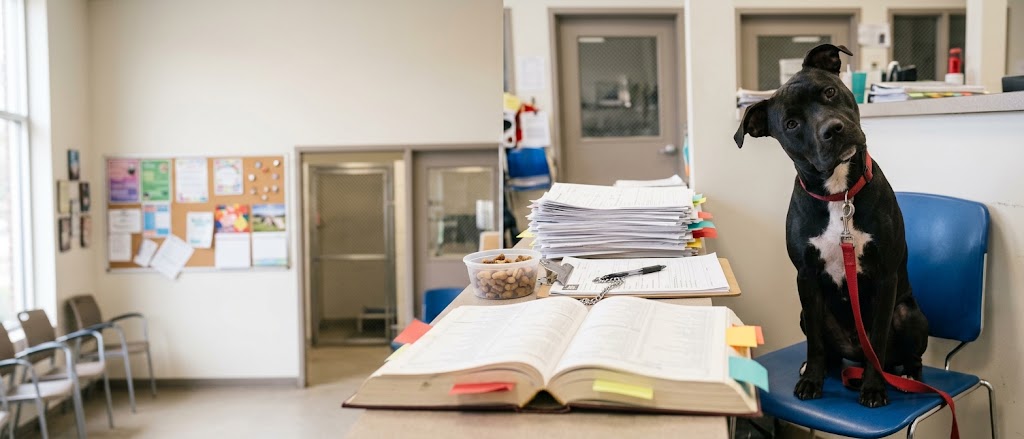
The short answer
Foster-to-adopt means an adopter takes a shelter dog home as a foster before the adoption becomes final. Some foster-to-adopt programs work as a trial run, while others cover a dog still waiting on surgery or treatment. Foster-to-adopt rules differ by shelter, so adopters should ask how long the placement lasts and who pays for care.
Shelter dog terms like foster-to-adopt, stray hold and owner surrender get tossed around at every adoption counter, usually by someone holding 3 leashes. This Let Them Be Dog rescue dog glossary translates 30 shelter dog terms into plain English before you sign anything.
I've volunteered with Chicago shelter dogs since 2017.
Nobody wants to ask what "altered" means while a dog licks their shoe. So here's the cheat sheet I wish I'd had. Every entry opens with a 1-sentence definition, then the part the paperwork leaves out.
What Does "Foster-to-Adopt" Mean?
Foster-to-adopt is the term I get asked about most. That's mostly because shelters use it 2 different ways.
In both versions, the dog lives at your place before the paperwork is final. Ask which deal you're signing up for before the dog's in your car.
The Trial Version
A trial foster-to-adopt is a short test run where you foster a specific dog at home before you commit to adopting. The shelter keeps ownership during the trial, and you finish the adoption if the fit works.
It's the closest thing to a test drive the dog world allows. Trials make a lot of sense for dogs who fall apart in a kennel or for homes with a resident pet.
A dog who melts down in a loud lobby can be a total couch potato by night 3. That's what a few weeks on a real couch does for a shelter dog.
The Medical Wait Version
A medical foster-to-adopt means you're already approved to adopt, but the dog still needs a procedure before the adoption is official. The BC SPCA's foster-to-adopt explainer lays it out simply. The organization keeps the dog in its care on paper and pays for the procedure, then the adoption goes official once it's done.
Spay and neuter surgery is the usual holdup. Your job is mostly rides to the vet and keeping the stitches dry.
Foster Fail
A foster fail is when a foster family adopts the dog they were only supposed to foster. It's the best kind of failure in rescue.
Oscar Wonder came to me as a foster through Dark Horse Dogs in July 2024. By December he was mine.
| Arrangement | Who Owns the Dog | Who Usually Covers Vet Care | How Long It Lasts | How It Ends |
|---|---|---|---|---|
| Foster | The shelter or rescue | The shelter or rescue | A night to a few months | The dog goes to an adopter, or the foster adopts (a foster fail) |
| Trial foster-to-adopt | The shelter or rescue, until the adoption is signed | Varies, so ask before pickup | A set trial period the shelter names | The adopter signs, or the dog goes back with home notes |
| Medical foster-to-adopt | The shelter or rescue, on paper | The shelter or rescue covers the pending procedure | Until surgery or treatment is done | The adoption goes official once the procedure is done |
| Adoption | The adopter | The adopter | For good | It doesn't, unless the return policy kicks in |

Got a foster-to-adopt dog coming home this week? Use the quiet 2-week settling plan on our homepage, whether the paperwork is final or not.
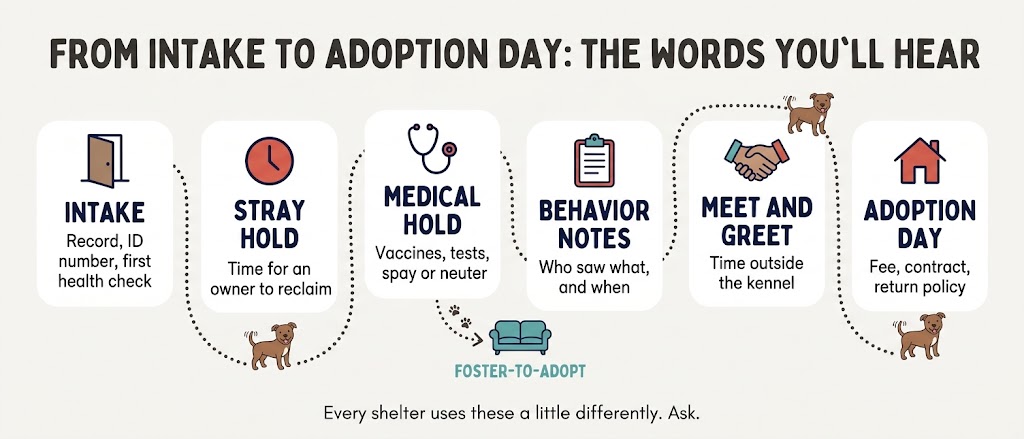
What Happens Before a Shelter Dog Is Up for Adoption?
Every dog's shelter story starts with paperwork.
These 5 terms cover the stretch between the front door and the adoption floor. They also explain why the dog you saw online on Monday might not be "available" until Friday.
Intake Day
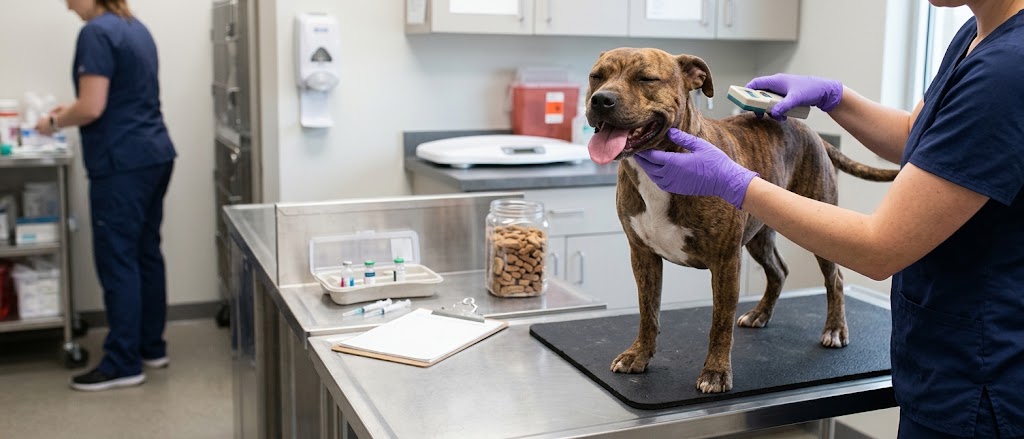
Intake is the moment a dog officially enters a shelter or rescue, with a record, an ID number and a first health check. Staff scan for a microchip, write down how the dog came in and give the first vaccines.
It's loud and fast, and the dog has no clue what's going on. Which is why intake notes can read a little dramatic.
Stray Hold
A stray hold is the legal waiting period when a shelter must keep a found dog so an owner can reclaim the dog.
Michigan State University's Animal Legal & Historical Center reports that most state laws set that period at 3 to 5 days. The shortest runs about 48 hours, in Hawaii. The longest is about 10 days, in Missouri.
At Chicago Animal Care and Control, the stray hold is 7 days for a dog with a microchip and 3 days for a dog without one.
During a stray hold you can usually look but not take.
Owner Surrender
An owner surrender is a dog given up to a shelter or rescue by the person who owned the dog. There's no stray hold, since nobody's out searching, so surrendered dogs can be available fast.
Owner surrenders made up 30% of U.S. dog and cat intake in 2025, according to Shelter Animals Count. I dug into why housing and money land so many dogs in shelters in our 2026 report. The upside for you: surrender paperwork often comes with real history, like "housetrained, hates the vacuum."
Managed Intake
Managed intake means a shelter schedules non-emergency surrenders and found-pet drop-offs by appointment instead of taking walk-ins.
The National Animal Care & Control Association's guideline on appointment-based intake recommended the switch in 2021. NACA says sick, hurt and dangerous animals still get help right away. For adopters, it usually means a less crowded building and calmer dogs to meet.
Open Admission Shelter
An open admission shelter takes in every animal that comes through the door, full kennels or not. City shelters like CACC work this way.
That's why space gets tight fast.
What Should You Look for in a Dog's Behavior Notes?
Behavior notes are where shelter jargon gets personal. They're also where a lot of great dogs get walked past.
I'll stick to the vocabulary here. For what specific labels like "dog selective" or "no cats" mean, I already wrote the plain-English guide to kennel card labels.
Behavior Notes
Behavior notes are the written record of how a shelter dog acts with people, other dogs, handling and daily routines.
Check who wrote each note and how old it is. Then ask for the story behind it, because "reactive" is a summary, not a story.
Kennel Card
A kennel card is the info sheet clipped to a dog's kennel, usually with a name, age, weight, intake date and a few quick notes. Staff write it fast, for each other, while the building is at full volume.
Treat it like a dating profile. Mostly true, very short and missing all the good parts.
Playgroup Notes
Playgroup notes describe how a shelter dog acted off leash with other dogs in a supervised yard.
These notes are gold if you have a dog at home. Ask which dogs your dog liked and how they played, not just whether he "did fine."
Kennel Stress
Kennel stress is the anxiety and frustration a dog builds up from noise, confinement and too little sleep in a shelter. It's why a sweet dog can bounce off the walls of a kennel run.
I've covered the jumping, mouthing and leash biting kennel life causes already. Short version: meet the dog outside the kennel before you judge.
Behavior notes say your new dog is a lot? Start with 5-minute reward games that help a busy dog settle on our homepage.
What Medical Terms Show Up on Shelter Dog Paperwork?
Medical paperwork reads like a vet school final. Mostly it's good news in a scary font.
The Association of Shelter Veterinarians' guidelines summary sets the standard a lot of shelters follow. It calls for a quick health check at intake and, ideally, a full exam within 24 hours.
Medical Hold
A medical hold means a shelter dog isn't available yet because the dog needs treatment, tests or recovery time first. It's a pause, not a red flag.
Ask what the hold is for and when it should end.
Core Vaccines
Core vaccines are the shots every shelter dog should get, usually a combo shot called DHPP or DAPP plus rabies. DHPP covers distemper, hepatitis (adenovirus), parvovirus and parainfluenza.
ASV guidelines say adult animals should get core vaccines, except rabies, at or before intake. Rabies often comes later, at surgery or before the dog leaves, depending on local law.
Kennel Cough
Kennel cough is a contagious respiratory infection that spreads fast wherever lots of dogs share air, like a shelter.
It usually sounds worse than it is, with a honking cough and maybe some sneezing. Call your vet if your new dog stops eating, gets sluggish or keeps coughing.
Heartworm Positive
Heartworm positive means a dog tested positive for heartworm, a parasite spread by mosquitoes that lives in the heart and lungs. It's treatable, and the hardest part is keeping a happy dog calm for weeks.
I covered what heartworm treatment asks of an adopter in my post on overlooked dogs.
Spayed, Neutered or Altered
Altered means a dog has been spayed (female) or neutered (male), so the dog can't have puppies. Intact means the surgery hasn't happened yet.
ASV guidelines say shelters should sterilize animals before adoption or make sure it happens after.
Microchip
A microchip is a rice-sized ID chip under a dog's skin that a scanner reads to pull up a registry number. It only works if the registry has your current phone number.
A 2009 study in the Journal of the American Veterinary Medical Association tracked strays at 53 U.S. shelters. Microchipped stray dogs went home to their owners 52.2% of the time, compared with 21.9% for stray dogs overall.
What's the Difference Between a Shelter and a Rescue?
People use "shelter" and "rescue" like they're the same word. They're cousins at best.
A shelter is a building with kennels that takes in dogs, often run by a city, a county or a humane society. A rescue is a group that pulls dogs from shelters or takes them from owners, then houses them in foster homes until adoption.
Neither is better. They just run different playbooks.
| Question | Shelter | Rescue |
|---|---|---|
| Where do the dogs live? | In kennels at a shelter building | Mostly in foster homes, sometimes a small facility |
| Who runs it? | A city, a county or a humane society, with paid staff | A nonprofit group, often run mostly by volunteers |
| Does it take every dog? | Open admission shelters do, full or not | No, a rescue chooses which dogs to pull |
| What do the notes come from? | Intake, kennel staff, playgroups and volunteers | A foster who lives with the dog every day |
| What does applying look like? | Often a meet and greet and same-day or next-day paperwork | Often an application, references and sometimes a home check |
| What does the fee cover? | Ask, since it usually includes vaccines, spay or neuter and a microchip | Ask, since it usually includes the same plus foster care costs |
If your heart's set on a certain look, most popular breeds have a breed-specific rescue. That beats buying a puppy while shelter dogs wait every time.
No-Kill Shelter
A no-kill shelter is one that saves at least 90% of the animals it takes in, the benchmark Best Friends Animal Society uses.
It doesn't mean a shelter never euthanizes, since some dogs are too sick to treat or too dangerous to place. Some no-kill groups also limit intake, which sends more dogs to open admission shelters. So "no-kill" is a stat, not a halo.
Transfer and Pull
A transfer is when a shelter sends a dog to a rescue or another shelter with more room, and a pull is the same move from the rescue's side.
Rescues pull dogs when they have a foster home lined up. Every pull opens a kennel.
Courtesy Listing
A courtesy listing is a shelter or rescue posting a pet who still lives with the owner, so the owner can rehome the dog directly.
The dog never enters the shelter. Ask what the owner knows and whether vet records exist, since staff usually haven't met the dog.
Picked a shelter or a rescue? Check the short list of gear to buy before pickup day while your application's in review.
What Do the Words on Adoption Day Mean?
Adoption day has its own dialect. Here's the phrasebook.
Meet and Greet
A meet and greet is a short, supervised visit where you spend time with a shelter dog outside the kennel before you decide.
Bring your resident dog if the shelter allows it. Go twice if you can, since 1 visit is a snapshot.
Adoption Counselor
An adoption counselor is the staff member or trained volunteer who matches adopters with dogs and walks them through the paperwork.
Tell them the boring truth about your schedule. That's how good matches happen.
Adoption Hold
An adoption hold means someone has claimed a dog for a set time while an application, a meeting or a surgery gets finished.
Holds usually expire. If a dog you love says "on hold," ask to be the backup.
Adoption Fee
An adoption fee is what a shelter or rescue charges to adopt a dog, and it usually helps cover vaccines, spay or neuter surgery and the microchip.
Ask what the fee covers so you know what's already done. Honestly the fee is the cheap part, and what a dog costs after adoption day is the bigger number.
Adoption Contract
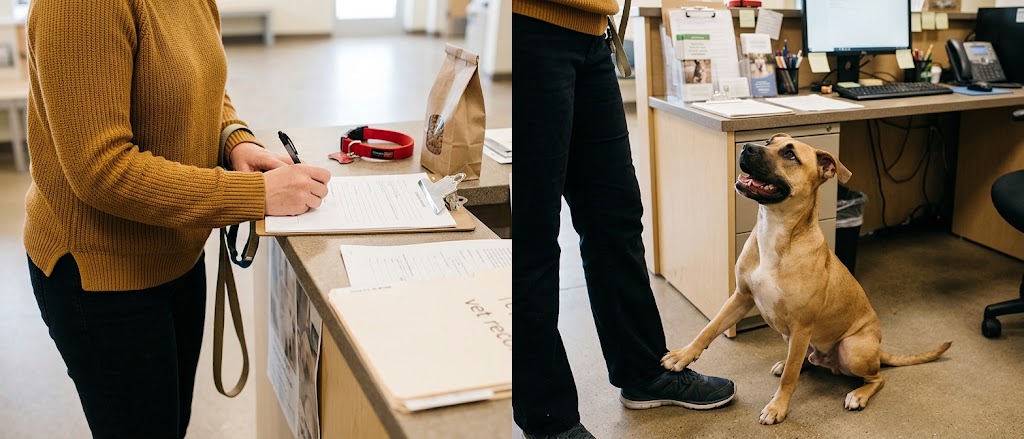
An adoption contract is the agreement you sign to adopt, listing your responsibilities and the shelter's rules.
Common clauses cover vet care, ID tags and what to do if you can't keep the dog. Read it, all of it, including the small print.
Return Policy
A return policy explains how and when you can bring an adopted dog back to the shelter or rescue. Many rescue contracts require you to return the dog to them instead of rehoming on your own.
Returns happen more than people think. I've written about why adopted dogs come back and how adopters can head it off.
Words You'll Hear Once the Dog Is Home
2 more terms show up in every rescue group chat, and both have full guides here.
Decompression is the quiet first stretch at home when a new dog rests and sheds shelter stress before facing busy places or lots of guests. I lay out how to run a calm first 2 weeks with a new dog.
The 3-3-3 rule is a rough guide for how a rescue dog settles in. It says a dog decompresses in about 3 days, learns the routine in about 3 weeks and feels at home in about 3 months. Every dog runs on their own clock, and the 3-3-3 timeline, taken day by day covers the details.
Learn the Lingo, Then Meet the Dog
Now that shelter dog terms make sense, go meet a dog outside the kennel. Then grab the Let Them Be Dog guides built for your first months together on our homepage.
Common questions
How long is a stray hold for a dog?
A stray hold for a dog usually lasts 3 to 5 days, though the exact length depends on state and local law. Michigan State University's Animal Legal & Historical Center reports the shortest state holding periods run about 48 hours. The longest run about 10 days. Some laws add time when a stray dog has a microchip or an ID tag.
Can you adopt a dog that is on a stray hold?
A dog on a stray hold usually cannot be adopted until the hold ends, since owners get the first chance to reclaim a dog. Some shelters let adopters join an interest list or ask for a call when a stray hold ends. Adopters should ask each shelter how its waitlist works.
What happens if a foster-to-adopt placement doesn't work out?
A foster-to-adopt placement that doesn't work out usually ends with the dog going back to the shelter or rescue before the adoption is final. Trial foster-to-adopt programs are built for that possibility. Notes from the trial about the dog's behavior at home help the shelter find a better match next time.
Why would a shelter dog be on a medical hold?
A shelter dog goes on a medical hold when the dog needs treatment, testing or recovery time before adoption. Common reasons include kennel cough, a skin infection, a pending spay or neuter surgery and heartworm treatment. A medical hold usually ends when a shelter veterinarian clears the dog for adoption.
What does "altered" mean on a shelter dog's profile?
"Altered" on a shelter dog's profile means the dog has been spayed or neutered and cannot have puppies. Shelter profiles may also say "fixed" or "sterilized" for the same thing. "Intact" means a dog has not had spay or neuter surgery yet, and many shelters schedule that surgery before adoption.
Do shelter dog terms mean the same thing at every shelter?
Shelter dog terms do not mean exactly the same thing at every shelter or rescue. Foster-to-adopt, medical hold and no-kill can each come with different rules from 1 organization to the next. Stray hold lengths also change by state and city law. Adopters should ask staff to explain any unclear term before signing.
About the Author
I’m Jeff Molitor and I adopted my first dog at 39 (Cooper Wonder) and have volunteered with Chicago shelter dogs since 2017, first at The Anti-Cruelty Society and now at Chicago Animal Care and Control. I help with dog handling, agility, adoption showings and support, photography and marketing. I love all dogs, but I gravitate toward momma dogs, seniors, black pibbles and the ones with cropped ears. Basically whoever’s been overlooked the longest. Jeff is dad to Oscar Wonder (pibble) and Gary Wonder (our cat).
This article shares what we have learned from our own experience. It is not medical advice, and we are not veterinarians. If you have any concerns about your dog's health, please check with your vet.