Home Setup
New Dog Checklist: Everything to Buy Before Pickup Day
Published · By Jeff Molitor
Buy the safety gear before pickup day, then wait to learn which toys, beds and extras your rescue dog actually needs.
The short answer
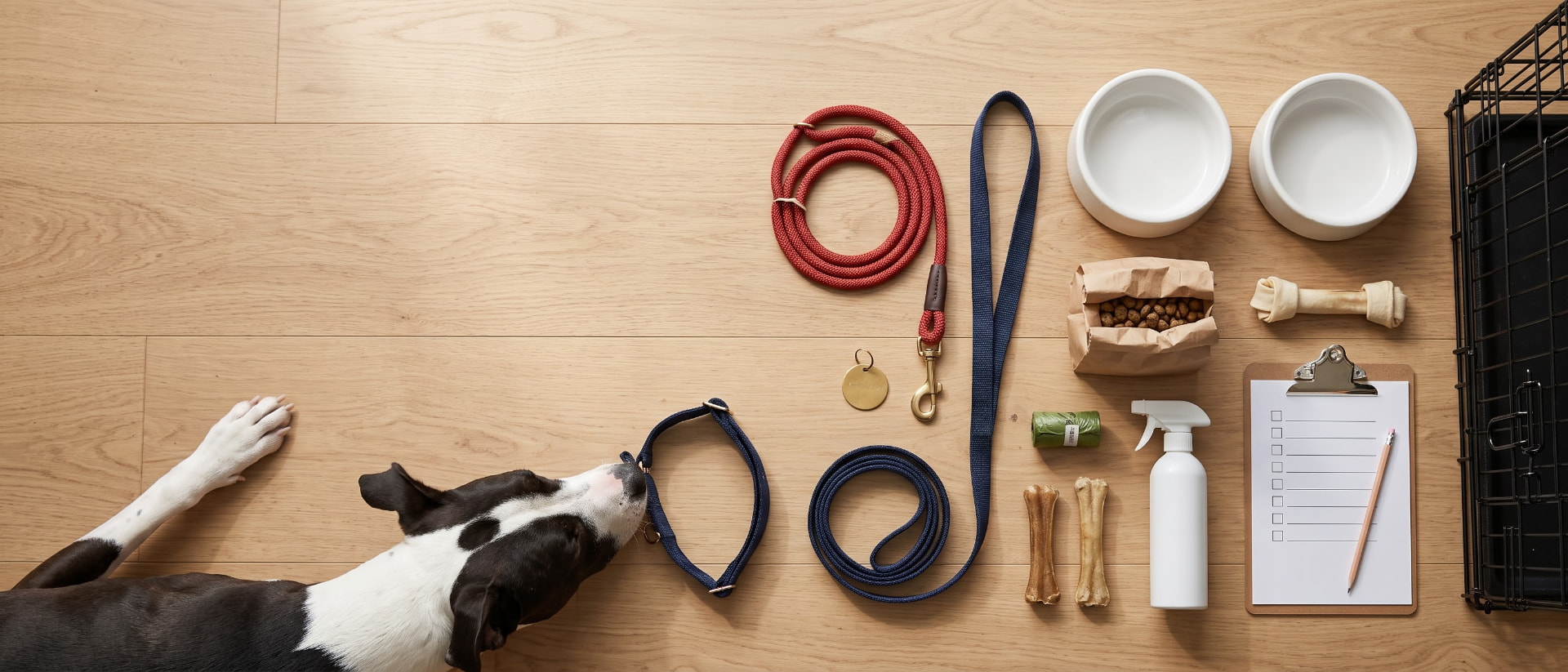
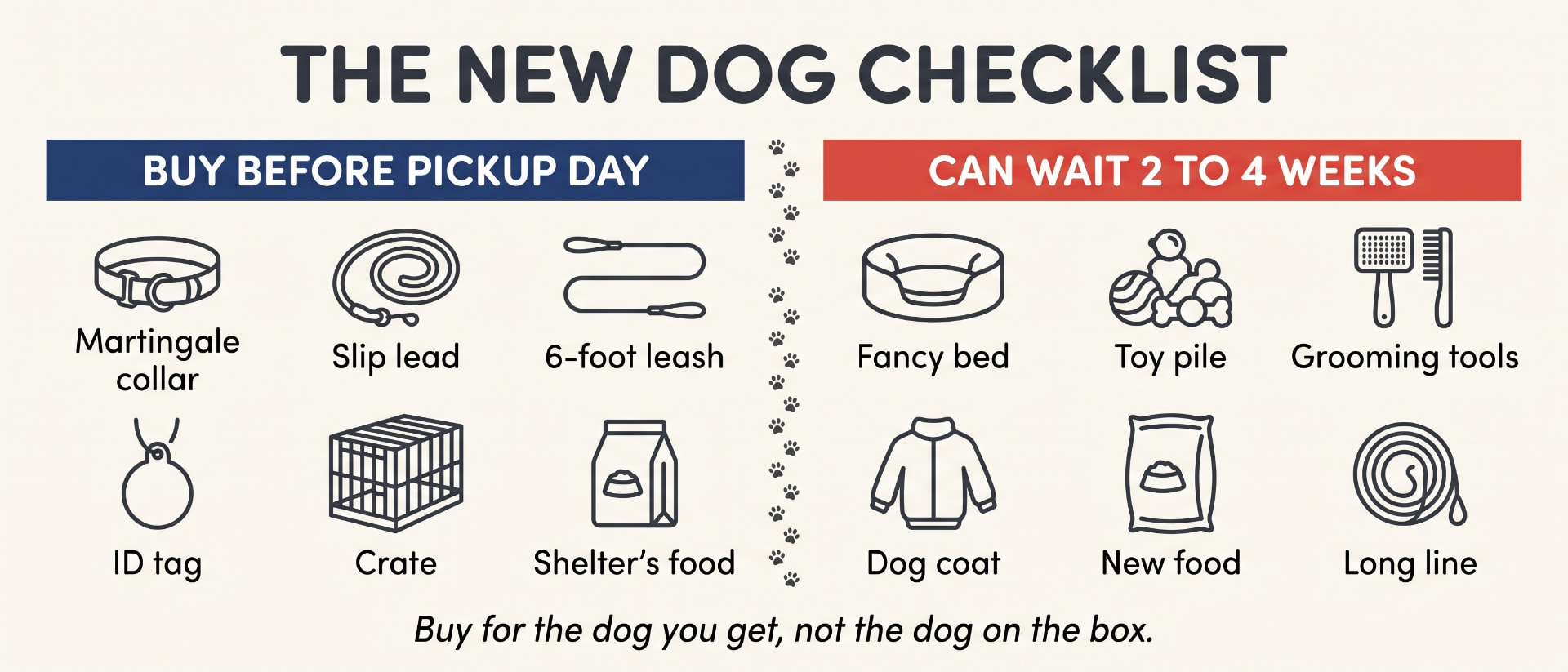
A rescue dog needs a martingale collar, slip lead, leash, ID tag, crate and the shelter's food before pickup day. Poop bags, enzyme cleaner, bowls and a baby gate round out the must-have list. Toys, fancy beds and grooming gear can wait 2 to 4 weeks.
A new dog checklist for a rescue dog should be short, cheap and built around keeping a scared dog from escaping. That's the Let Them Be Dog take on pickup day, and I'll defend it to any pet store employee who asks.
Most of the store can wait. What can't wait is the gear that keeps a brand new dog attached to you. That means a martingale collar, a slip lead, a plain leash and an ID tag with your cell number.
So I split this list in 2. The must-haves get bought before pickup day. Everything else gets bought after you've met the actual dog living in your house, which is cheaper and a lot less silly.
What Do I Need Before Bringing Home a Rescue Dog?
I help with adoption showings. The shopping list works best when safety comes first and the cute extras wait until you know your dog.
The must-have list really only has a couple jobs. Job 1 is keeping your dog from slipping a collar and bolting on day 1. Job 2 is getting you through week 1 without a 2 AM run for paper towels.
Everything else on the shopping list is a guess. You don't know yet if your dog shreds plush toys in 4 minutes or ignores them completely. You also don't know if he sleeps in a tight donut or flat on the cold tile like a starfish.
I sort the must-haves into 4 piles on the kitchen table. Escape gear is the collar, slip lead, leash and tag. Rest gear is the crate, a baby gate and a washable bed. Food and cleanup gear covers the rest, and most of that is bags and a big bottle of enzyme cleaner.
So buy for the dog you get, not the dog on the packaging. Here's my new dog checklist for a rescue, with a rough price tier instead of dollar figures. Prices swing too much by store and dog size for me to promise you a number.
| Item | Why It Can't Wait | Budget Tip | Cost Tier |
|---|---|---|---|
| Martingale collar | Stops a nervous dog from backing out of the collar and bolting | Adjustable nylon works fine. Leather can wait | $ |
| Slip lead | Backup line for car doors, front doors and the first walks | Ask if the shelter sends one home with your dog | $ |
| 6-foot leash | Real control near traffic, bikes and squirrels | Any plain nylon or biothane leash. No retractables | $ |
| ID tag | Gets a lost dog home without a microchip scanner | Order a week early with your cell number in big type | $ |
| Wire crate with a divider | A quiet den for rest and a safe spot when you're out | Used crates work. Wash with dish soap and check every latch | $ |
| Baby gate | Shrinks the house to 1 or 2 rooms for the first weeks | Borrow one or buy used | $ |
| Small bag of the shelter's food | Familiar food is easier on a stressed stomach | Ask the shelter for the exact brand and formula | $ |
| 2 heavy bowls | Food and water that don't tip, slide or clank | Any heavy ceramic or stainless bowl you already own | $ |
| Poop bags | Every walk, starting in the shelter parking lot | Bulk rolls cost less per bag | $ |
| Enzyme cleaner | Breaks down pee smell so the same spot doesn't get hit twice | 1 big bottle lasts for months | $ |
| Washable bed or old blanket | A soft spot that survives the washer and the first accident | A folded comforter works for now | $ |
| 2 sturdy chews | Something legal to chew when nerves kick in | Pick chews your dog can't swallow whole | $ |
$ means cheap and $ marks the biggest single purchase. Real prices vary by store, dog size and season.
My rule is simple. If an item keeps your dog contained or fed, it goes on this list. If it mostly makes your dog look adorable on Instagram, it waits.
Collars and crates pass the test. The sweater with tiny pom-poms doesn't, at least not yet.
This post handles the shopping. For when each item actually comes out on day 1, our hour-by-hour plan for the first evening home picks up right where this list stops.
Gear's in the cart. Now learn the first-week leash skills that make it all work before your dog hits the sidewalk.
Why Do Rescue Dogs Need a Martingale Collar?
Picture this. Your new dog hears a skateboard, panics and reverses like a minivan in a crowded parking lot. A flat collar slides right over the ears, and now you're holding a leash attached to nothing.
Shelter volunteers watch this move happen all the time. It's why so many of us get weirdly intense about collars at adoption showings.
A martingale has 2 loops. The big loop goes around the neck, and the small loop pulls it tighter when the leash pulls. It only tightens to a set point, about the size of your dog's neck, then stops.
Sighthounds like greyhounds made martingales famous because their heads are narrower than their necks. Lots of shelter dogs pull the same escape trick for a different reason. They're stressed, a little underweight and very motivated to leave.
Fitting one takes about 5 minutes. Do it in your living room, not the shelter parking lot.
- Ask the shelter for your dog's neck size, or measure the widest part of the neck at a visit.
- Buy an adjustable martingale that covers that size, with a side clip if your dog hates things going over the head.
- Slide it on, then pull the small loop all the way tight.
- Look at the 2 metal rings on the small loop. If they touch when the collar's tight, it's too loose, so snug it up.
- Let it go slack and slide 2 fingers underneath. Snug, not strangling.
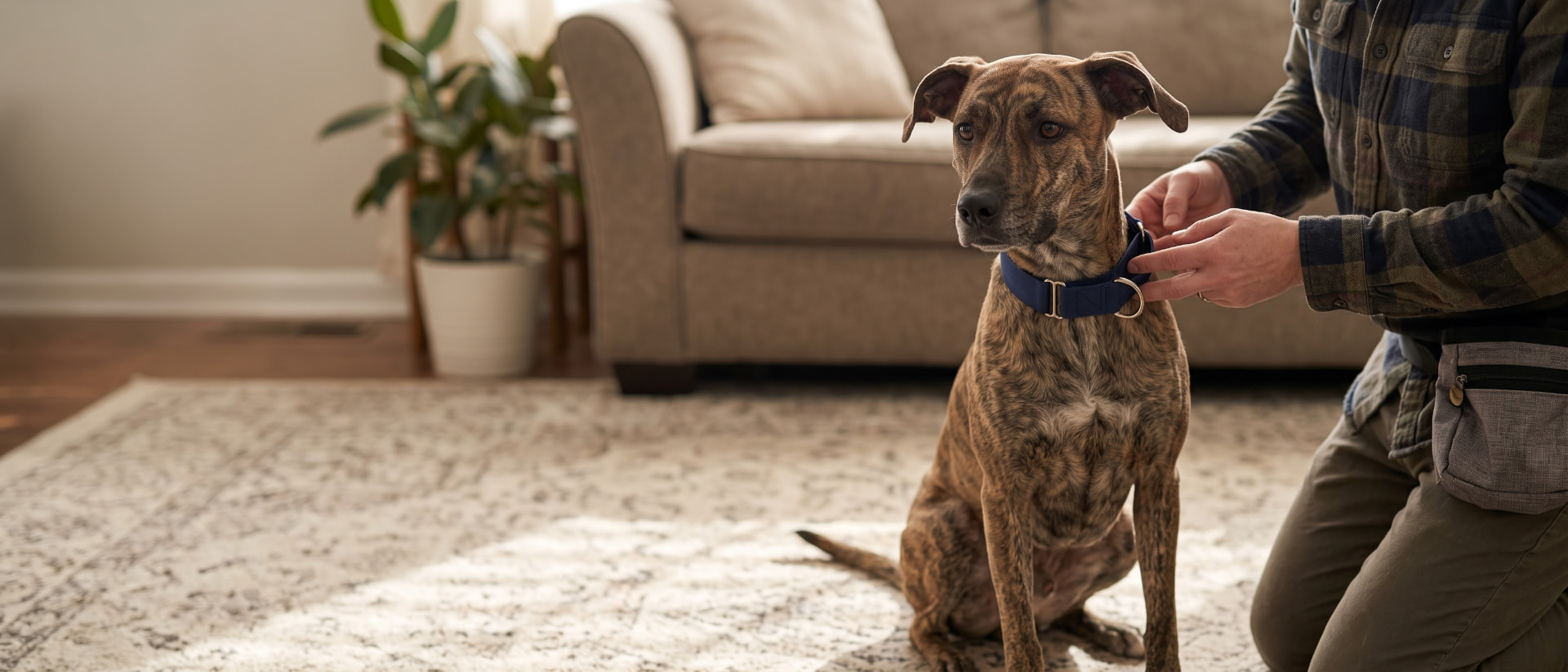
One more thing, and I'm not flexible on it. Take the martingale off in the crate and anytime nobody's watching, because that extra loop can snag on crate wire.
When Should You Use a Slip Lead on a Rescue Dog?
A slip lead is a leash with a loop at one end, threaded through a ring. Shelter teams often use one for quick, supervised transfers between kennels and outdoor spaces.
That speed is the whole point. Shelter dogs go in and out of kennels all day, and nobody has time to wrestle with buckles. If you've visited a shelter, you probably saw one during all that meet room bouncing.
At home, a slip lead earns its spot as a backup line. Plenty of rescue folks walk a new dog on 2 leashes for the first few weeks. One clips to the martingale or harness, and the slip lead goes over the head with the stopper set loose. It only tightens if the first line fails.
It looks like overkill until a garbage truck backs up next to you. A lot of shelter dogs carry a flight risk note on their paperwork for a reason. If yours does, or your dog spent weeks as a stray, take it seriously.
Doorways are the danger zones. The car door, the front door and the gap in the fence all look like exits to a scared dog. Get the slip lead on before any of them open.
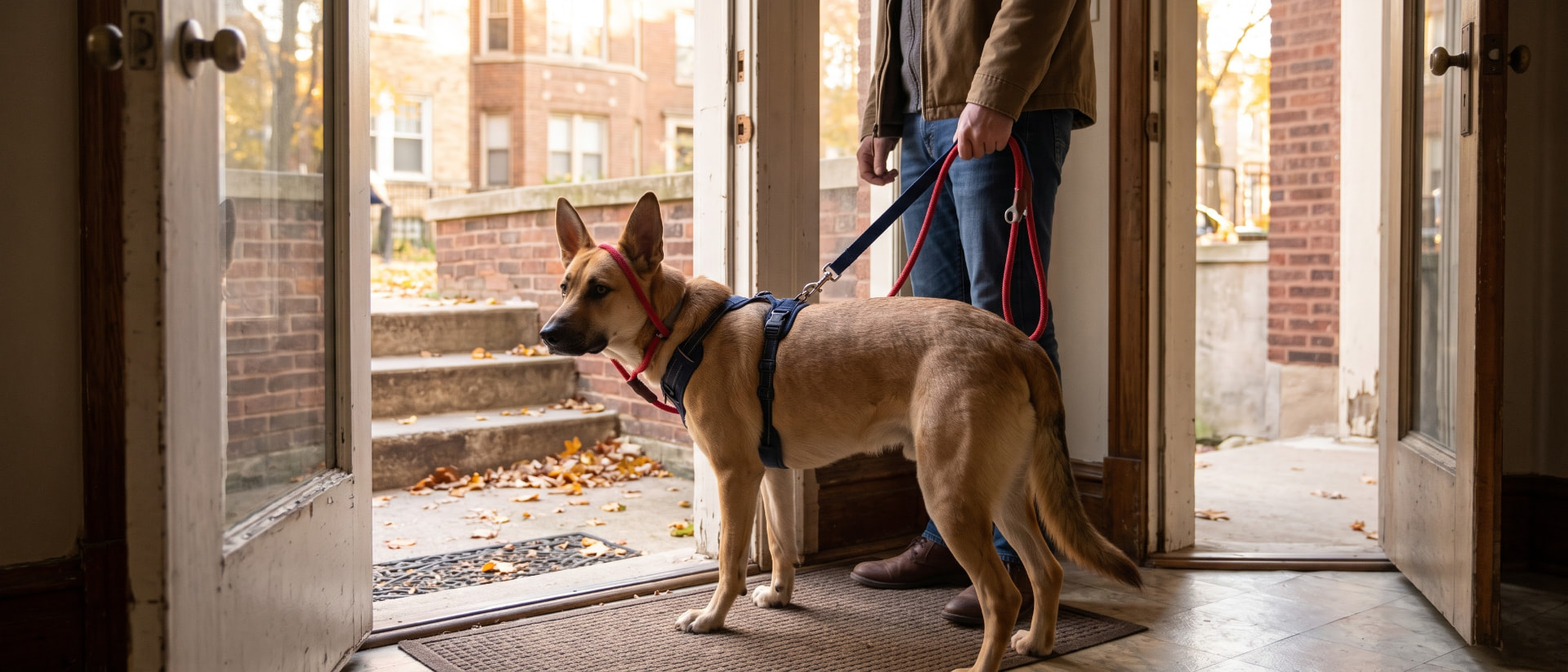
Where a slip lead falls short is daily walks with a puller. It keeps tightening, so a dog who leans into it all walk gets a sore neck and learns nothing. Treat it like a seatbelt, not a steering wheel.
A double leash buys you time while trust builds. Here's how trust usually grows over the first 3 months with a rescue.
What ID Does a New Rescue Dog Need Before the Car Ride?
Your dog doesn't know your address. Your dog barely knows your name. If he gets loose on day 2, that tag does all the talking.
Order the tag a week before pickup. The engraving machine at the pet store has a way of breaking exactly when you need it. Put your cell number on it in big type and skip your home address.
Next comes the microchip. Most shelters chip dogs before adoption, but a chip only helps if the registry has your name and number. Ask the shelter which registry the chip uses and who handles the transfer, then log in yourself a week later to check.
New dogs do go missing. In American Humane's study of 572 adopters, 60 adopted dogs and cats weren't in their new homes about 6 months later. That's 10.5%, and 6 of those 60 pets had been lost.
If you live in Chicago, add one more item. The city requires every dog 4 months and older to be registered. The Chicago City Clerk's dog registration page lists $5 a year for a spayed or neutered dog, and your dog needs a current rabies shot first.
The city tag gets its own number, which a finder can call in to 312-744-DOGS. Outside Chicago, check your city or county website, since a lot of towns have a similar rule.
What Should You Look for in a Crate for a Rescue Dog?
The crate is the priciest must-have, so get it right the first time.
Size for Stretching Out
Ask the shelter for your dog's weight, or measure at a visit. Go from nose to the base of the tail and add a few inches. For height, measure from the floor to the top of the head while sitting, plus a few inches.
If you can't measure, buy a crate with a divider panel. Size up and block off the extra space.
Wire Beats Fabric
Soft fabric crates are cute and light. They're also 1 zipper away from freedom for a determined dog, and a stressed rescue is very determined. Between you and I, I'd save fabric crates for a calm dog you've had for a year.
Plastic crates are great for car travel. For home, I'd pick wire because it folds flat, lets air through and looks a lot like the kennel your dog just left.
Cover 3 Sides
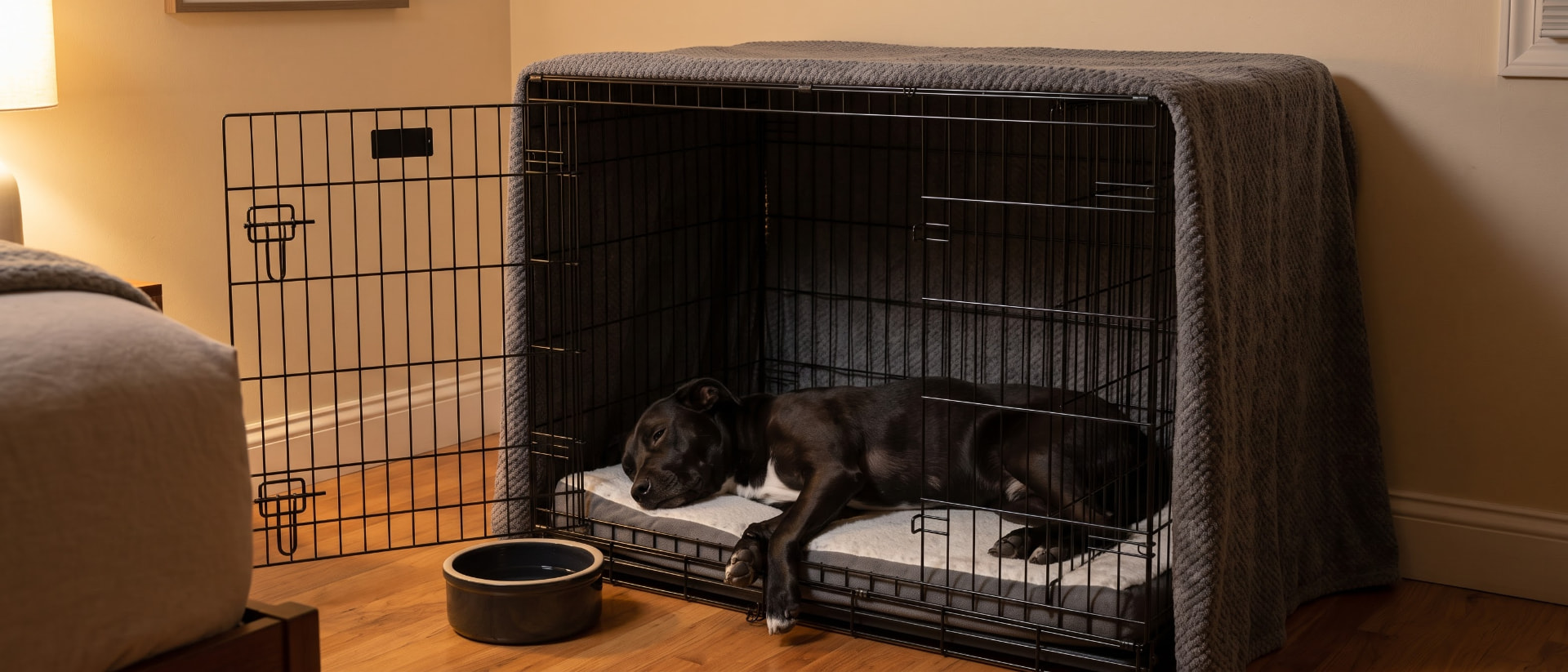
Drape a blanket over the top and 3 sides, so the front stays open. Set the crate in a quiet corner away from the front door. That way it doubles as the quiet spot your dog retreats to for the first couple of weeks.
Which Dog Supplies Can Wait a Few Weeks?
This is where I talk you out of the cute stuff. The dog you bring home on Saturday isn't fully the dog you'll have a month later. The one ignoring toys in week 1 might turn into a squeaker assassin by week 4.
You're in good company if chews are calling your name. The American Pet Products Association's 2026 Dog Report found 65% of dog owners bought chews in 2025. Buy 2 kinds, see which one your dog actually works on, then buy more of that one.
Food is the other big one. A huge bag of a new formula on day 1 is how people end up shampooing a rug at midnight. Stick with a small bag of the shelter's food, and read up on why a new dog might snub dinner before you blame the brand.
Here's my can-wait list and when I'd shop for each item.
| Item | Why It Can Wait | When to Buy |
|---|---|---|
| Upgraded dog bed | Plenty of new dogs chew or pee on the first bed | Week 3 or 4, once sleep habits show |
| More toys | Play style shows up after a dog relaxes | Week 2 or 3 |
| Puzzle feeders and lick mats | A cardboard box stuffed with paper works in week 1 | Week 2 |
| Everyday walking harness | Fit depends on build and gait, and a martingale covers week 1 | Week 1 or 2, fitted on your dog in person |
| Long line, 15 to 20 feet | Needs a little trust and a quiet, empty field | Week 3 or later |
| Big bag of a new food | Food switches go slowly, and the shelter's food covers week 1 | After week 1, with your vet's input |
| Brush and nail clippers | Coat needs and handling trust take time to learn | Week 2 to 4 |
| Coat or sweater | Sizing and tolerance vary a lot from dog to dog | The first cold snap |
| Training treats in bulk | Every dog has a favorite, and you won't know it yet | After a week of taste tests |
| Car seat cover | An old towel handles the ride home | Before the first long drive |
Shopping after week 1 means buying for the dog you actually brought home.
5 Things I'd Leave on the Store Shelf
Some gear can wait. Some gear shouldn't come home with a brand new rescue at all.
I'd walk right past these, roughly in order of how much they bug me.
- A retractable leash. The thin cord can burn a hand, the lock can fail and a scared dog can hit the end at full speed.
- Any car harness sold as "crash tested" with no proof. The Center for Pet Safety's 2011 pilot study reported a 100% failure rate for the harnesses it tested. Of the 4 harnesses it details, 3 came with testing claims, so look for the group's certification instead.
- A giant bag of fancy new food.
- Anything that shocks, pinches or sprays. A scared new dog needs to trust your hands, and a zap teaches the opposite.
- A pricey plush bed, since plenty of new dogs pee on the first bed or eat it.
Food and beds can be reconsidered later. Skip retractable leashes, uncertified car restraints and gear that shocks, pinches or sprays. Use reward-based training instead.
There's a reason enzyme cleaner made the must-have list. Here's what's behind a messy first week and when it calls for the vet.
How Do You Keep a New Dog Checklist on a Budget?
Start by asking the shelter what goes home with your dog. Some send a slip lead, a few days of food or paperwork for a vet visit. You won't know until you ask, and asking is free.
Then spend where a failure gets expensive. That's the collar, the tag and a crate your dog can't break out of. Bowls, beds and gates are where cheap and secondhand work great.
The bigger costs show up later anyway. The same APPA report puts vet care at 29% of what dog owners spend and food at 27%. So the money you skip on a designer bed is better parked for the first vet visit.
Neighborhood swap groups are full of barely used crates and gates. Wash them with dish soap and hot water, and test every latch. A cardboard box stuffed with paper and kibble beats a store puzzle in week 1, and our cheap DIY sniff games use stuff from your recycling bin.
Print the List, Then Go Get Your Dog
The must-haves fit in 1 tote bag, and the rest can wait. Find more new adopter guides for week 1 on the Let Them Be Dog homepage, then go get your dog.
Common questions
What size crate should I buy before I meet my rescue dog at home?
The right crate size for a rescue dog lets the dog stand, turn around and lie flat with a few inches to spare. Shelter staff can share a dog's weight and height, which narrows the choice. A crate with a divider panel covers a range of sizes. Buying 1 size up and blocking off the extra space works better than buying too small.
Should I buy a dog bed before my rescue dog comes home?
A cheap, washable dog bed is enough before a rescue dog comes home. A folded blanket or old comforter works for the first few weeks. Many newly adopted dogs chew, pee on or ignore their first bed, so an expensive bed is a risky first purchase. A sturdier upgrade makes more sense once the dog's sleep style and chewing habits show up.
Can a rescue dog wear a martingale collar all the time?
A martingale collar should come off whenever a rescue dog is crated or left alone. The extra loop on a martingale collar can catch on crate wire, furniture or another dog's teeth. A flat collar or breakaway collar with an ID tag can stay on at home instead. The martingale goes back on before any walk or car ride.
Is a slip lead safe for walking a rescue dog every day?
A slip lead is safest as a short-term backup for a rescue dog, not a daily walking tool. A slip lead keeps tightening when a dog pulls, which puts steady pressure on the neck. For everyday walks, a martingale collar or well-fitted harness gives control with less strain. Many adopters add a slip lead as a second line during the first few weeks.
What food should I buy before adopting a shelter dog?
The best food to buy before adopting a shelter dog is a small bag of the same brand and formula the shelter feeds. Familiar food keeps a stressed new dog's stomach steadier in the first week. Most shelters will share the brand when asked. A slow switch to a different food can start after the first week, ideally with a vet's input.
Does a house-trained rescue dog still need a crate?
A house-trained rescue dog still benefits from a crate or a gated area during the first few weeks. A new home brings new smells, new routines and new stress, and accidents happen even with house-trained dogs. A crate also gives a nervous dog a quiet den to rest in. A baby-gated room works just as well for dogs who panic in crates.
About the Author
I’m Jeff Molitor and I adopted my first dog at 39 (Cooper Wonder) and have volunteered with Chicago shelter dogs since 2017, first at The Anti-Cruelty Society and now at Chicago Animal Care and Control. I help with dog handling, agility, adoption showings and support, photography and marketing. I love all dogs, but I gravitate toward momma dogs, seniors, black pibbles and the ones with cropped ears. Basically whoever’s been overlooked the longest. Jeff is dad to Oscar Wonder (pibble) and Gary Wonder (our cat).
This article shares what we have learned from our own experience. It is not medical advice, and we are not veterinarians. If you have any concerns about your dog's health, please check with your vet.