Cost and Budgeting
The Rising Cost of Dog Ownership: Vet Bills, Breed Bans and a Pricier World
Published · By Jeff Molitor
Vet clinic buyouts, rental breed bans and a pricier 2026 are why dogs cost more now, plus how to adopt anyway on a tight budget.

The short answer
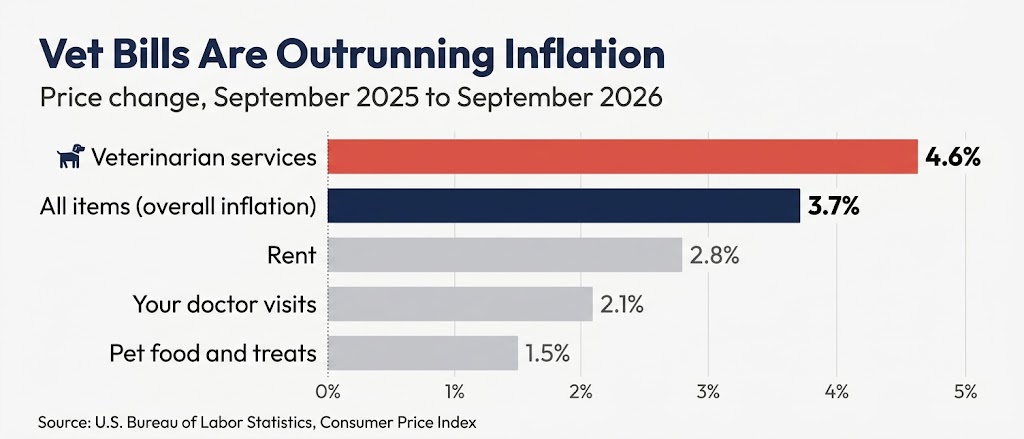
Vet bills are high because veterinarian services prices rose 4.6% in the year ending September 2026, beating 3.7% overall U.S. inflation. Staff shortages, costlier equipment, better medicine and corporate clinic ownership all push veterinary prices higher.
Adopting a shelter dog in 2026 costs more than it used to, and the reasons have almost nothing to do with the dogs. The rising cost of dog ownership comes from places adopters never signed up for: vet clinic buyouts, breed bans in rentals and a year when gas alone jumped 34.2%.
People still love dogs. I see it on almost every shift at Chicago Animal Care and Control, where folks fall hard for a gray-muzzled pibble in about 4 seconds.
Then they do the math. Lately the math is rigged.
So this Let Them Be Dog post names who rigged it. Then it walks through how to adopt anyway, because the dogs at CACC don't read the Consumer Price Index.
Why Are Vet Bills So High Now?
I'll start with the receipts. Everybody loves a receipt.
The Bureau of Labor Statistics checks vet prices every month. Its September 2026 Consumer Price Index report shows veterinarian services up 4.6% over 12 months. Prices for everything Americans buy rose 3.7% over the same year.
The people comparison is what got me. Physicians' services, meaning visits to your own doctor, rose just 2.1%. Oscar's checkup is getting pricier faster than mine, and he doesn't even have a job.
The long view is worse. Gallup says U.S. vet care costs have climbed more than 60% since 2014. Call it a decade-long staircase with no railing.
Some of the climb is honest. Economist Matt Salois told PBS NewsHour in July 2026 that rising vet prices are part inflation, part better medicine, part labor scarcity and part ownership. Clinics can do things now they couldn't do in 2010, and good vet techs aren't cheap or easy to find.
I'll take the first 3 on the chin. The fourth one, ownership, deserves its own section.
Who Owns Your Vet Clinic Now?
Your vet clinic might have been sold while you sat in the waiting room. I'm only half kidding.
The Roll-Up Playbook
Private equity firms buy businesses with a lot of borrowed money. They push profits up, then sell a few years later for more.
In vet medicine, a firm buys a big clinic group and keeps bolting on local practices, 1 at a time. The industry calls it a roll-up. PBS NewsHour reported that corporations owned roughly 10% of U.S. vet practices a decade ago, and estimates now run from 30% to 50%.
Independent vets get buyout offers constantly. One Michigan owner told PBS she turned down a single bid of $8.5 million, which makes her my new favorite person in Ann Arbor.
Where It Hurts Most
Specialty and emergency care is the most consolidated corner of the whole business. PBS put the corporate share at about 75% across specialty care, emergency medicine, oncology and cardiology.
That's the 2 AM bloat run and the cancer consult. Nobody comparison shops during those.
The Federal Trade Commission noticed back in 2022. It made JAB Consumer Partners sell off clinics as a condition of its $1.65 billion deal for Ethos, a specialty and emergency chain. A few months earlier, the FTC put similar conditions on JAB's $1.1 billion purchase of SAGE Veterinary Partners.
The Sign Stays the Same
The sneaky part is the signage. PBS reported that Mars rebrands many of the clinics it buys, but private equity owners usually don't.
So the clinic keeps its cute local name, its old logo and maybe even the same receptionist. The owner is a fund in another state. There's less truly independent clinics every year, and most pet owners have no idea which kind they're walking into.
Most first-week vet panic is a nervous stomach, not a $3,000 emergency. Learn when a new dog's tummy trouble actually needs a vet before you pay ER prices for a stress poop.
Does Private Equity Make Vet Care More Expensive?
I'll be fair here, even though it physically hurts. Salois told PBS that private equity in a clinic isn't automatically good or bad, and that its exact share of rising costs is hard to pin down. He also said consolidation can cut local competition, and less competition pushes prices up. He called independent practices a real competitive force, not nostalgia.
That last point is my whole argument. When 1 company owns the ER, the specialty hospital and 3 clinics in your zip code, nobody nearby is left to undercut it.
Britain already ran this experiment. The Competition and Markets Authority closed its vet market investigation in March 2026. It found less than half of people using a large vet chain even knew their practice was part of one.
The British fixes are almost embarrassingly basic. Clinics must post standard price lists, give written estimates for treatment of £500 or more and show who owns them. Those rules start phasing in during late 2026.
The U.S. has nothing like that yet, so you'll have to ask yourself. The list is coming.
Mars told PBS its prices reflect better medicine, staff shortages and pricier supplies. I believe the vets mean well. I just don't think the spreadsheet does.
How Do Vet Costs Keep Dogs in Shelters?
Shelter dogs don't stay put because nobody wants them. The people who want them are scared of the bill that comes after the adoption fee.
The PetSmart Charities-Gallup State of Pet Care Study surveyed 2,498 dog and cat owners in late 2024 and early 2025. Gallup found 52% of pet owners skipped or declined vet care they needed, and 71% of that group named cost.
It isn't only a low-income problem. 1 in 3 owners earning $90,000 or more who skipped care said they couldn't afford it.
The number that stuck with me is smaller. Only 23% of owners had ever been offered a payment plan by their vet. Yet 64% said a 1-year, interest-free plan would let them at least double what they could pay for lifesaving care.
Most families have a ceiling, and it's lower than a vet ER thinks. 66% of owners told Gallup they could pay $1,000 or less for lifesaving treatment.
When a family hits that ceiling, the dog often comes back through the shelter door. Gallup found 11% of owners know someone who gave up a pet over vet costs. Our 2026 shelter dog report has the full surrender picture, including the housing side.
The vet bill comes later. The first bill is the shopping trip, so grab our pickup day shopping list that skips the junk and keep your vet fund intact.
The Rest of the Bill: Gas, Rent and Groceries in 2026
Even if your vet were a saint, the rising cost of dog ownership got help from nearly everything else this year.
The same BLS report shows overall prices up 3.7% in the year ending September 2026. Gasoline jumped 34.2%, driven by the war in the Middle East and what it did to oil prices. Energy overall rose 20.4%.
Rent rose 2.8%. Chicago-area prices rose 2.9%, which is about the only time this city has been gentle about anything.
One weird bright spot: pet food and treats rose only 1.5%, and pet supplies barely moved at 0.1%. Kibble is behaving. Your vet invoice and gas tank are not.
| Price Category | 12-Month Change | What It Means for Adopters |
|---|---|---|
| Gasoline | +34.2% | Every vet trip, shelter visit and pet store run costs more to drive to |
| Veterinarian services | +4.6% | Exams, vaccines and surgery rose faster than prices overall |
| All items (overall inflation) | +3.7% | The benchmark every other number gets measured against |
| Rent of primary residence | +2.8% | Less room in the budget for pet rent and pet deposits |
| Physicians' services (human) | +2.1% | Your own doctor visits rose less than your dog's vet visits |
| Pet food and treats | +1.5% | Kibble rose slower than inflation, so food isn't the problem this year |
| Pets, pet supplies and accessories | +0.1% | Collars, crates and toys barely moved |
When budgets get squeezed, the dog line gets cut first. Usually not the dog. It's the checkup and the dental cleaning, plus the classic "let's see if it clears up on its own."
Food is the one place you can save without cutting corners. Our feeding basics that won't blow the budget show how to keep a new dog well fed without the boutique bag.
How Do Breed Bans in Rentals Keep Pit Bulls in Shelters?
This one's personal. My dog Oscar is a pibble, and the scariest thing about him is how fast he steals a couch cushion.
Our shelter stats post covers how common breed limits are. Short version: they're everywhere, and pit bull type dogs get crossed off first.
What I want to poke at is the excuse. "It's not me, it's my insurance." Me and every volunteer I know have heard landlords say that almost word for word.
In Illinois, that excuse got a lot thinner. Public Act 103-0011 says insurers can't refuse, cancel or raise rates on a homeowners or renters policy based solely on a dog's breed or mix. Insurers can still act on an individual dog that's been legally declared dangerous or vicious.
The law kicked in at the end of 2023. New York and Minnesota have their own versions, and Michigan lawmakers brought back a similar bill in 2026.
Now the catch. The Illinois law covers insurers, not leases. A landlord can still write "no pit bulls" into a lease and mean it.
I'm not a lawyer, so talk to a tenant rights group before you go to war with a property manager. Still, when a landlord blames insurance, asking which policy says so costs you nothing.
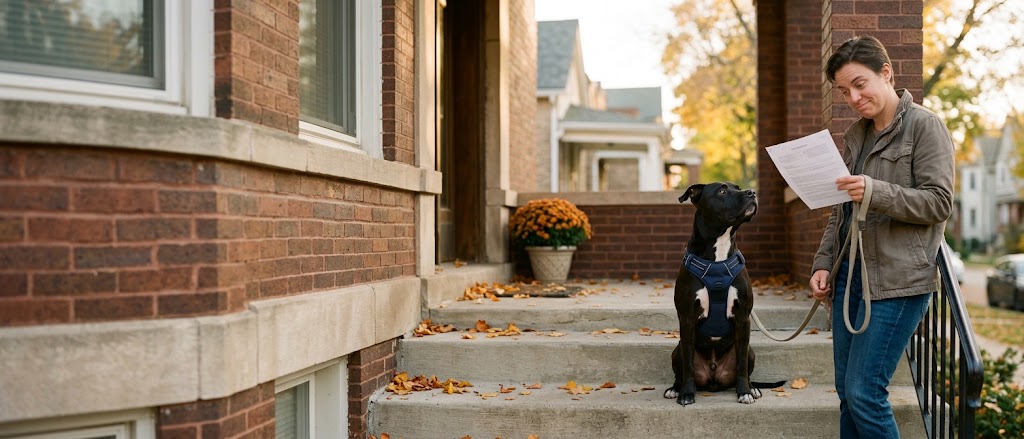
A polite pibble is the best lease negotiator you'll ever have. Start with our leash manners that win over landlords, then bring a video of them to your next apartment showing.
What Should You Look for in a Vet Clinic Now?
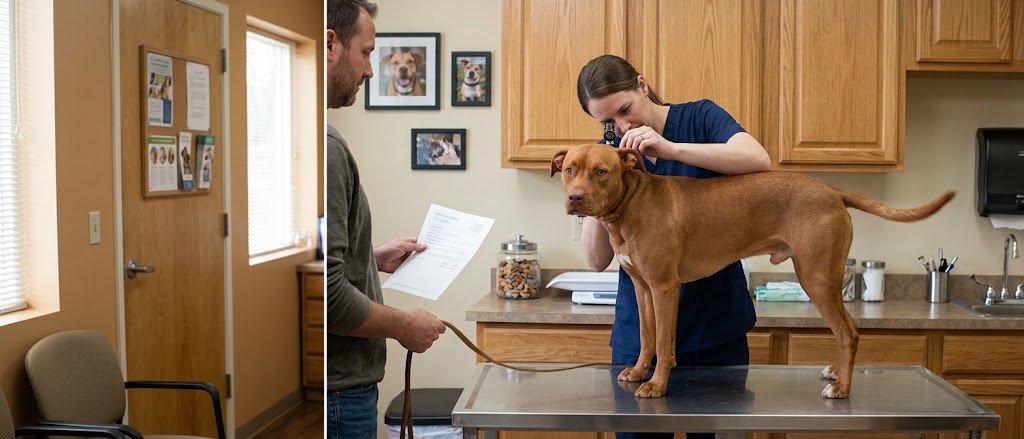
You don't need a finance degree to vet a vet. You need a few questions and some nerve at the front desk.
Ask before your dog needs anything, because a calm Tuesday call beats a panicked Saturday night. And if you find a good independent practice, give it your business. Your appointment is one of the few votes regular people get on vet prices.
Here's what I'd ask, roughly in order of how much it tells you.
- Who owns this clinic? A good front desk will just tell you.
- Can I see prices for an exam, core vaccines and a dental cleaning?
- Will you give me a written estimate before any treatment?
- Do you offer payment plans? Gallup found fewer than 1 in 4 owners had ever been offered one, so asking matters.
- If money is tight, what's plan B? Many vets practice what's called "spectrum of care," which means offering a range of options instead of gold standard or nothing.
- Can I fill prescriptions somewhere else?
A sigh and a glossy brochure tells you something. A straight number means keep that vet forever and send cookies.
How Can You Adopt a Dog When Money Is Tight?
Now the useful part. None of this fixes private equity, but all of it helps get a dog out of a kennel.
Count What the Fee Covers
A shelter adoption fee is one of the best deals in America, and I will argue this at a barbecue. Many shelters send dogs home spayed or neutered, vaccinated and microchipped. Price those out at a private clinic and the fee looks like a coupon.
Buy Insurance Before the First Exam
Pet insurance is all about timing. Most policies won't cover conditions that show up before coverage starts, and most have a waiting period after you sign up.
Some shelters hand out a free trial policy at adoption, so ask. Then shop for a real policy in week 1, before the first exam puts anything in writing.
The first few months are when a new dog's quirks come out, and our guide to the first 3 months with a rescue explains why. You want coverage in place before the surprises do.
Hunt Breed-Inclusive Rentals
Search listings for "no breed restrictions," then call to confirm, because listings lie more than dogs do.
Bring vet records, a shelter reference, a cute photo and proof of renters insurance. In Illinois, mention that insurers can't deny renters coverage over breed alone. Then offer a pet interview, because a sleepy pibble on a mat sells himself.
Use Low-Cost Clinics for Basics
Vaccines, microchips and spay or neuter surgery don't need a fancy hospital. Shelter-run clinics, nonprofits and vet school teaching hospitals often charge less for routine care.
Save your full-service vet for diagnosing anything weird. And start a vet fund on day 1, even $20 a paycheck.
To find one near you, search "low-cost vet clinic near me" or "low-cost vaccine clinic" plus your city. You can also call your shelter and ask which clinics they send adopters to.
| Force | How It Hits Adopters | Workaround |
|---|---|---|
| Vet clinic consolidation | Fewer independent clinics nearby, and corporate owners hidden behind local names | Ask the front desk who owns the clinic, then give an independent practice your business |
| Vet prices up 4.6% in a year | Bigger bills for exams, emergency visits and surgery | Get written estimates, ask for payment plans and buy pet insurance in week 1 |
| Breed bans in rentals | Pit bull type dogs get ruled out before anyone meets them | Search "no breed restrictions," bring vet records and a shelter reference, offer a pet interview |
| Pricier everything, led by gas at +34.2% | Less room in the household budget for routine care | Use low-cost clinics for vaccines and microchips, and count what the adoption fee already covers |
What Adopters Tell Me at Adoption Showings
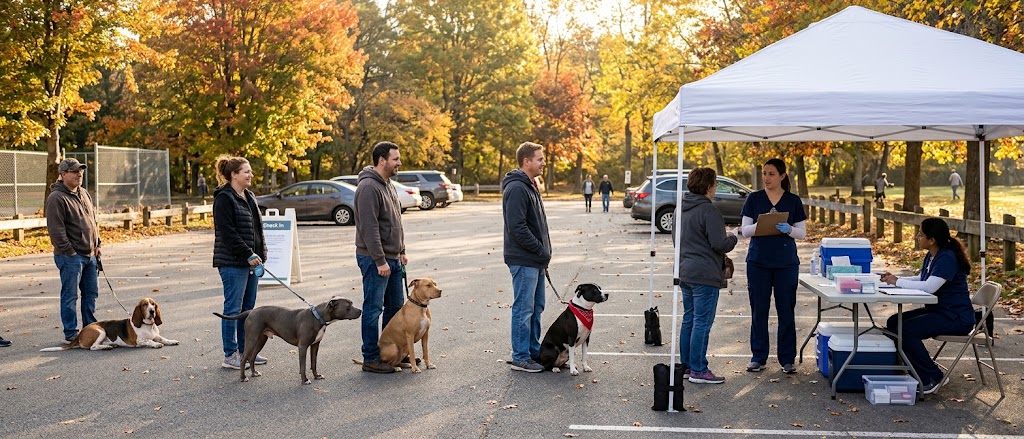
I've volunteered with Chicago shelter dogs since 2017, first at The Anti-Cruelty Society and now at CACC. Money comes up at a lot of adoption showings now. Sometimes it's a joke, and sometimes somebody walks away from a dog they clearly love.
Once a dog does go home, a slow, quiet first couple of weeks matters more than any fancy gear.
Don't Let the Bill Pick Your Dog
The system got pricier, but your next dog is still sitting in a kennel. Find budget-smart guides for new adopters on the Let Them Be Dog homepage, then go meet that dog.
Common questions
Is pet insurance worth it for a newly adopted shelter dog?
Pet insurance for a newly adopted shelter dog is worth pricing out in the first week, before a vet records any pre-existing conditions. Most pet insurance policies exclude conditions that appear before coverage starts. Pet insurance makes the most sense for adopters who could not cover a surprise vet bill of $1,000 or more.
How can I tell if my vet clinic is owned by private equity?
The easiest way to tell if a vet clinic is owned by private equity is to ask the front desk who owns the practice. Many corporate-owned vet clinics keep their original local name after a sale. The clinic website footer, the "about us" page or the business name on a receipt can also reveal a parent company.
Can a landlord in Illinois ban pit bulls?
Illinois landlords can still ban pit bulls and other breeds through lease rules, even though Illinois insurers cannot make breed-based decisions. Illinois Public Act 103-0011 stops homeowners and renters insurers from denying, canceling or raising rates based solely on dog breed. The Illinois insurance law does not cover lease terms set by landlords.
Why is emergency vet care so expensive?
Emergency vet care is expensive because emergency animal hospitals staff vets and technicians around the clock and keep costly equipment ready. Emergency and specialty vet care is also the most consolidated part of the industry, with corporate owners holding about 75%, according to PBS NewsHour. Fewer local competitors leave pet owners with fewer places to compare prices during a crisis.
Is dog food getting more expensive in 2026?
Dog food prices rose more slowly than most prices in 2026, with pet food and treats up 1.5% in the year ending September 2026. Overall U.S. consumer prices rose 3.7% over the same period, according to the Bureau of Labor Statistics. Veterinarian services rose 4.6%, so vet care is driving the rising cost of dog ownership far more than kibble.
Do low-cost vet clinics give good care?
Low-cost vet clinics give good care for routine services like vaccines, microchips and spay or neuter surgery. Many low-cost clinics are run by shelters, nonprofits or veterinary schools and keep prices down by focusing on high-volume routine care. A full-service vet clinic is still the better choice for diagnosing illness or managing a chronic condition.
About the Author
I’m Jeff Molitor and I adopted my first dog at 39 (Cooper Wonder) and have volunteered with Chicago shelter dogs since 2017, first at The Anti-Cruelty Society and now at Chicago Animal Care and Control. I help with dog handling, agility, adoption showings and support, photography and marketing. I love all dogs, but I gravitate toward momma dogs, seniors, black pibbles and the ones with cropped ears. Basically whoever’s been overlooked the longest. Jeff is dad to Oscar Wonder (pibble) and Gary Wonder (our cat).
This article shares what we have learned from our own experience. It is not medical advice, and we are not veterinarians. If you have any concerns about your dog's health, please check with your vet.