Settling In
The 3-3-3 Rule for Rescue Dogs, Explained Day by Day
Published · By Jeff Molitor
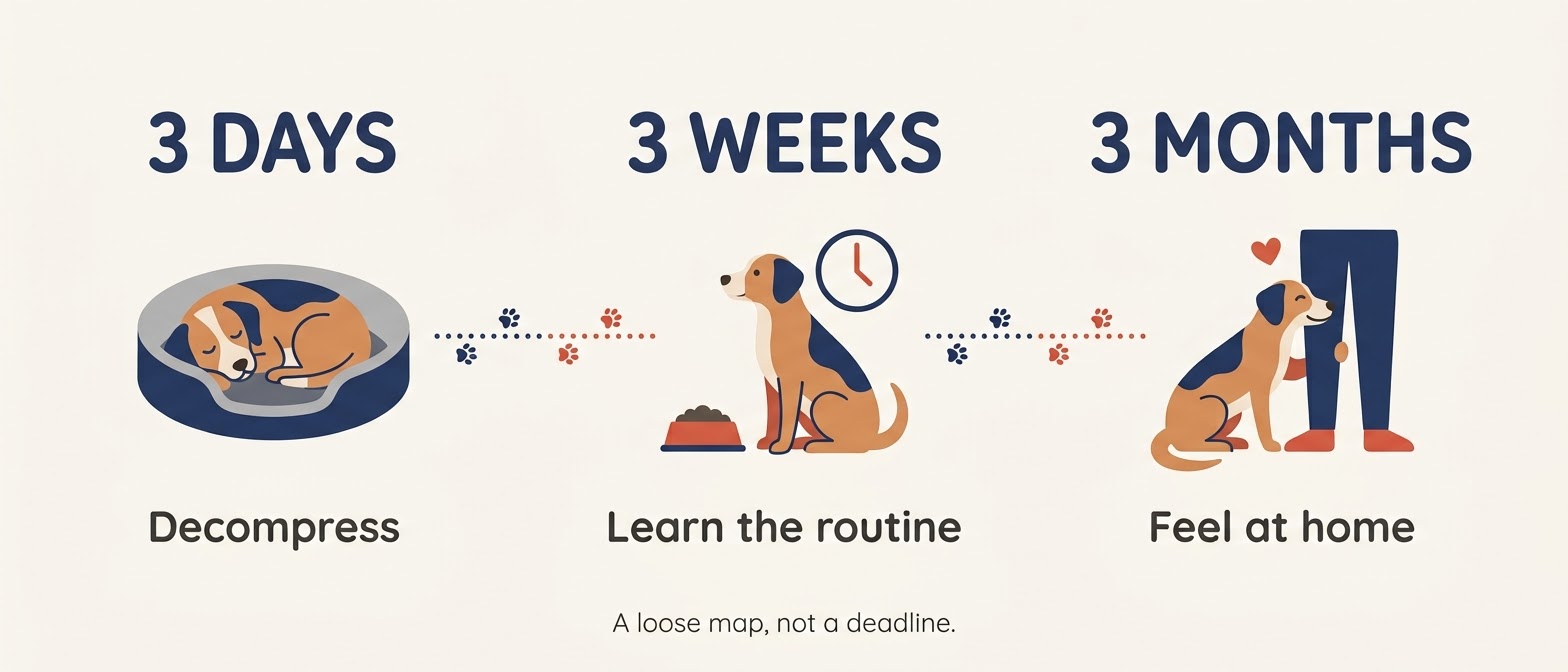
The 3-3-3 rule for rescue dogs gives a new dog 3 days to decompress, 3 weeks to learn routines and 3 months to feel at home.

The short answer
The 3-3-3 rule for rescue dogs gives a new dog 3 days to decompress, 3 weeks to learn routines and 3 months to feel at home. This is a rough guide, not a deadline.
The 3-3-3 rule for rescue dogs gives a new dog 3 days to decompress, 3 weeks to settle in and 3 months to trust. I love this rule. I also think most people read it wrong, like a deadline their dog has to hit.
Your dog never saw the rule. One dog walks in the door and naps on the couch by lunch. Another spends 10 days behind the dryer. Both dogs are normal.
I wrote this Let Them Be Dog guide to show you what each stage really looks like, day by day and week by week. You'll also learn what to do when your dog runs behind, and how to tell slow progress from a real problem.
What Is the 3-3-3 Rule for Rescue Dogs?
The 3-3-3 rule is a simple timeline that shelters and rescue groups share with new adopters. There's no single study or author behind it. It grew out of what rescue folks kept seeing, dog after dog.
Here's how the stages break down.
The first 3 days are about stress. Your dog just left a loud kennel, rode in a strange car and walked into a house full of new smells. Most dogs act small at first: quiet, careful and a bit frozen.
The first 3 weeks are about patterns. Your dog starts to learn when breakfast shows up and which door leads to the yard. A little personality leaks out, and so does some testing of house rules.
The 3-month mark is about belonging. By now most dogs know the house is theirs too. They sleep hard, play more and show you who they really are.
A rough timeline helps because it resets what you expect. Lots of new owners picture a grateful dog curled up on their lap on day 1. Real shelter dogs often hide, skip dinner or pee on the rug, and the rule reminds you it's early.
But a timeline turns into a report card if you let it. I'd rather you watch your dog than the calendar.
What Happens in the First 3 Days With a Rescue Dog?
Shelter life is hard on a dog's body. A 2019 study in PeerJ followed 207 shelter dogs on 1 or 2 night foster sleepovers. The dogs' cortisol, a stress hormone, dropped during their stay, and the dogs got their longest stretches of unbroken rest in the foster homes (Gunter et al., 2019).
That's good news for you. It also tells you your dog shows up running on stress, and the first few nights in a real home are a huge shift. Plan for a slow, boring weekend.
Day 1: The Big Shutdown
Day 1 is usually quiet. Most dogs sniff every corner, then pick a spot and stay put. The spot might be behind the couch, under a desk or deep in an open crate.
Watch for panting, pacing, a tucked tail and whale eye, where the whites of the eyes show. Lots of dogs won't touch food. Some hold their pee for hours and then have an accident on the rug, which is annoying and totally normal.
Your job on day 1 is small. Show the dog water, a bed and the potty spot. Then sit down and be dull. Skip the pet store trip, the bath and the neighbor who "just wants to say hi."

Day 2: Testing the Air
Day 2 brings tiny steps. Your dog may creep out to watch you cook, then slip back to their hiding spot. Appetite comes back for many dogs, though plenty still pick at their bowl. If meals are a struggle, the feeding tips for a new dog on our homepage can help.
Keep everything on a clock. Meals, potty trips and bedtime should happen at the same times. Walk one short route or just sniff around the yard. Let your dog come to you instead of reaching out for pets.
Day 3: The First Real Look
By day 3 a lot of dogs take a deeper breath. You might get a soft wag, a big sigh as they flop down or a first real look into your eyes.
Start a little hand feeding now. Say the dog's name, then hand over a treat. Keep it to a minute or 2 and stop while it's still fun.
Day 3 is not a finish line, though. Keep the house calm for another week or so even if your dog seems fine.
Bringing a dog home this week? Read the decompression plan for new adopters on our homepage before the car ride.
What Should You Expect in the First 3 Weeks With a Rescue Dog?
The first 3 weeks feel different than the first 3 days. The fog lifts. Your dog stops just surviving and starts paying attention to how your house works.
It's also when the so-called honeymoon period ends.
Week 1: Routine Takes Root
Week 1 is about rhythm. Your dog learns that the alarm means breakfast and the leash means outside. Expect a lot of sleep, more than you'd guess.
Potty training may slide backward, even for a dog the shelter called "house trained." New house, new rules. Take your dog out after every meal, nap and play session, and praise the second they finish. Most dogs have less accidents by the end of week 1 if you stick to the schedule. Our guide to house training an adult rescue dog lays out a full 2-week plan.
Week 2: Personality Peeks Out
Somewhere in week 2, your dog starts acting like a dog. Maybe the first play bow. Maybe zoomies after a bath, or a bark at the mail carrier that surprises both of you.
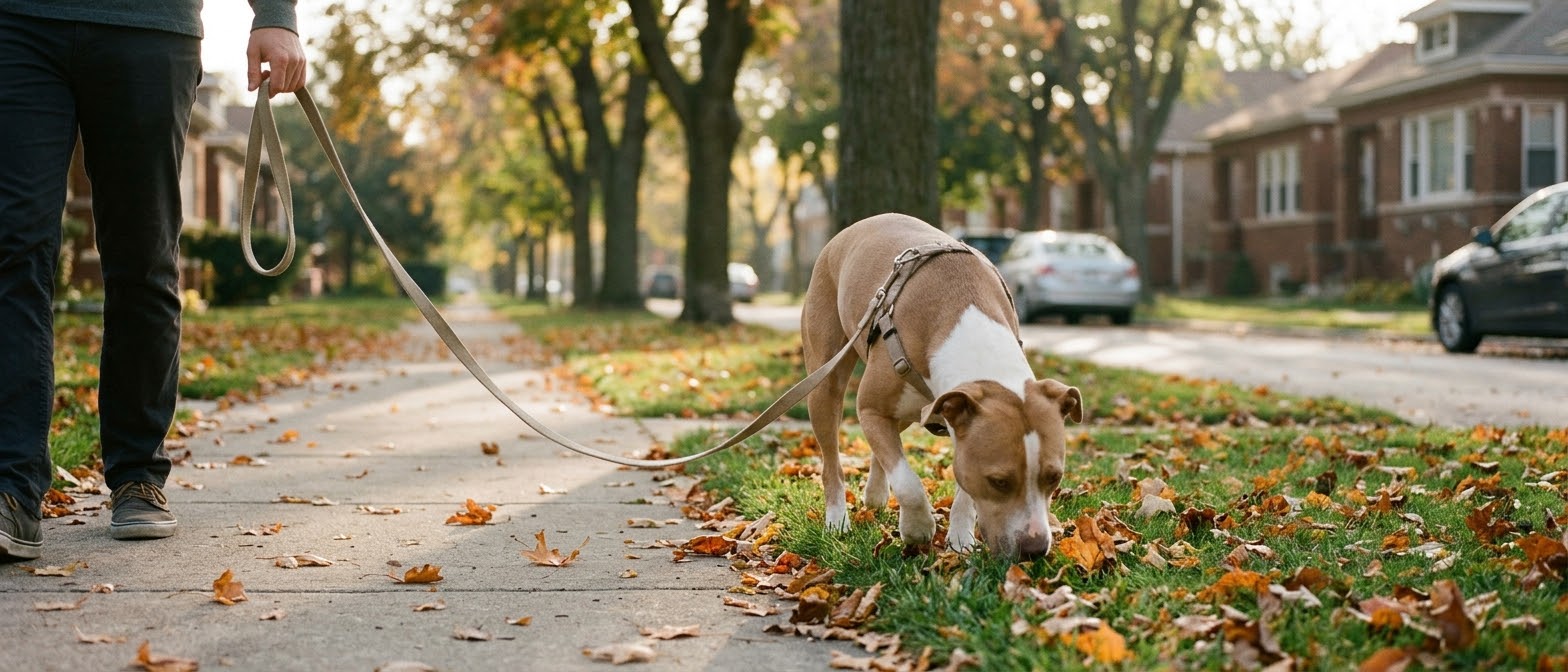
This is when boredom kicks in, and boredom chews shoes. Give your dog's brain some work. Sniff walks, a snuffle mat and a puzzle feeder at dinner tire a dog out faster than a long jog, and you'll find more easy enrichment ideas on our homepage.
Week 3: Boundaries Get Tested
Week 3 is when a lot of adopters text a friend: "Who is this dog?"
Your dog may jump on the counter, steal a sock or tune out the cue they nailed last week.
Nothing went wrong. As stress drops, your dog feels safe enough to try things. Some hidden quirks show up too, like guarding a chew or barking at dogs on the leash.
Answer with training, not punishment. Short sessions with treats work best for a dog with an unknown past. The American Veterinary Society of Animal Behavior backs reward-based methods over fear and force in its humane dog training position statement. I'd try and keep sessions under 5 minutes, end on a win and skip any tool that hurts or scares.
What Changes by Month 3 After Adopting a Rescue Dog?
Month 3 is the payoff, though "feels at home" looks different for every dog.
Month 1: Comfort Builds
By the end of month 1, most dogs have a favorite nap spot and a clear read on your schedule. They might start to greet you at the door. Handling gets easier too, so this is a good time to practice paw touches and ear checks before the first nail trim.
Month 2: Bonds Get Deeper
Month 2 is often when a dog picks "their person." You'll see more eye contact, more leaning and more following you to the bathroom.
That follow-you-everywhere habit is sweet, but keep an eye on it. If you went back to work or changed your hours, watch for whining, chewing doors or accidents only when you're gone. Those are early signs of separation anxiety in rescue dogs, and they're easier to fix early.
Month 3: Home Feels Like Home
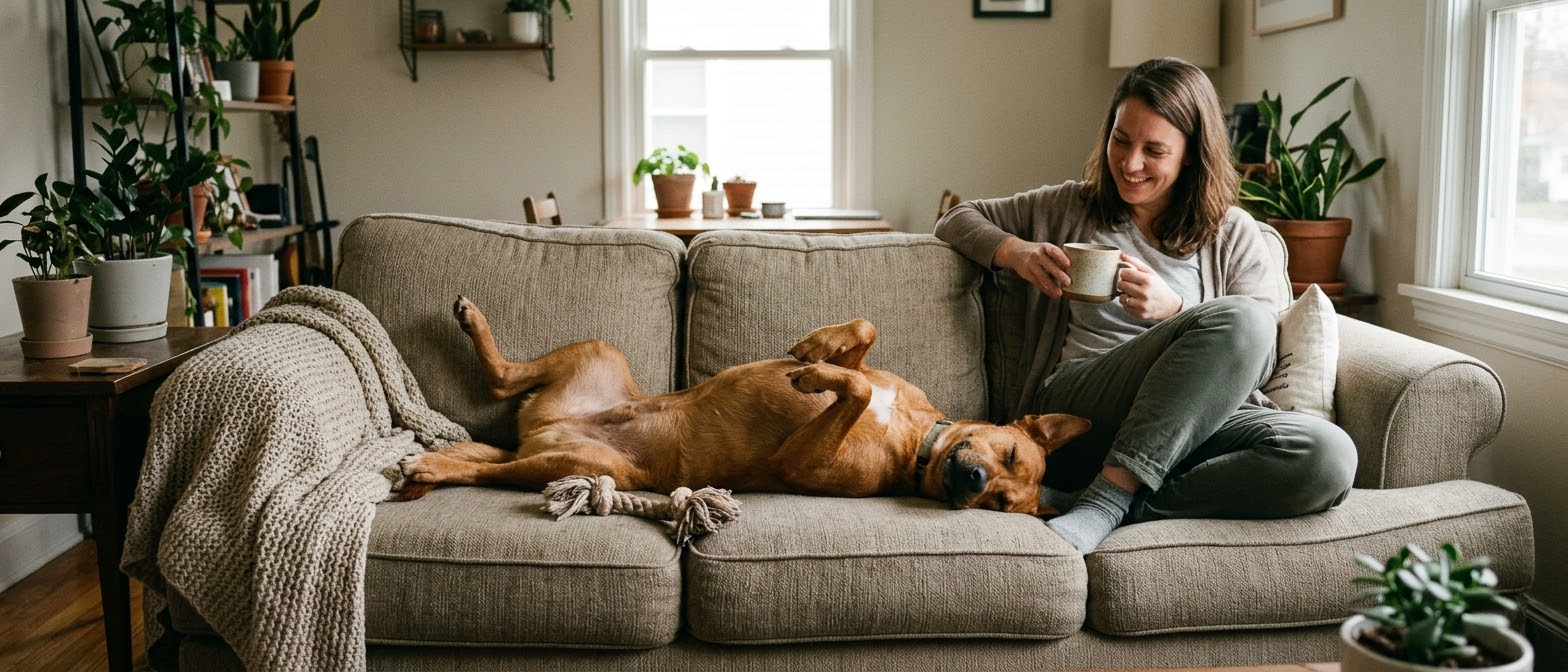
At 3 months, a lot of dogs sleep belly-up. They bring you toys, they stretch out on the couch and they'll lay down by the door when you leave instead of panicking. Walks feel easier because your dog knows the block.
You'll also meet the real dog now. A "shy" dog might turn out to be a clown. Month 3 is a great time to set training goals for the next 6 months.
The 3-3-3 Rule Timeline at a Glance
Some people like stories. Others want a chart they can stick on the fridge.
The table below sums up each stage of the 3-3-3 rule: what you'll likely see, what helps most and what "running behind" can look like. Use it as a check-in tool, not a test.
| Stage | What You'll Likely See | What Helps Most | Running Behind Looks Like |
|---|---|---|---|
| First 3 Days | Hiding, panting, skipped meals, potty accidents and little interest in play | A quiet house, set meal and potty times, no visitors and short sniff breaks | Still hiding most of the day and refusing food after the first week |
| First 3 Weeks | Routine sinks in, first play bows and zoomies, chewing and testing house rules | Short reward-based training sessions, sniff walks, puzzle feeders and a house training schedule | Still startling at everyday house sounds or avoiding people at week 3 |
| First 3 Months | Deep sleep, a steady appetite, greetings at the door and a full personality | Clear training goals, slowly building alone time, a steady routine and a vet check-in | Little interest in people or play, or new fear and guarding at 3 months |
Ready to start teaching cues? Our homepage covers reward-based training basics for brand new rescue dogs.
What If Your Rescue Dog Is Behind Schedule?
This is the part of the 3-3-3 rule nobody prints on the handout. Lots of dogs run late.
Think about where your dog came from. A dog from a hoarding case, a puppy mill or months in a kennel may have never lived in a house. Stairs are new and the TV is scary.
Those dogs aren't failing the rule. They're starting from further back.
Pain is the other big reason dogs stall. A sore hip, bad teeth or an ear infection can make a dog grumpy, jumpy or slow to warm up. Book a vet visit if your dog seems stuck, before you assume it's all behavior.
Here's the slow-down plan I'd use. Shrink your dog's world to 1 or 2 quiet rooms with a baby gate, and count a single tail wag as a win.
Keep a simple daily log of eating, hiding time and how often your dog comes over on their own. Trends over 2 weeks tell you more than any single bad day.
Then know where the line is. Slow progress means your dog is still moving forward, just in small steps. Stuck means nothing improves for weeks, or things get worse. Growling, snapping, nonstop pacing, panic when alone or no eating for more than 48 hours all mean it's time to call a vet or a certified behavior pro.
| Behavior | Usually Normal Slow Progress | Call a Vet or Certified Behavior Pro |
|---|---|---|
| Eating | Picks at food at first, then eats a little more each day | No eating for more than 48 hours, or vomiting and diarrhea |
| Hiding | Hides less from week to week and comes out for meals | Hides all day with no change after several weeks |
| Body Language | Startles at noises but recovers within seconds | Nonstop pacing, trembling or panting with no clear cause |
| People | Slow to approach but takes treats from family members | Growling, snapping or lunging at people in the home |
| Alone Time | Whines for a short time, then settles down | Panic, clawing at doors or getting hurt trying to escape |
For a deeper look at the factors that speed up or slow down adjustment, read our breakdown of how long rescue dogs take to adjust. It covers age, breed and history in detail.
What Signs Show a Rescue Dog Is Adjusting Well?
Watch the body before you watch the behavior. A settled dog looks loose. The mouth hangs a little open, the eyes look soft and the tail swings wide instead of stiff and high.
Sleep is a big clue. A stressed dog naps with one ear up, while a settled dog sprawls out and snores right through your footsteps. Steady meals without coaxing tell you the stress is easing too.
Then look at choices. A dog who comes to find you, or picks the spot next to you on the couch, is showing trust. A dog who could leave and stays is telling you something.
The ASPCA's canine body language guide has clear examples of relaxed and stressed postures if you want a visual cheat sheet. We also walk through the early stress signals in our post on reading dog body language.
Does the 3-3-3 Rule Work for Puppies, Seniors and Fearful Dogs?
Puppies adjust fast. Most shake off the move in a day or 2 and want to play. The hard part is everything else: chewing, potty training and meeting the world. For a puppy, the 3-month stage is more about manners than trust.
Seniors are a mixed bag. Lots of older dogs settle quickly because they've lived in homes before. Others have stiff joints or poor eyesight that make a new house harder to learn, so book a vet visit early and put rugs on slick floors.
Fearful and under-socialized dogs take the longest. For them, I'd stretch every stage. Think 3 weeks to decompress and 3 months just to feel safe with you. A dog who came from a foster home often moves faster, since doors, dishwashers and stairs are already old news.
Homes with a resident dog need extra care too. Keep early meetings short and feed the dogs apart for the first few weeks.
Want a plan for the quiet weeks ahead? Our step-by-step guide to dog decompression covers visitors, outings and handling.
Let Your Rescue Dog Set the Pace
Every dog runs on their own clock, and that's okay. Find checklists, trusted guides and more resources for new dog adopters on the Let Them Be Dog homepage.
Common questions
Who came up with the 3-3-3 rule for rescue dogs?
The 3-3-3 rule for rescue dogs has no single known author or study behind it. Shelters and rescue groups have shared the rule for years in adoption packets and online posts. The 3-3-3 rule works best as common rescue wisdom based on what adopters see, not as a scientific standard.
Can I walk my rescue dog during the first 3 days?
Short, calm walks are fine for a rescue dog during the first 3 days if the dog seems comfortable. A quiet sniff around the yard or block works better than a long hike or busy park. New rescue dogs can be flight risks, so a secure harness or martingale collar and leash should stay on during every walk.
When should visitors meet a new rescue dog?
Visitors should wait at least 2 weeks before meeting a new rescue dog, and longer for a shy dog. Early guests add stress during decompression and can trigger fearful reactions. When guests do visit, ask each person to ignore the dog and toss treats so the dog can choose when to say hello.
Is it normal for a rescue dog to sleep all day in the first week?
Heavy sleep is normal for a rescue dog in the first week home. Shelter noise and constant activity leave many dogs short on rest, so a quiet house lets a new dog catch up. A veterinarian should check any dog whose heavy sleep comes with vomiting, diarrhea, coughing or a full refusal to eat.
Can a rescue dog regress after 3 months?
Rescue dog regression after 3 months is common after a move, a new pet, a schedule change or a scary event. Regression usually looks like hiding, accidents or fear of things the dog handled well before. Going back to the early routine for a few weeks helps, and a vet visit can rule out pain.
Does the 3-3-3 rule apply to dogs adopted from foster homes?
The 3-3-3 rule still applies to dogs adopted from foster homes, though foster dogs often move through the stages faster. A foster dog has already learned house life, like doors, stairs and kitchen noise. New people and new smells still cause stress, so a former foster dog needs a quiet first few days too.
When should I call a professional about my rescue dog's adjustment?
A rescue dog who stops eating, shows sudden aggression or seems to be in pain needs a veterinarian first. Medical problems often look like behavior problems. A certified trainer or veterinary behaviorist is the next call for growling, snapping, nonstop pacing or panic when left alone. Getting help early keeps small problems from turning into habits.
About the Author
I’m Jeff Molitor and I adopted my first dog at 39 (Cooper Wonder) and have volunteered with Chicago shelter dogs since 2017, first at The Anti-Cruelty Society and now at Chicago Animal Care and Control. I help with dog handling, agility, adoption showings and support, photography and marketing. I love all dogs, but I gravitate toward momma dogs, seniors, black pibbles and the ones with cropped ears. Basically whoever’s been overlooked the longest. Jeff is dad to Oscar Wonder (pibble) and Gary Wonder (our cat).
This article shares what we have learned from our own experience. It is not medical advice, and we are not veterinarians. If you have any concerns about your dog's health, please check with your vet.