Bringing Your Dog Home
Dog Decompression: What It Is and How to Do It Right
Published · By Jeff Molitor
Dog decompression is a quiet 2-week rest that lets a new shelter dog shed stress before meeting guests, busy places or lots of handling.
The short answer
Dog decompression is a quiet 2-week rest that lets a new shelter dog shed stress before meeting guests, busy places or lots of handling.
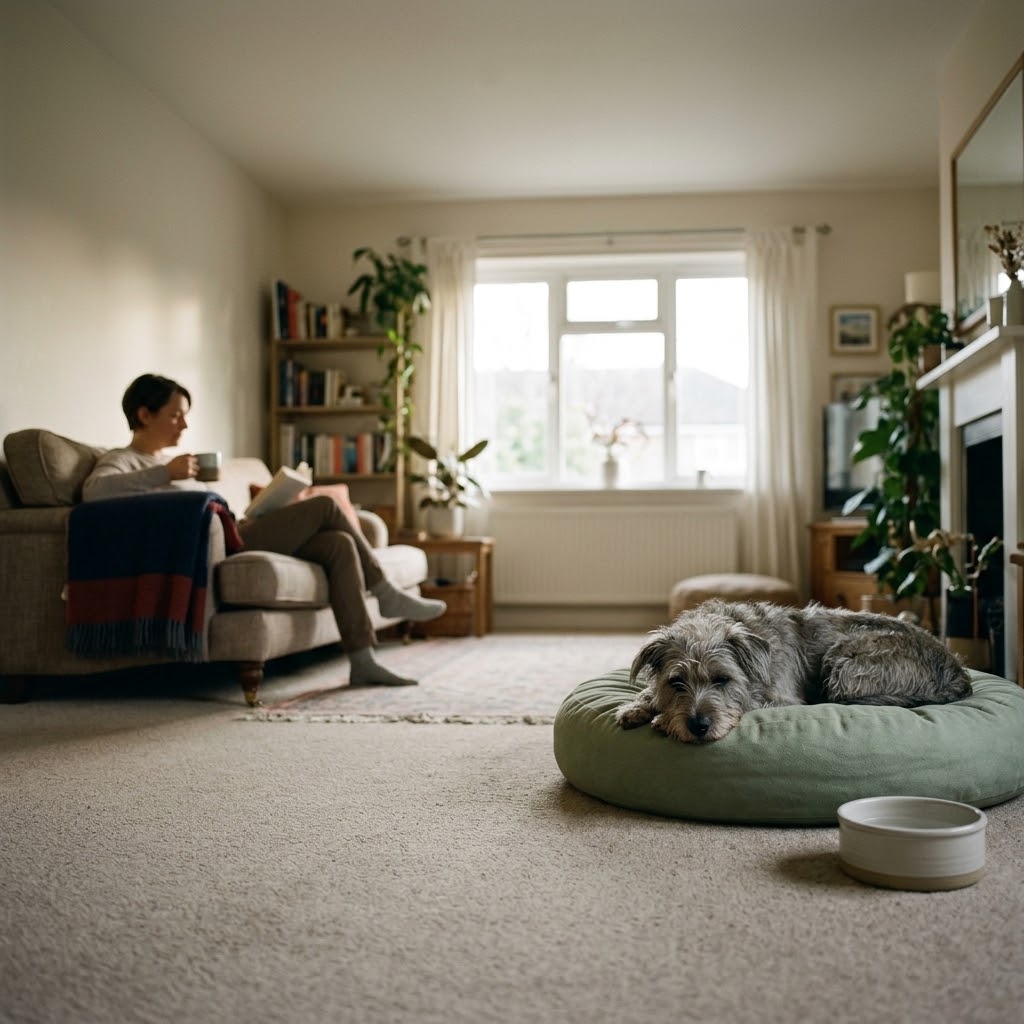
Dog decompression is the quiet stretch after adoption when a new dog rests, sheds shelter stress and learns your home is safe. Many rescues suggest about 2 weeks of dog decompression, and plenty of adopters cut it short because the dog looks "fine" on day 2.
I get it. You waited months for this dog, and your sister wants to meet him Saturday.
Your sister can wait. (Sorry, sister.)
This Let Them Be Dog guide explains decompression in plain words and why shelter stress hangs on after the car ride home. Then I'll hand you a 14-day quiet-home plan built around 4 dials you control: visitors, outings, routines and handling.
What Is Dog Decompression?
The word comes from scuba diving. Divers who shoot up to the surface too fast get the bends, so they rise slowly and stop along the way. Your new dog needs the same slow climb.
Think about the worst trip you've ever taken. A delayed flight, a loud airport, a hotel room that smelled weird. When you finally get home, you don't want a party. You want sweatpants, your own bed and nobody asking you questions.
A shelter dog has been on that trip for days or weeks. Decompression is you being the quiet house at the end of it.
Here's what decompression is not. It's not locking your dog in a back room or ignoring him. He still gets meals, potty breaks, short walks and you, sitting nearby and being pleasantly dull.
What changes is the volume of new stuff. Fewer faces and fewer places, plus less touching. Lots more sleep.
If you've read about the 3 days, 3 weeks and 3 months timeline, decompression is the front end of that map. This post zooms way in on the first 14 days and what you actually do with them.
Why Does Shelter Stress Stick Around After Adoption?
You'd think leaving the shelter would flip a switch. Car ride, new bed, done. Bodies don't work that way.
Cortisol Takes Its Time
Cortisol is the body's main stress hormone. In a 1997 study of dogs at a county shelter, researchers at Wright State University measured it in shelter dogs. Dogs in their first 3 days had higher levels than dogs who'd been there more than 9 days.
A dog's first-day levels were also higher than those of pet dogs tested at home. The authors described shelter confinement as a prolonged activation of the stress system.
Now here's the part nobody tells you. Adoption is another first day. New smells, new people and new rules all hit at once, and your dog's body has no idea this move is the good one.
Sleep Debt Piles Up
Shelters are loud. Dogs bark at every door, hoses run at 7 AM and strangers walk past the kennel all day long.
Most shelter dogs nap a lot but rarely sink into deep, easy sleep. So your new dog shows up tired in a way coffee can't fix. Mine would need about 4 gallons.
The Stress Bucket Fills Fast
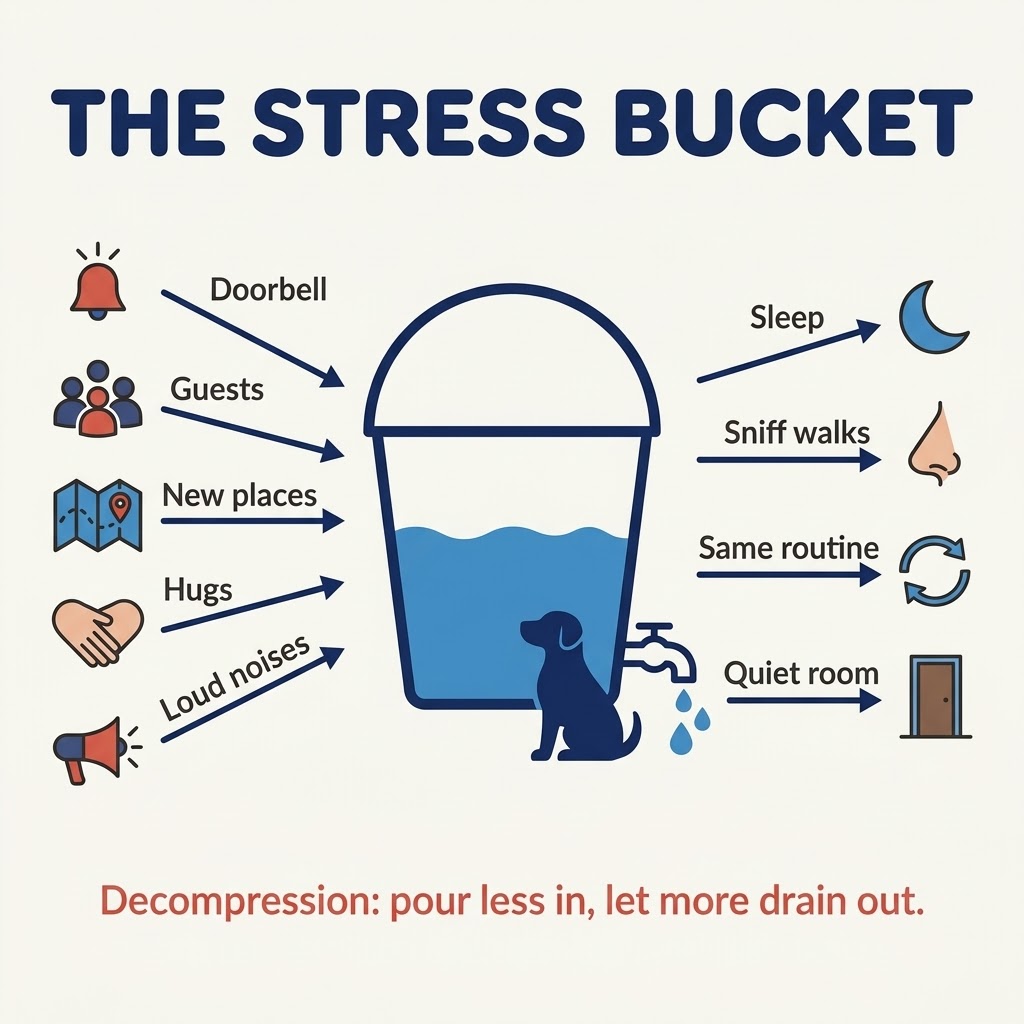
Trainers often talk about a stress bucket. Every new thing pours a little water in: the doorbell, the vacuum, a kid's surprise hug.
One cup at a time is fine. Stack them in 1 afternoon and the bucket spills over as a growl, a bolt out the door or a puddle on the rug. Trainers call that trigger stacking.
A shelter dog arrives with the bucket already half full. Decompression just means you pour less in while the bucket drains.
Bringing a dog home soon? Skim our homepage decompression guide before you make the first car ride.
Your 2-Week Dog Decompression Plan at a Glance
Here's the whole plan in 1 table. Print it, tape it to the fridge, point at it when your uncle asks why he can't bring his 3 dogs over.
The 14 days split into 3 phases. Each phase turns the 4 dials up a tiny bit: visitors, outings, routines and handling.
Rescue dog decompression doesn't run on a stopwatch, so none of this is law. If your dog is still hiding on day 6, stay in the Days 1 to 3 row longer. Your dog earns the next row by eating, sleeping and exploring like a dog who feels okay.
| Phase | Visitors | Outings | Routines | Handling |
|---|---|---|---|---|
| Days 1 to 3 | Household only. Put the dog in the decompression room with a chew before any worker arrives. | Yard or curb only, 5 to 10 minutes at a time for potty and sniffing. | Set wake-up, meal, potty and bedtime times on day 1 and keep them. | Let the dog approach. Short chest scratches only when invited. |
| Days 4 to 7 | Still household only. Send guests a date for later. | 1 quiet loop at quiet times, 15 to 20 minutes, in a martingale collar or snug harness. | Same schedule every day. Add 2-minute departures, like a trip to the mailbox. | Use the 5-second test. Book a vet checkup this week. |
| Days 8 to 14 | 1 calm adult guest for 20 to 30 minutes. The guest sits, ignores the dog and tosses treats. | Add 1 new quiet spot with a 15 to 20 foot long line. Car rides only go to the vet. | Add 2 to 3 minute name games or hand targets between naps. | Gentle brushing and paw touches paired with treats, if the dog enjoys them. |
| Day 15 and On | Add guests 1 at a time, outdoors or seated. | Try 1 new place per week, still at quiet times. | Keep the core schedule and slowly stretch alone time. | Plan the first bath or nail trim with treats and breaks. |
What Should a Dog Decompression Space Include?
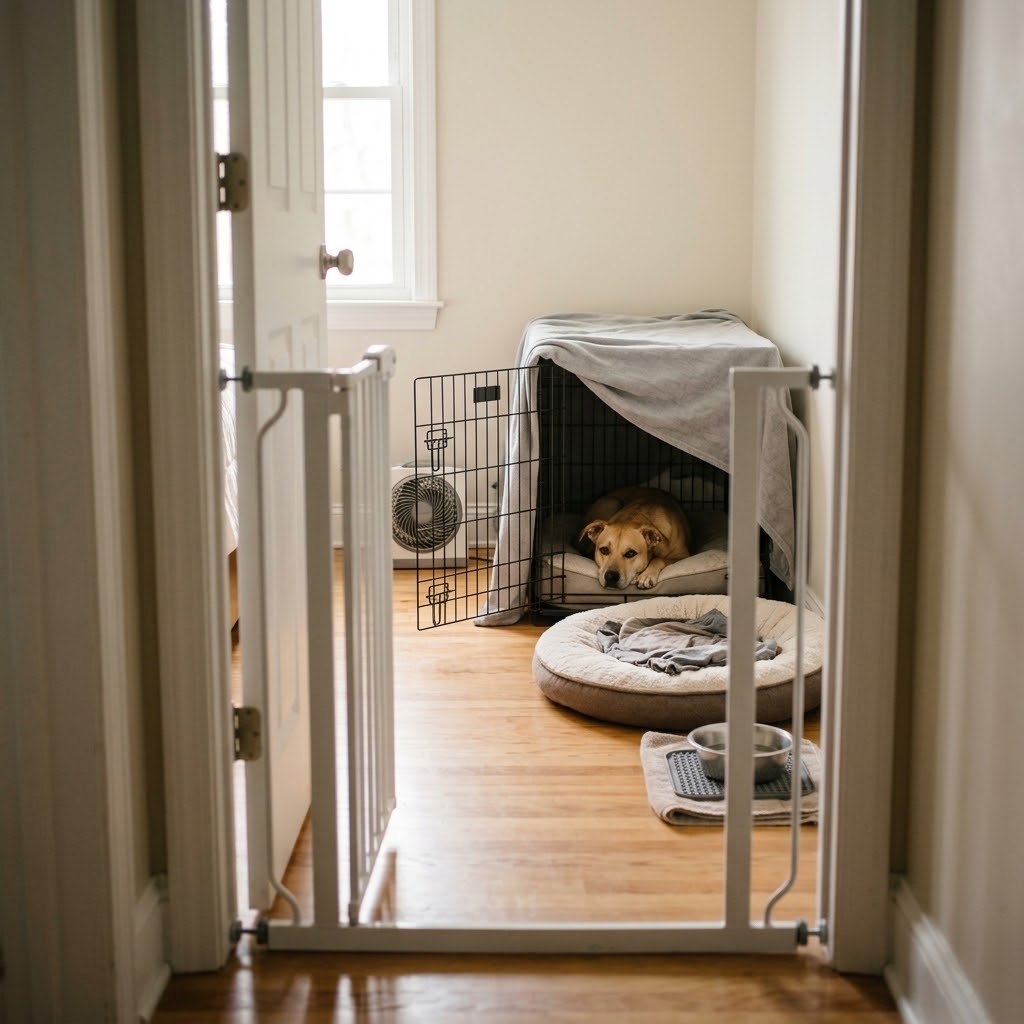
Pick the room first. A spare bedroom works great, and so does a gated end of the kitchen. Skip the front hallway, where every knock lands right on top of a nervous dog.
Next, give your dog a den. A crate with the door propped open and a blanket over the top feels like a cave. If your dog hates crates, an open-sided bed under a desk does the same job.
Add water, a washable bed and 1 or 2 chews your dog can't swallow whole. A lick mat with a smear of wet food is a nice touch.
A T-shirt you've slept in tells your dog who lives here. A fan covers the creaks of a house he doesn't know yet.
Last tip. Your dog might ignore the whole setup and pick the gap behind the couch.
Let him. Move the bed there. You're not decorating for Instagram.
If you're building this space for your very first night with a rescue dog, that guide walks through the evening hour by hour.
How Should You Handle Visitors During Dog Decompression?
Visitors are the dial most adopters crank up first. Totally fair, you want to show him off.
But to your dog, every guest is a stranger who smells weird and reaches for his head. Less visitors in the first 2 weeks means less water in that bucket.
So send a group text before pickup day. Something like: "He's decompressing for 2 weeks. You're invited on the 20th. Bring cheese."
Some visitors you can't cancel, like the plumber. Put your dog in his decompression room with a chew 5 minutes before the plumber shows up.
Then there's the neighbor who says he's "great with dogs." Every dog person says this. Every one. He can wait too.
Once Days 8 to 14 roll around, try 1 calm adult guest for 20 or 30 minutes. Your guest sits, talks to you and tosses a treat now and then without looking at the dog.
Your dog decides if he wants to sniff a shoe. If he stays across the room the whole time, the visit still counts as a win.
What I've Seen From the Kennel Side
I've volunteered with shelter dogs in Chicago since 2017, first at The Anti-Cruelty Society and now at Chicago Animal Care and Control. Most of my shifts are dog handling, enrichment and photos, which gives me a front row seat to kennel noise.
The dog you meet in a kennel is a tired, overloaded version of the real one, so give the real one a couple of weeks to show up.
Keeping guests away means more time at home. Try our sniff-friendly enrichment games that work in a single room.
What Should Outings Look Like During Dog Decompression?
Your dog does not need to see Target on a Saturday. Nobody does.
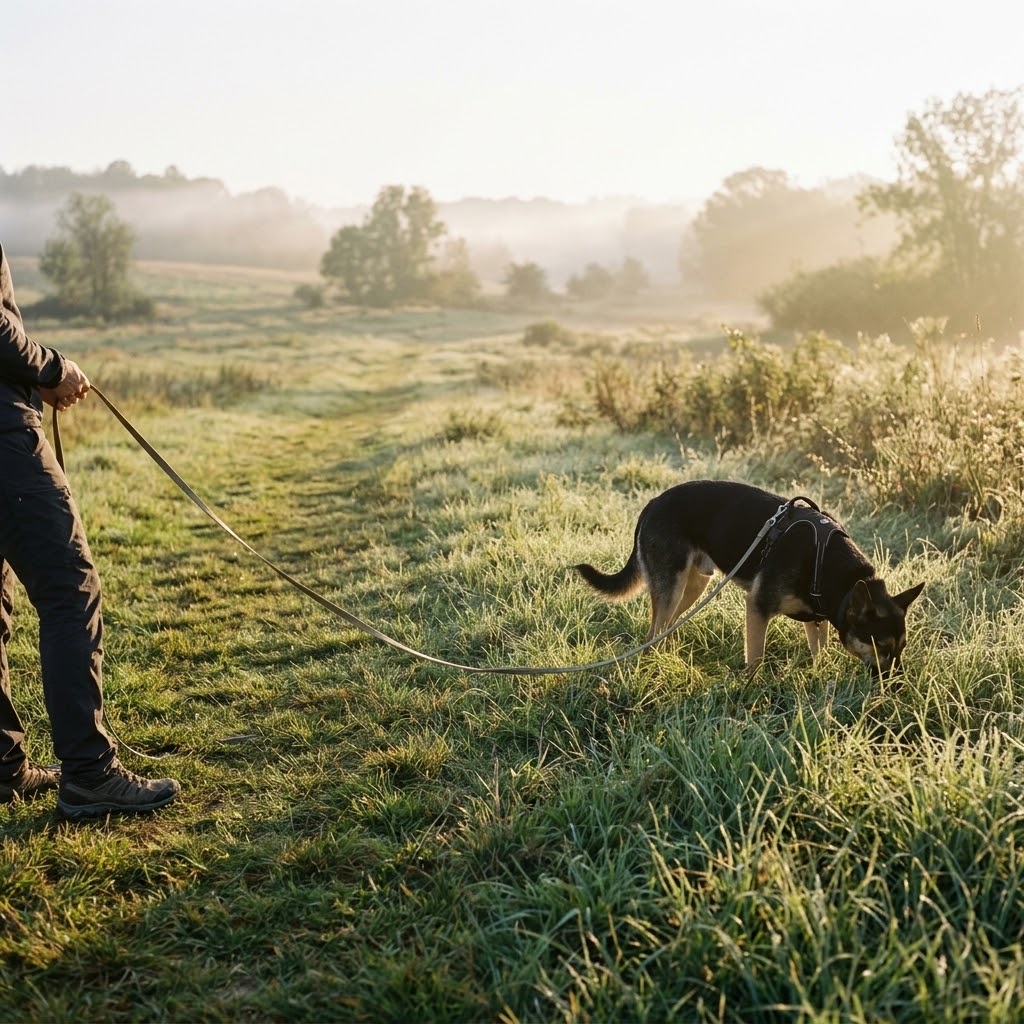
For the first 2 weeks, the world shrinks to your yard, your block and maybe 1 empty field. That's plenty, because a 15-minute sniff can tire a dog out more than a long jog.
In a 2019 study summarized by Purdue University's Canine Welfare Science team, pet dogs did daily nosework for 2 weeks. They got more optimistic on a judgment test, while dogs who practiced heelwork didn't change.
2 weeks, the same length as this plan. Probably a coincidence, but I'm keeping it anyways.
Days 1 to 3
Stick to the yard or the curb for 5 to 10 minutes at a time.
Days 4 to 7
Walk 1 quiet loop at quiet times, like early morning. Use a martingale collar or snug harness, since new dogs can be flight risks.
Days 8 to 14
Add 1 new quiet spot, like an empty school field on a Sunday morning. A 15 to 20 foot long line gives your dog room to wander. Car rides only go to the vet.
What Daily Routine Helps a Rescue Dog Decompress?
Routine is the easiest dial, and it costs nothing.
Humane World for Animals advises adopters to keep feeding, walks and their own comings and goings at the same times for the first few weeks. Dogs can't read a clock. They read patterns.
A sample day might be potty at 6:30 AM, breakfast at 7:00 in a puzzle bowl, then a long nap. Noon brings a potty break and a short sniff.
Afternoons are naps and a chew. Dinner lands at 5:30, then an evening sniff walk and a last potty trip around 9:30. Boring is the whole point.
Use the same food, bowl and spot at every meal. Our mealtime routine tips cover picky eaters and dogs who inhale dinner in 4 seconds.
Protect naps. Every dog and every adopter are different, but most new dogs sleep a huge chunk of week 1.
Also practice tiny departures, like a 2-minute trip to the mailbox. Short trips teach your dog that people leave and come home.
How Much Should You Touch a Dog During Decompression?
This one's hard. You adopted a dog, and you want to squish him.
To your new dog, you're still basically a stranger. A 2012 petting study looked at 24 dogs. How well a dog knew the person petting changed how often the dog showed appeasement signals, like lip licks and looking away.
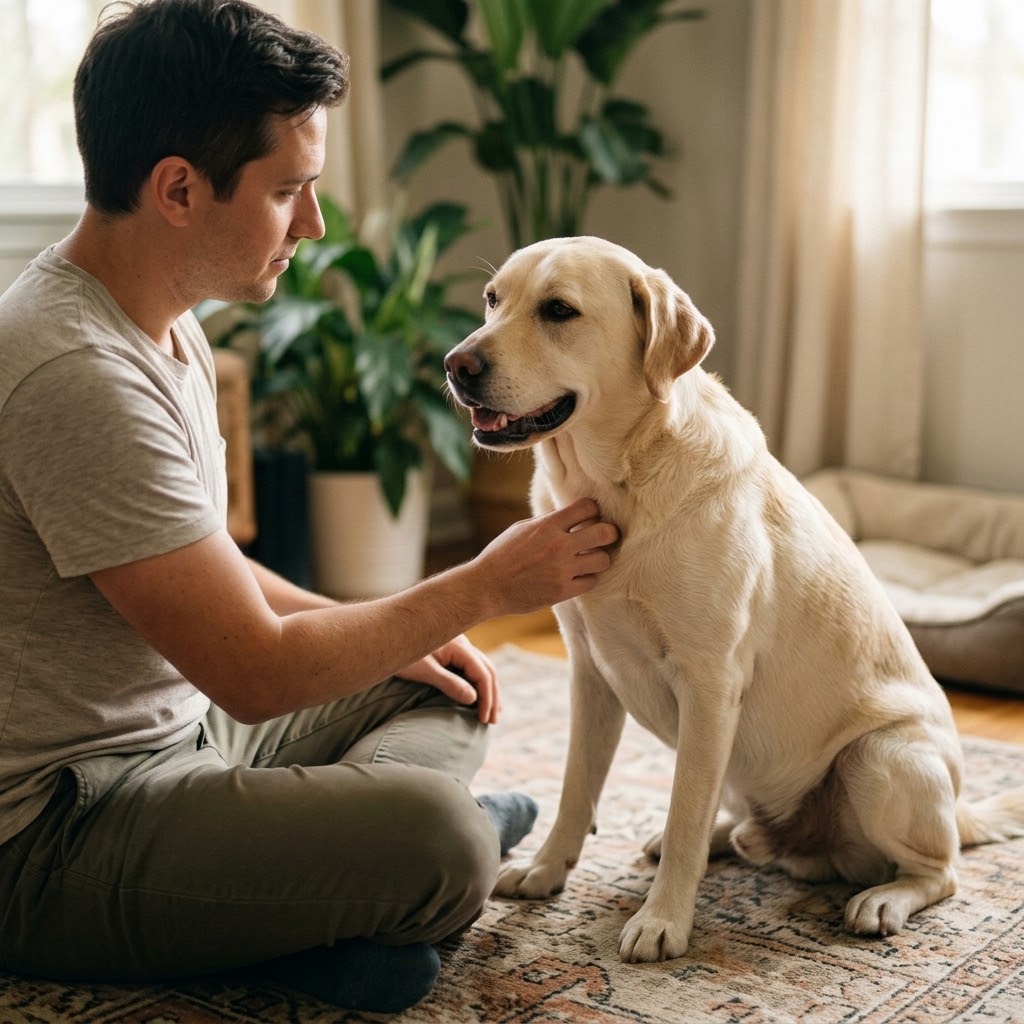
So use the 5-second test. Pet your dog on the chest or side of the neck for 3 to 5 seconds, then stop and take your hand away.
If your dog leans in or nudges you, he's asking for more. If he licks his lips, turns his head or walks off, the answer is "no thanks." Respect it.
Between you and I, the pat on top of the head is overrated. Most dogs tolerate it at best.
Skip hugs and never reach into the crate, which is his safe zone. Our guide to reading dog body language shows the stress signals one by one.
Grooming can wait, since a bath is a lot of handling for a dog who barely knows you. The one exception is a vet checkup in week 1.
| Type of Handling | When It Fits | How to Do It |
|---|---|---|
| Chest or neck scratch | Now, when the dog comes over | 3 to 5 seconds, then pause and let the dog ask for more |
| Vet exam | Week 1 | Bring high-value treats and ask the clinic for a quiet room |
| Brushing and paw touches | Days 8 to 14, if the dog enjoys them | A few strokes or a single paw touch, each paired with a treat |
| Pats on top of the head | Later | Stick to the chest and sides of the neck for now |
| Bath or nail trim | After week 2 | Short sessions with breaks, or ask the groomer or vet for help |
| Hugs or picking up | Later, and only if the dog likes it | Many dogs never enjoy hugs, so watch for lip licks and head turns |
| Reaching into the crate | Never | Call the dog out with a treat and keep the crate a safe zone |
Ready to teach a cue or 2 without overwhelming your dog? Start with our gentle training starters for brand new adopters.
What Mistakes Cut Dog Decompression Short?
Let's start with the welcome party. 10 people, a bone-shaped cake and 1 terrified dog under the table.
Then there's the "he seems fine" trap. A shut-down dog can look calm, quiet and easy. Some dogs don't show their real worries until week 2 or 3, after the stress lifts enough for them to react.
The field trip comes next. Hardware store Saturday, brewery patio Sunday, soccer game Monday. Stacked together, that's the bucket overflowing.
The opposite mistake is real too. Decompression doesn't mean shutting your dog in a room for 2 weeks. He still needs you nearby, regular walks and someone to hand him a treat for being brave.
And watch out for the day 15 cliff. Going from total quiet to dog park, house guests and a full workday all at once undoes a lot of good work. Turn the dials one at a time.
If you've been home all 14 days and you're heading back to the office, start short absences a week before. Our post on early signs of separation anxiety covers what to watch for.
Let the Boring Weeks Do Their Job
You don't need a perfect 2 weeks, just a quiet one. Browse the full adopter resource library on the Let Them Be Dog homepage for what comes next.
Common questions
How long does dog decompression take?
Dog decompression takes about 2 weeks for many rescue dogs, though shy or under-socialized dogs can need a month or more. A dog's appetite, sleep and body language are better guides than the calendar. Adopters can add new people and places one at a time once a new dog eats, rests and explores normally.
What is a decompression walk?
A decompression walk is a slow, low-pressure outing where a dog sniffs freely on a loose leash or long line in a quiet place. The goal of a decompression walk is calm exploration, not distance or exercise. Empty fields and quiet early-morning streets work well.
Can you start training during dog decompression?
Light training can start during dog decompression as long as sessions stay short, easy and fun. Name games, hand targets and rewards for calm behavior work well in the first 2 weeks. Group classes, busy training facilities and corrections are better saved until a new dog has settled into the home.
Is it bad to keep a new dog isolated during decompression?
Dog decompression should never mean leaving a new dog alone in a closed room for hours. A decompressing dog still needs nearby people, regular meals, potty trips and short sniff walks. The goal of decompression is fewer new experiences, not less contact with the family the dog lives with.
Do dogs need decompression after boarding, a move or a vet stay?
Dogs often benefit from a short decompression period after boarding, a move, a hospital stay or long travel. A few quiet days with a familiar routine help a dog recover. Owners can shorten the break for a dog who quickly returns to normal eating, sleeping and play.
How should kids act around a dog during decompression?
Kids around a dog during decompression should stay calm, let the dog approach first and avoid hugging, chasing or picking the dog up. Short, supervised visits work best, with an adult watching the dog's body language. Children can still help by tossing treats or filling the food bowl.
When should a new dog meet the resident dog?
A new dog and a resident dog should first meet on neutral ground, on leash, with plenty of space between them. Parallel walks on opposite sides of a quiet street make a gentle first step. For the first 2 weeks, the 2 dogs do best with separate rest areas, separate meals and short supervised time together.
About the Author
I’m Jeff Molitor and I adopted my first dog at 39 (Cooper Wonder) and have volunteered with Chicago shelter dogs since 2017, first at The Anti-Cruelty Society and now at Chicago Animal Care and Control. I help with dog handling, agility, adoption showings and support, photography and marketing. I love all dogs, but I gravitate toward momma dogs, seniors, black pibbles and the ones with cropped ears. Basically whoever’s been overlooked the longest. Jeff is dad to Oscar Wonder (pibble) and Gary Wonder (our cat).
This article shares what we have learned from our own experience. It is not medical advice, and we are not veterinarians. If you have any concerns about your dog's health, please check with your vet.