Adoption Advocacy
The Question Nobody Asks Before Buying a Dog
Published · By Jeff Molitor
Buying a dog or adopting one fills the same open home. Here's the shelter kennel math, breeder rules and pet store supply chain behind that choice.
The short answer
Buying a dog from a breeder hurts shelter dogs because each purchase fills a home that a waiting shelter dog could have taken. About 2.8 million dogs entered U.S. shelters and rescues in 2025, according to Shelter Animals Count. Homes ready for a dog are limited, so breeder sales and shelter adoptions compete for the same families.
Buying a dog from a breeder fills a home that a shelter dog was waiting for, and almost nobody says it out loud. Most buying a dog vs adopting advice skips that part and goes straight to coat colors.
The question nobody asks is which shelter dog loses the couch when a puppy gets bought.
I won't yell at you. I'll show you the kennel math, the breeder rules and the pet store supply chain. Then this Let Them Be Dog post makes the case for adopting like my dog's dinner depends on it.
Does Buying a Dog From a Breeder Hurt Shelter Dogs?
Most people picture breeder harm as cages and neglect. Some breeders earn that picture. The bigger damage is quieter, though, and it happens even when the breeder is lovely.
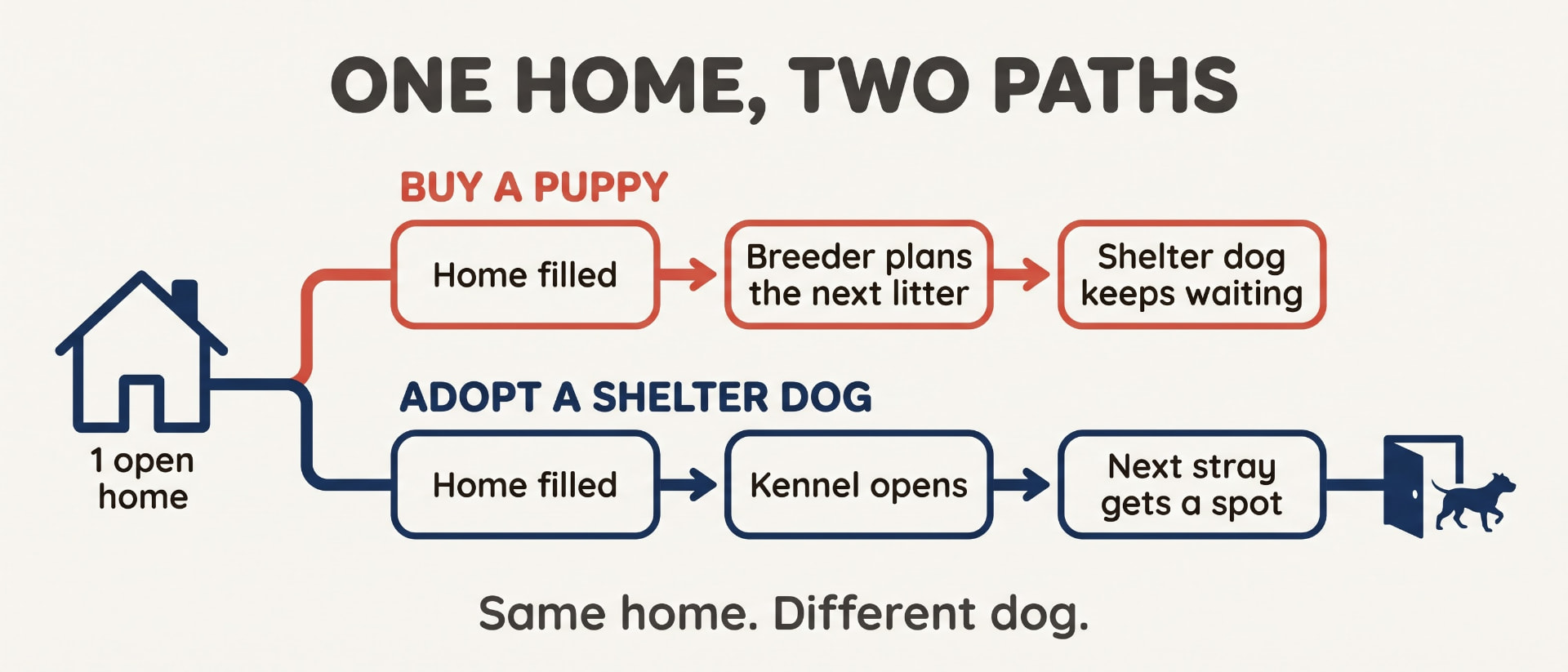
Homes are the limited resource here. There's only so many families each year who want a dog, have a lease that allows one and have time to walk it. When 1 of those families buys a puppy, that home is gone.
Now look at who's waiting. Shelter Animals Count estimates 2.8 million dogs entered U.S. shelters and rescues in 2025, and about 320,000 were euthanized. At mid-year 2026, 236,000 adult dogs were still in care and waiting for an outcome.
Our 2026 report on dogs stuck in U.S. shelters has the full breakdown. Short version: America has plenty of dogs. What it's short on is homes.
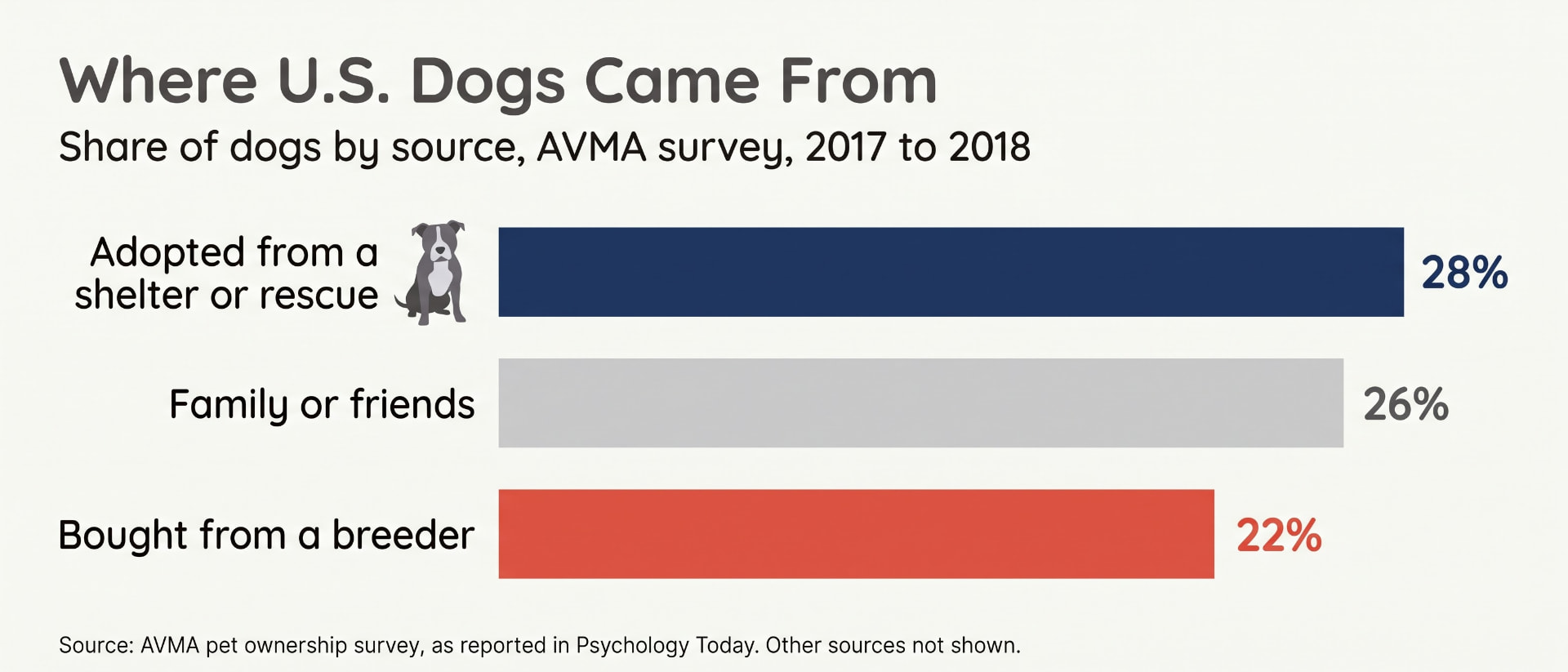
Breeders still claim a big slice of those homes. An AVMA survey from 2017 and 2018 found 22% of dogs came from a breeder and 28% were adopted, as psychologist Zazie Todd laid out in Psychology Today.
So every purchase is a trade, whether the buyer means it or not. 1 puppy gets a home. 1 shelter dog keeps waiting, and at a full city shelter, waiting comes with a clock.
The Kennel Math Behind Buying a Dog vs Adopting
Let's do the math the puppy contract leaves out. I'll keep it simple, since my own math peaked around 4th grade.
Open-admission shelters like CACC can't say no. Strays, seized dogs and owner surrenders all come through the door, full kennels or not.
So every dog leaves 1 of 4 ways. An owner reclaims the dog, a family adopts it, a rescue with room pulls it or the shelter euthanizes it to free up space.
Adoptions and transfers both depend on families saying yes. A rescue can only pull another dog from a city shelter when 1 of its own foster dogs gets adopted. That means a puppy bought in the suburbs can echo all the way back to a kennel on Western Avenue.
CACC's save rate for dogs was 69.6% in 2025, compared with 87.5% for cats, according to PAWS Chicago's 360@CACC report.
Here's the side-by-side. Neither column is about good people or bad people. It's only about where the home goes.
| Question | Buying From a Breeder or Pet Store | Adopting From a Shelter or Rescue |
|---|---|---|
| What happens to a shelter kennel | Nothing changes, and the dog inside keeps waiting | The kennel opens for the next stray or surrender |
| Where the money goes | Toward the breeder's next litter | Toward shelter vet care and the next intake |
| What you know about the dog | A puppy's adult size and energy are still a guess | An adult dog's size and personality are already showing |
| Vet basics | Often paid for on top of the price | Spay or neuter, vaccines and a microchip often included in the fee |
| Who checks on the parent dogs | USDA licenses larger breeders, and breeders with 4 or fewer breeding females are exempt | No parent dogs involved, and the shelter's vet team checks the dog you take home |
| Rescue chain | No effect on rescue foster space | Frees a foster home so a rescue can pull another dog |
Worried a shelter dog will be "too much"? Read why the loud dog at the kennel gate calms down at home before you write anybody off.
How Does Breeder Demand Keep Shelters Full?
Breeding is a business, even when the business is a farmhouse with a hand-painted sign. Demand shows up in 3 ways at the shelter door.
Sales Pay for Litters
A sold puppy pays for the next litter. An unsold one doesn't, so breeders breed whatever buyers keep asking for.
That's why the "it" dog changes every few years. Buyers place the order, breeders fill it and shelters see the result a couple of years later.
Leftover Puppies Land Somewhere
Not every puppy sells. Shelters in a 2023 Shelter Animals Count survey described taking in puppies from breeders who couldn't move them.
Sometimes it's a whole operation at once. In August 2023, the Iowa City Animal Care and Adoption Center took in 131 dogs and puppies from 1 breeder, HumanePro reported. Picture a shelter's entire dog wing filling up before lunch.
Trendy Dogs Come Back
Then there's the doodle. That same survey reached 314 shelters and rescues in 45 states, and more than 60% said they were receiving doodles and other intentional mixes.
I have nothing against a doodle. The doodle didn't pick the price tag or the grooming schedule. Some owners discover both once the puppy fluff grows out, and the dog is the one who ends up at intake.
Are Dog Breeders Regulated in the U.S.?
People assume somebody's checking on breeders. Somebody is, sort of.
The U.S. Department of Agriculture licenses larger commercial dog breeders under the Animal Welfare Act. But the federal licensing rules exempt anyone who keeps 4 or fewer breeding females. Retail pet stores get a pass too.
Licensed breeders don't get much attention either. In a February 2025 audit, the USDA Office of Inspector General found 80% of the dog breeders it visited still had at least 1 noncompliance. 95% of the breeders it reviewed weren't inspected on the schedule USDA's own system called for.
These weren't paperwork problems. The auditors found untreated eye problems and dental disease, excessive feces and flies, contaminated dog food and dogs with no water. Some of it got missed during actual USDA inspections.
And that's the floor, not the ceiling. A breeder can pass every federal rule and still treat a mother dog like equipment. Legal and kind are 2 different words.
Pricing puppies right now? Read our breakdown of what vet bills and rent do to a dog budget before you put down a deposit.
Where Do Pet Store Puppies Come From?
If you grew up in the '90s, you remember the mall pet store. Puppies in glass boxes, kids tapping the glass and a dad swearing he wasn't going to cave. He caved.
Those puppies didn't come from a backyard down the street. A store needs volume, so it buys from commercial breeders, often in other states.
Illinois decided it was done with that. Illinois Public Act 102-0586, signed August 27, 2021, says a pet shop may only offer a dog or cat from an animal control facility or shelter. The law took effect in February 2022.
Other states followed. Colorado's governor signed a pet store sales ban in 2026 that starts January 1, 2028, according to Gray News. The Humane World Action Fund counted 10 states with bans as of August 2026.
The dogs pay for the supply chain too. A 2013 study in the Journal of the American Veterinary Medical Association compared dogs bought as puppies from pet stores with dogs from noncommercial breeders. The pet store dogs showed more aggression toward strangers, more fear of other dogs and more separation problems.
So the cute window at the mall is the end of a long chain. At the other end is a mother dog you'll never meet.
Is It Wrong to Buy a Dog From a Responsible Breeder?
I'll be fair here, because the comments section is going to be spicy anyway.
A responsible breeder health tests the parent dogs, raises puppies in a home and takes dogs back for life. That's miles better than a puppy mill. If you're going to buy, buy from that person.
In the buying a dog vs adopting math, better isn't the same as harmless. The good breeder still adds a litter to a country that euthanized about 320,000 dogs in 2025. The home that puppy gets is still a home a shelter dog doesn't.
People give me reasons all the time at adoption showings. They want a puppy. They want to know how big the dog gets, or somebody in the house has allergies.
Shelters have puppies. Staff can tell you an adult dog's size because the dog is already grown. And "hypoallergenic" on a breeder's website is a sales promise, so take allergy questions to a doctor.
My take, plain: for a family pet, adopt. Purpose-bred working dogs, like service dogs, are a separate conversation, and it's rarely the one happening at a puppy pickup.
What I See When Bought Dogs Land at the Shelter
I've volunteered with Chicago shelter dogs since 2017, first at The Anti-Cruelty Society and now at Chicago Animal Care and Control. Dog handling, adoption showings, photos. Read why returns are the part volunteers carry home.
The dogs I root for hardest are momma dogs, seniors, black pibbles and anyone with cropped ears. None of them came with a breeder's guarantee. All of them would've taken that open home.
Ready to skip the breeder? Grab our short list of what to buy before adoption day and skip the pet store aisles you don't need.
What Should You Look for in a Shelter Dog Instead of a Breed?
Here's a secret from the adoption floor. Most people don't actually want a breed.
They want what the breed promised on the website. A dog who's calm, good with kids and not the size of a loveseat. A shelter can deliver all of that, and an adult dog's traits are already showing.
Breed labels on kennel cards are mostly educated guesses anyway. A 2018 genetic study in PLOS ONE tested dogs at 2 shelters and found only 4.9% were purebred. So shop for traits.
Here's what I'd look for, roughly in the order I'd ask about it at a showing.
- Energy at 4 PM, after a walk, when everybody's tired.
- Size you can live with. An adult dog is done growing, so there's no guessing.
- Foster notes on kids, cats, crates and the dishwasher.
- A breed-specific rescue if your heart's set on a certain look, since most popular breeds have one.
- Litters in foster, if you truly want a puppy.
- Your lease rules on breed and weight. Check those before you fall in love.
| If You Wanted | Ask the Shelter About | Why It Works |
|---|---|---|
| A calm dog | Adult dogs with foster notes or long volunteer histories | An adult dog's energy is already showing, so nobody has to guess |
| A small dog | Getting a call when small dogs come in or arrive by transfer | Small dogs get adopted fast, so being first in line matters |
| A puppy | Litters coming out of foster homes | Foster puppies often come with notes on crates, kids and other dogs |
| A certain look | Breed-specific rescues the shelter works with | Most popular breeds have a rescue network, no deposit required |
| A dog for kids | Dogs with documented meetings with children | Real kid notes beat a breed description every time |
| Fewer allergy problems | A foster-to-adopt trial, after talking with your doctor | A trial at home tells you more than the word "hypoallergenic" on a website |
Once you've got a match, our first cues to teach a grown shelter dog help the 2 of you get on the same page fast.
What Does Adopting Instead of Buying Actually Change?
Here's where I stop being a buzzkill. The buying a dog vs adopting choice moves more than you'd think.
A kennel opens first. At a busy city shelter, that kennel can fill again with the next stray the same afternoon. That stray now has a place to land.
The money moves next. An adoption fee pays for shelter vet care, not another litter. Many shelters send dogs home spayed or neutered, vaccinated and microchipped, which puppy buyers often pay for on top of the price.
Then the rescue chain moves. When a rescue's foster dog gets adopted, that foster home can pull another dog from a city shelter.
And the market notices. Every family that adopts is 1 less sale a breeder can count on, and fewer sales means fewer litters.
You also get a dog. A real one, already grown, with a personality somebody can describe to you. Plan a quiet first 2 weeks at home, then read how a grown shelter dog settles in over 3 months.
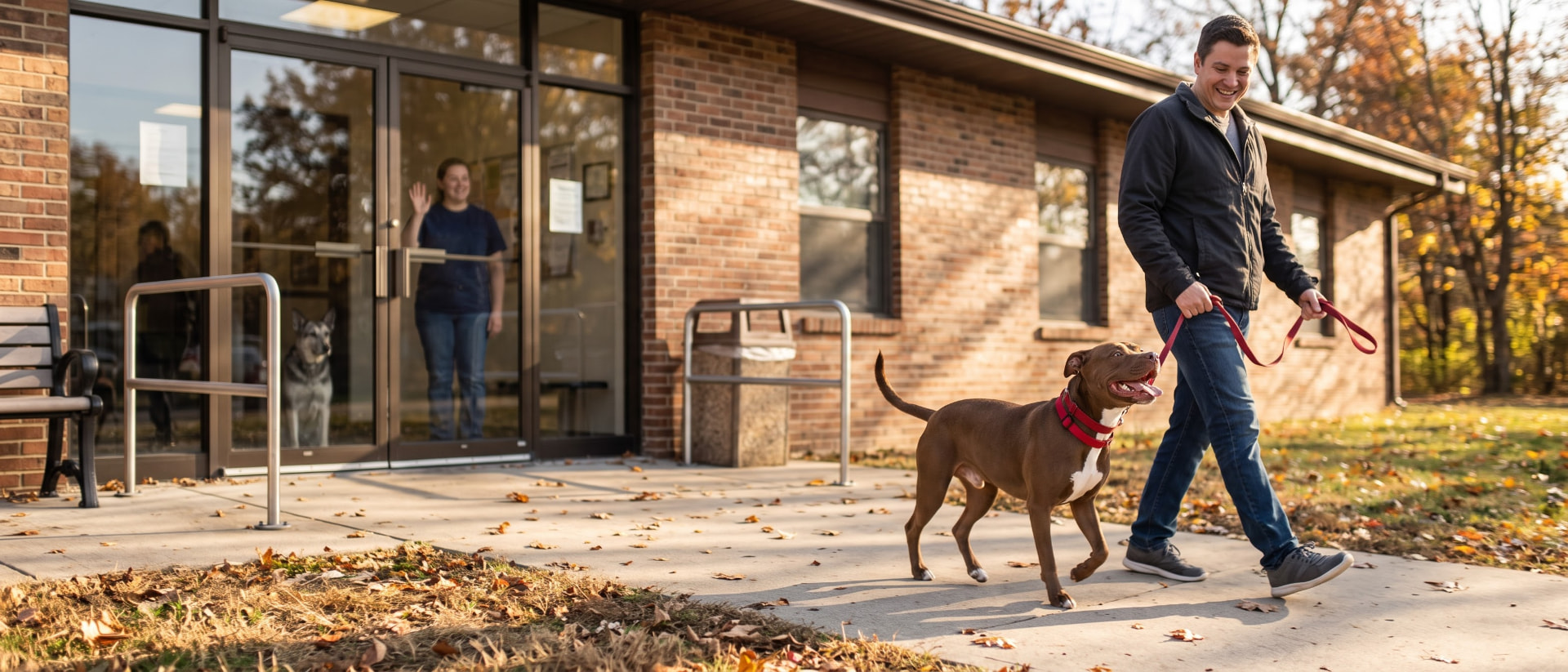
Ask the Question Before the Deposit
The question takes 5 seconds to ask, and a shelter dog is waiting on your answer. Find guides for adopters who skipped the breeder on the Let Them Be Dog homepage, then go meet that dog.
Common questions
Is adopting a dog cheaper than buying one from a breeder?
Adopting a dog usually costs less upfront than buying one from a breeder, because shelter adoption fees often include spay or neuter surgery, vaccines and a microchip. Breeder prices rarely bundle those basics. Food, vet visits and supplies cost the same for any dog, so a budget for those still matters after adoption day.
Can you find purebred dogs at animal shelters?
Purebred dogs do turn up at animal shelters, though purebreds make up a small share of most shelter dogs. A 2018 genetic study in PLOS ONE found only 4.9% of tested dogs at 2 U.S. shelters were purebred. Breed-specific rescues are the best place to find a particular breed without buying from a breeder.
Are puppy mills legal in the United States?
Large-scale commercial dog breeding is legal in the United States as long as licensed breeders meet Animal Welfare Act standards. Those standards set minimums for food, water, housing and veterinary care. A 2025 USDA Office of Inspector General audit found 80% of the dog breeders it visited had at least 1 noncompliance.
Does adopting a dog really save a life?
Adopting a dog can save a life, especially at open-admission shelters that euthanize when kennels run out of room. Shelter Animals Count estimates about 320,000 dogs were euthanized in U.S. shelters and rescues in 2025. Each adoption opens a kennel for the next dog that comes through the shelter door.
Can pet stores in Illinois sell puppies?
Illinois pet stores can only offer dogs and cats that come from animal control facilities or animal shelters. Illinois Public Act 102-0586 was signed in August 2021 and took effect in February 2022. Illinois pet shops can also host shelter dogs for adoption in place of selling puppies from breeders.
Why do people buy dogs instead of adopting?
Common reasons people buy dogs instead of adopting include wanting a puppy, wanting a specific breed look and believing shelter dogs come with problems. Shelters take in puppies, breed-specific rescues exist for most popular breeds and many shelter dogs come with behavior notes from staff, volunteers and foster homes.
Are doodles ending up in shelters?
Doodles and other designer mixes regularly end up in U.S. shelters and rescues. More than 60% of 314 shelters and rescues surveyed by Shelter Animals Count in 2023 reported receiving doodles and other intentional mixes. Shelters in that survey also described surrenders from owners who paid a lot for a dog and could no longer afford its care.
About the Author
I’m Jeff Molitor and I adopted my first dog at 39 (Cooper Wonder) and have volunteered with Chicago shelter dogs since 2017, first at The Anti-Cruelty Society and now at Chicago Animal Care and Control. I help with dog handling, agility, adoption showings and support, photography and marketing. I love all dogs, but I gravitate toward momma dogs, seniors, black pibbles and the ones with cropped ears. Basically whoever’s been overlooked the longest. Jeff is dad to Oscar Wonder (pibble) and Gary Wonder (our cat).
This article shares what we have learned from our own experience. It is not medical advice, and we are not veterinarians. If you have any concerns about your dog's health, please check with your vet.