Life After Adoption
Losing a Dog: How to Cope With the Grief and When It Starts to Ease
Published · By Jeff Molitor
Losing a dog brings grief with no set end date. The sharpest pain often softens over weeks to months, and waves can return for a year or more.
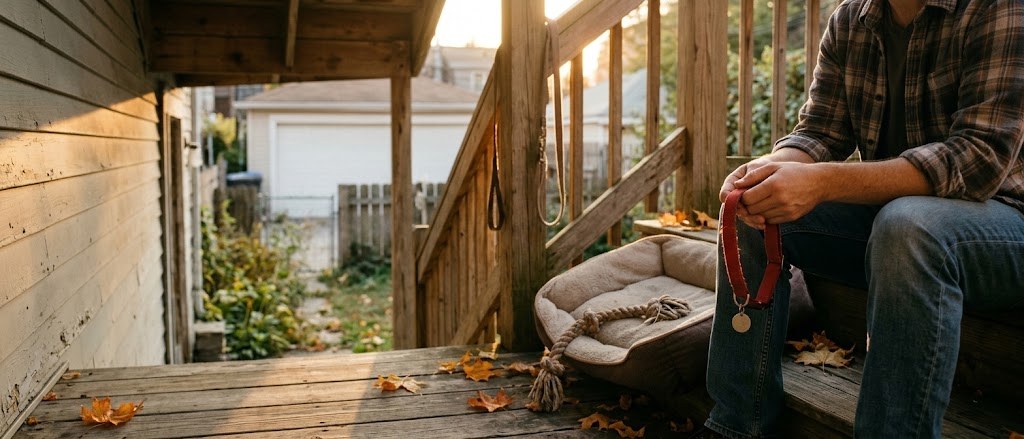
The short answer
Grief after losing a dog has no fixed end date, but the sharpest pain often softens over several weeks to a few months. Waves of sadness after a dog's death can return on anniversaries and birthdays for a year or longer. Grief over a dog that stays intense and disabling past 12 months is worth bringing to a doctor or grief counselor.
Losing a dog is real grief, and it keeps its own schedule no matter what anyone tells you. If you're here, you're probably losing a dog right now or you just did, and the house is way too quiet. I'm Jeff, and I write Let Them Be Dog for people who adopt from shelters.
Shelter dogs leave a specific kind of hole. They show up with a past nobody wrote down, and a lot of the time we get fewer years than we wanted. This guide walks through what grief feels like week by week, why the guilt shows up and what helps. It also covers the quiet signs that the worst part is behind you.
How Long Does It Take to Stop Grieving After Losing a Dog?
Short answer: you don't stop. It changes shape.
Grief after losing a dog isn't a switch that flips off at 6 weeks. It's more like a radio that slowly gets turned down, and every so often somebody bumps the dial.
For a lot of people, the raw part (crying in the car, not being able to look at the leash) eases somewhere in the first couple months. After that, the waves keep coming, just further apart and smaller.
A 2026 study in PLOS One surveyed 975 adults in the U.K. about every death they'd lived through. Maynooth University's summary of the pet grief study reports that 21% picked a pet's death as the most distressing loss of all.
The same study found 7.5% of people who'd lost a pet met the criteria for prolonged grief disorder. That's close to the rate after losing a close friend, which was 7.8%. So no, you're not being dramatic.
The American Psychiatric Association only considers prolonged grief disorder in adults when intense grief continues at least 12 months after a loss. It estimates 4% to 15% of bereaved adults develop it. Grieving a dog hard in month 2 isn't a disorder. It's month 2.
What Does Grief After Losing a Dog Feel Like Week by Week?
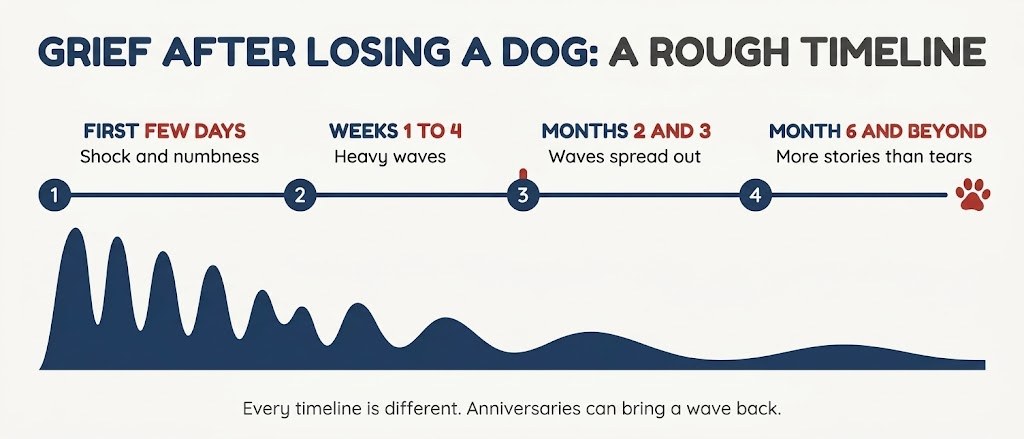
Everyone's timeline is different.
The First Few Days
You might feel numb, or weirdly calm, or like you're watching yourself from across the room.
Then the routines ambush you. You reach for the leash at 7am. You save the last bite of your sandwich for nobody. You step over a dog who isn't on the kitchen floor anymore.
Weeks 1 to 4
This is usually the heavy stretch, when the house gets loud with quiet.
Expect bad sleep, a short fuse and crying at stuff that has nothing to do with dogs. Some nights you'll lay on the floor by the empty bed for no real reason.
Some people hear tags jingle or feel the bed shift at night. That's common. Your brain spent years tracking a dog and hasn't caught up yet.
Months 2 and 3
The waves start spacing out. You'll have a decent day, then feel guilty for having a decent day. Both are normal.
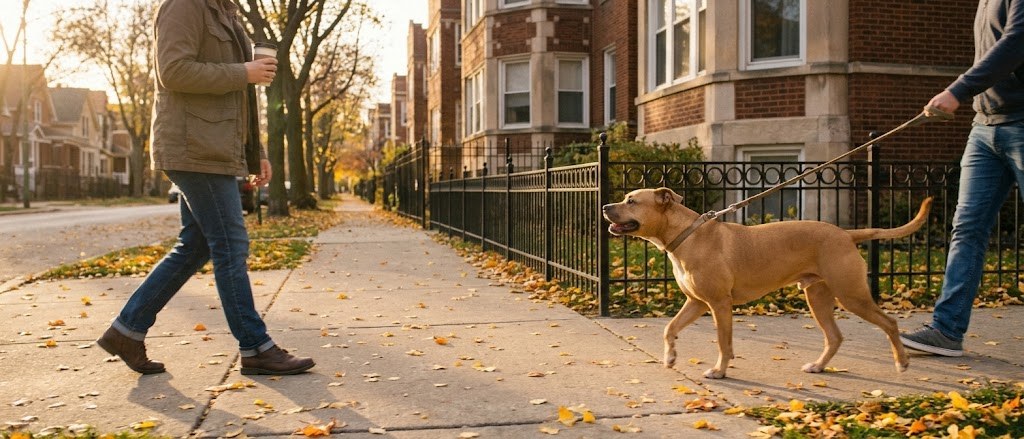
Seeing a dog that looks like yours on the sidewalk can still flatten you. For shelter people, half the dogs in Chicago look a little like a pit mix you loved.
Month 6 and Beyond
Most days feel mostly okay. Less tears, more stories. The memories start bringing a smile before they bring the ache.
The adoption anniversary, the birthday you guessed at and the day they died can still knock you sideways. That's not a setback. It's just the calendar.
| When | What It Often Feels Like | What Helps |
|---|---|---|
| The first few days | Shock, numbness and routines that catch you off guard, like reaching for the leash | Eat something, rest when you can and tell 1 person who gets it |
| Weeks 1 to 4 | Heavy waves of sadness, bad sleep, a short fuse and hearing tags jingle at night | Keep the old walk times and say your dog's name out loud |
| Months 2 and 3 | Waves start spacing out, plus guilt for having a decent day | Make 1 small memorial and let good days be good |
| Month 6 and beyond | More stories than tears, though anniversaries and birthdays can still hit hard | Plan something kind for the hard dates |
| Past 12 months | Grief that still blocks work, sleep or time with people | Talk to a doctor or a licensed grief counselor |
Every timeline is different. Grief that makes daily life hard at any point is worth bringing to a doctor, and anyone thinking about not wanting to live can call or text 988.
Got another dog at home who's moping around too? Give that sad brain a job with our sniff games and puzzle feeders for a dog who needs a distraction.
Why Does Losing a Rescue Dog Feel So Different?
Here's the extra layer nobody warns you about. When you adopt from a shelter, you usually walk in on chapter 4 of somebody's story.
You don't know who taught your dog to fear brooms or love the sound of a car door. The kennel card gave you an age guess, a weight and maybe a line about being "friendly with women." A kennel card's shorthand labels only cover so much, so you filled in the rest yourself over the years.
Then the dog dies and the whole story closes, including the parts you never got to read. You miss the dog you knew and ache for the one you didn't.
Time is the other thing. A lot of shelter dogs come home at 5, 8, 11 years old. Adopting a gray-muzzled dog is one of the kindest moves a person can make, and it almost always means a shorter run. Senior dogs who wait the longest in shelters are often the ones we lose first.
That's where "not enough time" comes from. You wanted to give them a decade of good stuff to balance out whatever came before. You got 3 years.
3 years in a warm house with someone who learned your weird habits is not a small gift to a dog who started out in a kennel. It counts. It all counts.
Is It Normal to Feel Guilty After Putting a Dog Down?
It's normal, and there's a lot of us in this club. Membership is free and nobody wants it.
The questions come at 2am. Did I wait too long? Did I go too early?
Should I have tried that last medication? Should I have noticed the limp sooner?
In 2026, a Texas A&M team dug into end-of-life surveys from the Dog Aging Project, a long-running national study of companion dogs. Texas A&M's write-up of the pet loss studies says owners felt grief, guilt and blame at about the same rates whether the dog was euthanized or died on their own. Jake Ryave, a Texas A&M veterinary clinical intern, summed it up: "Loss is loss regardless of how it happens."
The people who didn't have to make the call felt guilty too. So the guilt isn't proof you chose wrong. It's what loving something you were responsible for feels like once it's gone.
The same research found pain and suffering were the top reasons owners chose euthanasia. That's not giving up. That's taking the hurt onto yourself so your dog doesn't have to carry it.
Shelter adopters get an extra helping of guilt. We promised these dogs a better ending, and when it comes, it can feel like a broken promise.
You didn't. A quiet room, a familiar voice and someone holding them is a better ending than a lot of dogs ever get. If you volunteer, the guilt can pile up from both sides, which is why I wrote about the guilt shelter volunteers carry after a return too. That one's about a different kind of loss, but the self-blame sounds the same.
Not ready for another dog but missing the morning walks? See how borrowing a shelter dog for a day trip or a few weeks gets a dog out of the kennel and gets you back outside.
For surviving dogs, a Phys.org summary of the dog grief study reports that 86% of 426 surveyed Italian dog owners noticed negative behavior changes after another dog in the home died. A steady routine and extra one-on-one time help a grieving dog settle.
What Actually Helps When You're Grieving a Dog?
I won't hand you a 10-step program, because grief doesn't follow one. But some things help more than others, and a few popular "helpful" moves backfire. The table below sorts them out.
Start with the walk. If you used to walk your dog at 7am and 6pm, keep walking at 7am and 6pm for a while. It feels silly at first, but it gives your body somewhere to put all that leash energy.
Say their name out loud. A lot of people go quiet because it hurts. But a dog's name said with a story attached usually lands softer than silence.
Find your people. Some friends will get it. Some will say "it was just a dog," and you'll learn something about them.
If nobody around you gets it, call someone who does. The Cornell University Pet Loss Support Hotline is staffed by trained veterinary students and can be reached at 607-218-7457. Hours change by season, so call to check.
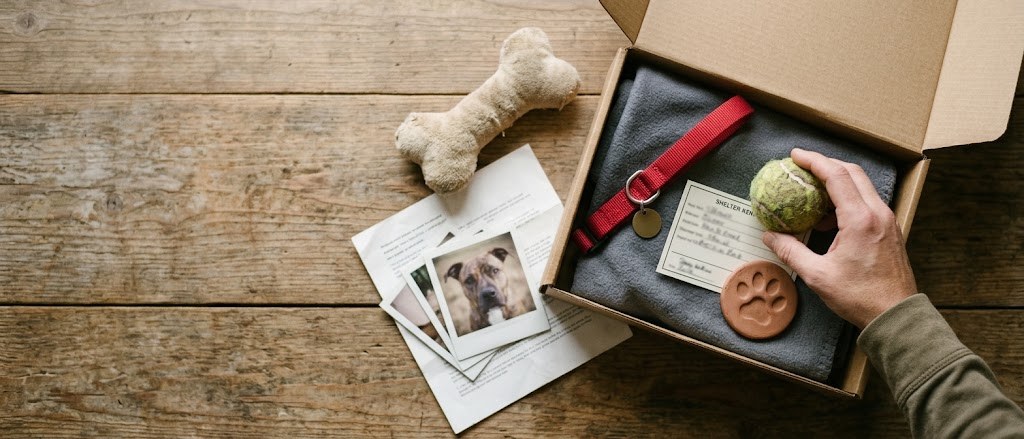
Make one small thing. A paw print in clay, a framed kennel card, a donation to the shelter in their name. It gives the love somewhere to go.
| Try This | Instead of This | Why It Helps |
|---|---|---|
| Walking at your dog's old walk times | Avoiding the route for months | Your body still expects the routine and needs somewhere to put that energy |
| Saying your dog's name and telling stories | Going quiet so nobody gets upset | A name with a story attached usually lands softer than silence |
| Leaning on people who've lost a dog | Venting to the "it was just a dog" crowd | Feeling understood eases the loneliness of pet grief |
| Calling a pet loss hotline or grief group | Waiting it out alone | Talking to someone outside the family gives grief somewhere to go |
| Making 1 small memorial | Packing up everything the first weekend | There's no deadline, and a donated bed can't come back |
| Keeping a surviving dog's routine steady | Changing everything at once | Dogs often react to a housemate's death, and routine helps them settle |
| Fostering when you feel curious about dogs again | Adopting fast just to stop the hurt | A new dog deserves to be loved as a new dog, not a replacement |
Grief over a dog is real grief. If the hurt still blocks daily life after a year, or gets scary at any point, reach out to a doctor or counselor.
What Are the Signs That Dog Grief Is Starting to Ease?
Healing doesn't announce itself. It's like noticing your knee stopped hurting sometime last week.
Plenty of people wait for a moment where they're "over it." It never comes, and then they think they're grieving wrong. You're not.
What you're looking for is a shift in the mix. Less ache, more fondness. Here's what that shift tends to look like.
- You tell a funny story about your dog and laugh before you cry, or instead of crying.
- You can walk past the spot where the bed used to be without bracing.
- A dog who looks like yours on the sidewalk makes you smile first.
- Sleep comes back closer to normal.
- You feel curious about shelter dogs again instead of guilty for looking.
- The days you don't think about your dog stop feeling like a betrayal.
You might tick 2 of those at month 3 and 5 of them at month 10. That's fine. There's no grade.
When Grief Needs More Than Time
Sometimes grief gets stuck. Maybe it's been a year and you still can't work, can't be around people or feel like life lost its meaning. If so, talk to your doctor or a licensed grief counselor. Those are the patterns the APA describes for prolonged grief disorder, and they're treatable.
You don't have to wait a year, either. If the grief is wrecking your sleep, your job or your relationships right now, that's reason enough to get help.
And if you ever have thoughts of not wanting to be here, call or text 988 any time to reach the 988 Suicide and Crisis Lifeline. Grieving a dog is not too small a reason to call.
Someday, when the time feels right, bookmark what the first 3 days, 3 weeks and 3 months with a new rescue dog look like. No rush. It'll be here.
What Losing Cooper Taught Me
Cooper Wonder was my first dog. I adopted him from The Anti-Cruelty Society in December 2010, when I was 39. He was a curmudgeon of a mutt. I lost my best friend Cooper in 2024.
That July, I fostered Oscar through Dark Horse Dogs. He was a heartworm-positive pibble who needed a quiet place to heal, and by December 2024 he was officially a Wonder.
A new dog doesn't replace the old one, though. Oscar is his own weird self. Cooper is still Cooper.
When Is It Okay to Adopt Another Dog After Losing One?
There's no correct waiting period. Anyone who says "too soon" or "what are you waiting for" is talking about themselves.
Here's the question I'd ask. Are you looking for a new dog, or for your old dog back?
A new dog will have different quirks, fears and opinions about the couch. If that sounds exciting, you might be ready. If it sounds unfair, give it more time.
A new shelter dog needs months to fully settle in, and that's easier to do with patience you actually have to spare.
Not ready, but miss the dog energy? Fostering is a good middle step. A dog gets out of the kennel, you get the morning walks back and nobody signs a lifetime contract.
When you do go back, consider giving the next spot to a dog who's been waiting a while. Adult dogs still make up most of the dogs waiting in U.S. shelters. Your old dog taught you a lot. Somebody in a kennel right now would love the benefit of that.
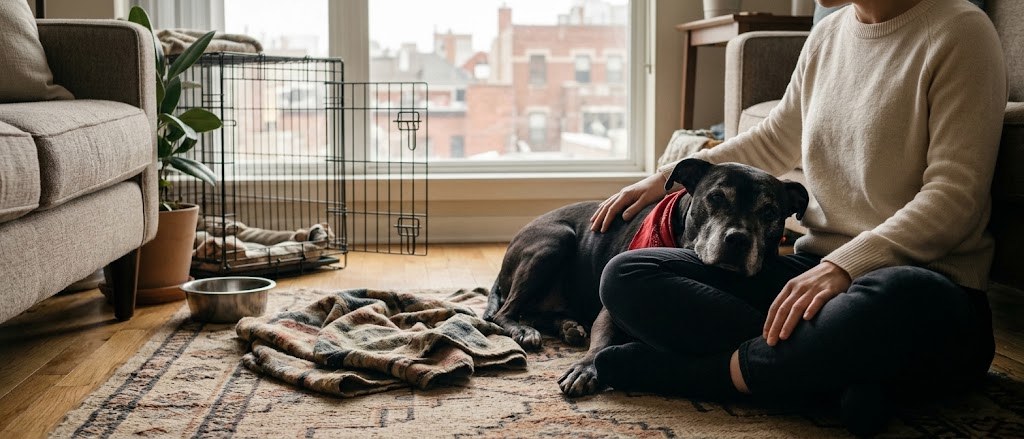
Love Them Loud, Grieve Them Slow
Losing a dog leaves a quiet house and a lot of love with nowhere to go. Give the grief the time it needs, say their name often and come find us when you're ready. Until then, the Let Them Be Dog guides for every stage of life with a shelter dog will be right here.
Common questions
Is it normal to grieve a dog more than a person?
Grieving a dog more than some human losses is normal and more common than most people admit. In a 2026 PLOS One study of 975 U.K. adults, 21% named a pet's death as the most distressing loss they had lived through. A dog shares the daily routine, the couch and the quiet hours, so the absence shows up all day long.
Do dogs grieve when another dog in the home dies?
Dogs often show behavior changes after another dog in the home dies. A 2022 Scientific Reports survey of 426 Italian dog owners found 86% noticed negative changes in the surviving dog, according to a Phys.org summary of the dog grief study. More attention seeking and less play were the most common changes. A steady routine and extra one-on-one time help a grieving dog settle.
What should I do with my dog's things after the dog dies?
There is no deadline for packing up a dog's belongings after the dog dies. Many people keep a collar, a tag or a favorite toy and donate the rest when they feel ready. Animal shelters usually welcome clean leashes, beds, blankets and unopened food. Donating to the shelter where the dog was adopted can feel like closing a loop.
What should you say to someone whose dog died?
The kindest thing to say to someone whose dog died is the dog's name and a specific memory. A line like "I'm so sorry about Rosie, she was the best greeter on the block" means more than advice. Skip "it was just a dog" and "you can always get another one." A text a month later often means as much as one sent on day 1.
How do you explain a dog's death to a child?
Explaining a dog's death to a child works best with short, honest words like "died" instead of phrases like "went to sleep." Young children can start to fear bedtime when death is described as sleep. Drawing a picture, burying a toy or sharing a favorite memory gives a child's grief somewhere to go. Kids often ask the same questions many times, and the repetition is normal.
Should you stay with your dog during euthanasia?
Staying with a dog during euthanasia is a personal choice, and many owners find comfort in being present. A familiar voice and touch can help a dog stay calm in the final minutes. Owners who cannot bear to stay should not carry guilt over that choice. Veterinary staff remain with the dog through the whole process.
About the Author
I’m Jeff Molitor and I adopted my first dog at 39 (Cooper Wonder) and have volunteered with Chicago shelter dogs since 2017, first at The Anti-Cruelty Society and now at Chicago Animal Care and Control. I help with dog handling, agility, adoption showings and support, photography and marketing. I love all dogs, but I gravitate toward momma dogs, seniors, black pibbles and the ones with cropped ears. Basically whoever’s been overlooked the longest. Jeff is dad to Oscar Wonder (pibble) and Gary Wonder (our cat).
This article shares what we have learned from our own experience. It is not medical advice, and we are not veterinarians. If you have any concerns about your dog's health, please check with your vet.