Volunteer Life
Take Care of the People, and the Dogs Follow: Why Shelters Should Put Volunteers First
Published · By Jeff Molitor
A well-run animal shelter volunteer program gives shelter dogs daily walks, calm human contact and better behavior notes, so adopters find better matches.
The short answer
A strong animal shelter volunteer program improves life for shelter dogs by adding walks, petting, playgroups and enrichment that staff can't cover alone. Shelter dogs with regular volunteer time leave the kennel more often and earn more detailed behavior notes. Detailed behavior notes help adoption counselors match each shelter dog with the right home.
Shelter dogs get better lives when shelters take care of their volunteers first. A trained, trusted animal shelter volunteer program does more for a dog's day than a shiny new kennel ever will.
I've walked dogs in Chicago shelters since 2017. Buildings get plaques. Volunteers get a lanyard and a "thanks, hon."
This Let Them Be Dog post is my case for flipping that order. It's for shelter staff, and for the volunteers and donors who keep nudging them in the right direction.
How Does a Strong Volunteer Program Improve Life for Shelter Dogs?
Every shelter dog needs 4 things a day. Food, a clean kennel, medical care when something's off and time out of the box with a person.
Staff cover the first 3 because they have to. The 4th one is where the day falls apart.
The Association of Shelter Veterinarians says that 4th thing isn't a bonus. Its 2022 Guidelines for Standards of Care in Animal Shelters give enrichment "the same significance" as feeding and medical care.
The same guidelines name daily time out of the kennel as one of the best ways to lower a dog's stress. They also call regular, positive time with people essential for socialized dogs, starting the day a dog comes in.
Chicago Animal Care and Control takes in strays, seized dogs and owner surrenders all day long. Staff are busy cleaning kennels and running intake. Volunteers add much of the daily people time.
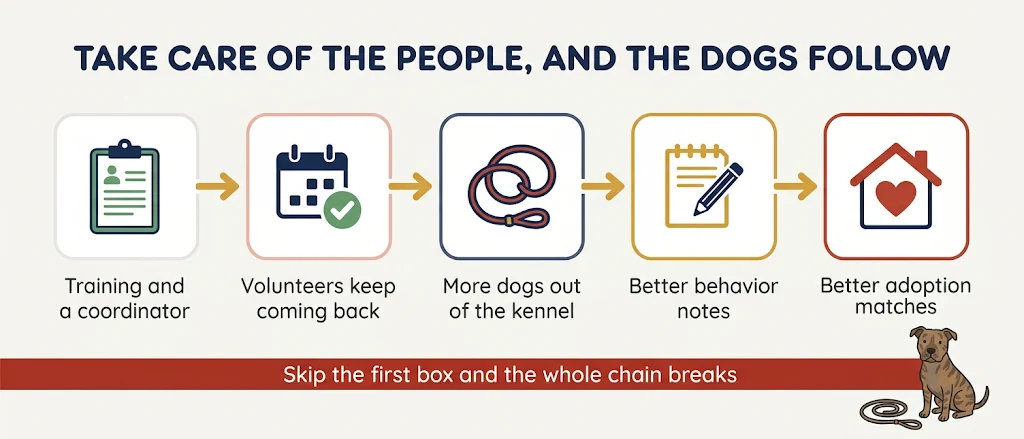
So the chain is short. Take care of the volunteers and they come back. When they come back, dogs get out of the kennel, and dogs who get out of the kennel show adopters who they really are.
A volunteer who walks the same dog every Saturday notices she leans on legs and hates the floor drain. That ends up in her file, and it's the kind of detail in the playgroup and walk notes adopters should be asking about.
Bring something to your next shift. Our 6 homemade puzzle ideas cost almost nothing and keep a kennel dog's brain busy between walks.
Why Do Shelters Spend on Buildings Before People?
I get it. A new dog wing photographs great. You can put a donor's name over the door, and nobody's ever going to engrave a plaque for the volunteer coordinator.
I'm not anti-building either. Chicago dogs need heat in January and drains that work. But a brand new kennel that a dog sits in for 23 hours a day is still a kennel.
This is the part that gets me. The ASV guidelines count the time and skills of shelter personnel as part of a shelter's capacity for care. They also say personnel includes volunteer team members, not only paid staff.
By the vets' own standards, a gorgeous building with no hands can't do the job.
Even the guidelines' rule for long-stay dogs comes back to people. Any animal staying more than 2 weeks is supposed to get housing with more space, enrichment and choice. The space is a building problem. The enrichment and choice mostly come down to somebody with a leash and a stuffed toy.
Some of the best shelter upgrades I've seen didn't involve a single brick. Foster programs free up kennel space without any construction, and the guidelines say those programs need enough people to support the fosters too. You keep landing in the same place: people.
What Does a Shelter Dog Actually Get From a Volunteer?
Less than you'd think per visit, and a lot more over a month.
Time Out of the Box
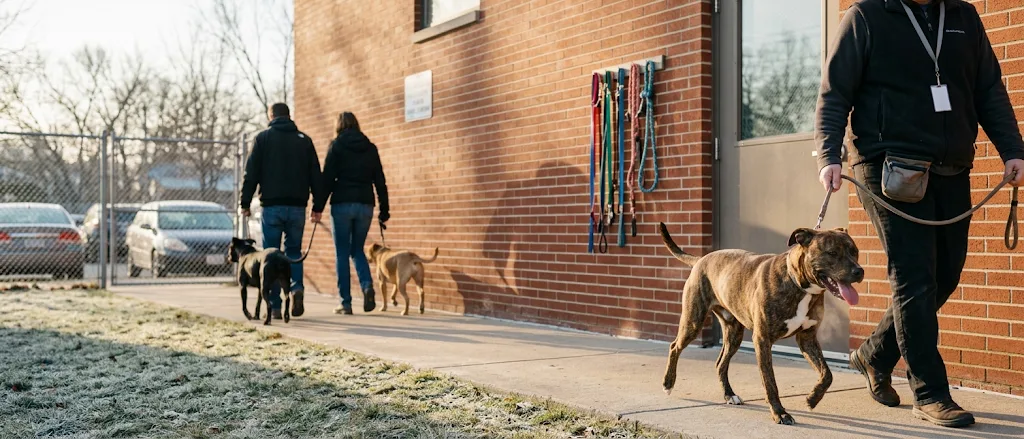
A walk around the block is the big one. Dogs get to pee somewhere that isn't 6 inches from their bed, sniff a tree and hear something other than 80 other dogs.
Calmer in 15 Minutes
Researchers from Wright State University and the University of Münster tested how much petting shelter dogs need. Their 2017 study found 15 minutes of petting lowered cortisol as well as 30 did. Dogs also panted, whined and tried to escape less while people petted them.
The bad news is that the calm didn't last once dogs went back to the kennel. That's my whole argument in 1 study. A once-a-month corporate volunteer day barely moves the needle. People coming back every single day does.
Playgroups Need People
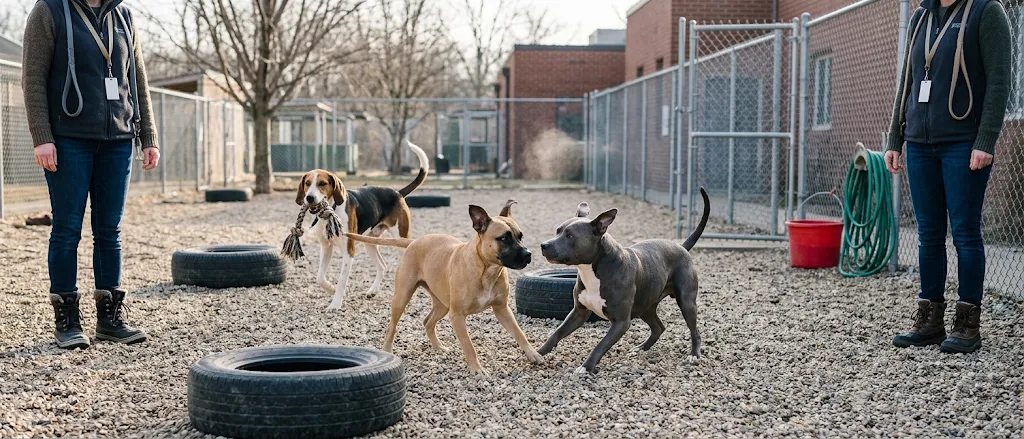
Playgroups are where shelter dogs get to be dogs. They're also where shelters learn where labels like "dog selective" come from.
The ASV guidelines say playgroups need a safe space and enough people to run them. Short a few handlers, and the playgroup just doesn't happen that day.
Photos and Bios
A blurry kennel photo of a black dog with sad eyes is a hard sell. A volunteer with a decent phone, a squeaky toy and some patience can change that dog's whole listing. That goes double for the long-stay seniors, mommas and black pitties who need a better photo most.
Notes Nobody Else Has
Staff see a dog at feeding time and at the vet. Volunteers see her in the park when a bus goes by. Both views matter, and the dog's file is better with both in it.
| Volunteer Role | What the Dog Gets | What Adopters Get | Training It Should Take |
|---|---|---|---|
| Dog walker | Time out of the kennel, a potty break outside and new smells | Notes on leash manners, city noise and other dogs on the street | Leash handling and a shadow shift with a mentor before walking alone |
| Kennel buddy | Quiet petting or reading time in or near the kennel | A sense of how the dog handles touch and calm company | Body language basics and how to spot a dog who wants space |
| Playgroup handler | Off-leash play with other dogs in a supervised yard | Playgroup notes on which dogs this dog likes and why | Shelter-specific playgroup training, plus time as a second handler first |
| Enrichment builder | Frozen food toys, puzzles and scent games between walks | Ideas for what keeps this dog busy at home | Which foods and materials the shelter allows |
| Photographer and bio writer | A listing that shows the dog at her best | Photos and a bio that look like the real dog | Safe handling for photo sessions and the shelter's listing style |
| Adoption showing helper | A walk before the meet, so she isn't bouncing off the walls | First-hand stories from someone who knows the dog | Meet room setup and how to answer questions honestly |
Roles, names and training vary by shelter. This table reflects our volunteer experience at Chicago shelters, not any one shelter's official program.
A short sniff walk is the best thing you can hand a kennel dog. Here's why 15 minutes of sniffing tires a dog out faster than running.
Why Do Good Volunteers Stop Showing Up?
It's almost never the poop.
It's the orientation that was 40 slides and then "go grab Kennel 12." It's the shift calendar nobody can open on a phone. It's suggesting a sign for the long-stay dogs, then hearing nothing back for 4 months.
A research team led by Laura Reese of Michigan State University measured this. In a 2021 study of 651 shelter volunteers, Reese, Jacquelyn Jacobs and Tessa Grebey looked at volunteer "voice," meaning whether volunteers felt they could give input. Volunteers who felt shut out were significantly less satisfied.
The bigger finding was this. Internal shelter factors mattered more to satisfaction than the traits of the volunteer. Translation: the problem usually isn't the volunteers a shelter gets. The problem is how the shelter treats the ones it has.
The heavy emotional stuff is real too, and I wrote about the volunteer side of a returned adoption in another post. This is the boring stuff. Boring stuff is fixable with a decent calendar and a reply email.
And when volunteers drift away, the dogs pay for it. Every volunteer who quits takes a mental file on 20 dogs with them. Who pulls on the leash, who hates rain, who's scared of men in hats and who'll do anything for string cheese.
The ASV guidelines ask shelters to keep a dog's caregivers and schedule as steady as possible. A volunteer who's been there 3 years is that steady face. A revolving door of 1-shift volunteers is the opposite.
What Should a Good Animal Shelter Volunteer Program Include?
None of this needs a capital campaign. Most of it needs 1 person whose actual job is the volunteers, plus staff who answer their messages.
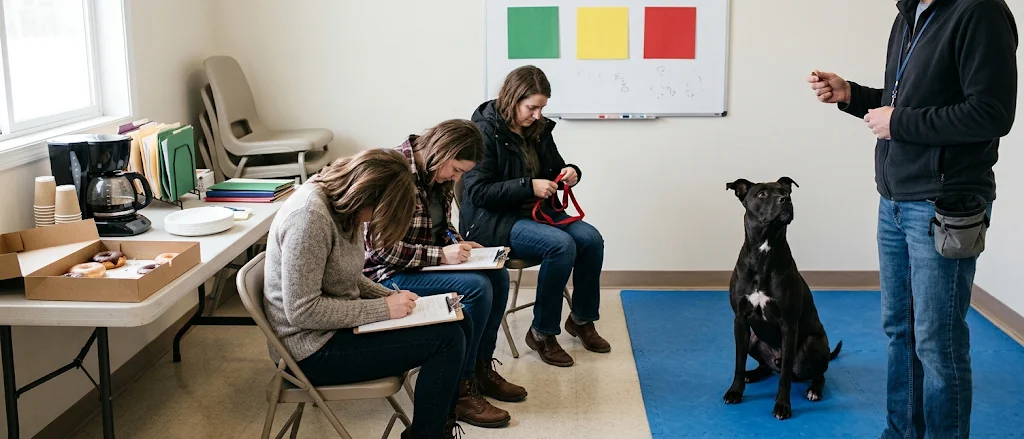
The ASV guidelines already set the floor. Shelters are supposed to train people for each task and make sure anyone handling animals knows basic handling. Plenty of shelters do the training on paper and skip it on the floor.
Here's what I'd look for if I was walking into a new shelter tomorrow. Staff can use it as a gut check, and volunteers can use it to pick where their Saturdays go.
- Training that happens on the floor, with a mentor, before anyone walks a dog alone. A slideshow is a start. It isn't training.
- Handling levels, usually color coded, so a 3-week volunteer isn't handed the 90-pound leash grabber on day 1
- 1 named volunteer coordinator with a phone number or email that someone actually answers
- Shifts at night and on weekends, and a sign-up tool that works on a phone
- A notes system volunteers can write in and staff really read. Paper on a clipboard counts if somebody looks at it.
- A way to suggest things and hear back, even when the answer is no
You'll notice there's no bullet for pizza parties. Volunteers like pizza. They like being listened to more.
| Area | Green Flag | Red Flag |
|---|---|---|
| Training | Green: Hands-on training and a mentor before solo shifts | Red: A slideshow, then "go grab Kennel 12" |
| Handling levels | Green: Color-coded levels, with a clear way to move up | Red: Every volunteer gets every dog on day 1 |
| Coordinator | Green: 1 named person whose job includes the volunteers | Red: Questions go to a general inbox and disappear |
| Scheduling | Green: Night and weekend shifts, sign-up that works on a phone | Red: Weekday daytime only, or a calendar nobody can open |
| Dog notes | Green: Volunteers write notes and staff read them | Red: What volunteers learn about a dog stays in their heads |
| Feedback | Green: Suggestions get an answer, even when it's no | Red: Ideas vanish and nobody hears back |
| Supplies | Green: A stocked enrichment closet volunteers can use | Red: Volunteers buy every toy and treat themselves |
Training expectations draw on the Association of Shelter Veterinarians' 2022 Guidelines for Standards of Care in Animal Shelters. The rest is our judgment from years on the shelter floor.
Good handling starts with the person holding the leash. Brush up on the positive-only training methods we stick to before your next shift.
How Can Donors and Volunteers Push a Shelter to Put People First?
Donors have more pull than they think. Shelters build what donors fund, and a lot of donors only ever get asked to fund concrete.
If you give, try restricting a gift to the volunteer program. A part-time coordinator's hours, a training day, a scheduling tool that works on a phone or a full enrichment closet are all real line items. Ask the development office what it would take, and watch them get excited.
Volunteers have pull too, just a different kind. Complaining in the parking lot doesn't count, sorry. Show up with something specific.
Track something for a month. How many dogs didn't get out on Tuesdays, or how many times the sign-up page crashed. 1 page with real numbers beats 10 angry emails.
Hand it to the right person and offer to help fix it. Shelters move slow, but they move.
Everybody can ask questions. When you tour a shelter, ask who runs the volunteers and how new people get trained. Leadership notices which questions supporters keep asking.
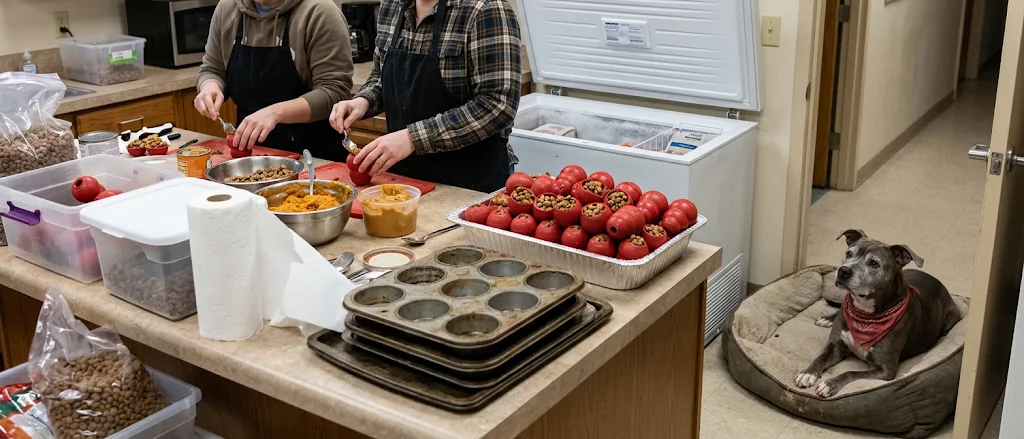
Why Should Adopters Care How a Shelter Treats Its Volunteers?
Because you're adopting the result. A dog who got walked every day for a month comes home with a little less to unload.
They still need time to settle in, and the stress a shelter dog carries home doesn't vanish on day 1. But there's a difference between a dog who left a loud building and a dog who left a loud building with a few friends in it.
You also get better information. A shelter with steady volunteers can tell you if she pulls toward squirrels, ignores cats on the street, loves car rides or freezes at the vet door. A shelter running on empty can tell you her weight.
It's also a quiet signal about the place. A shelter that treats its volunteers well usually treats its dogs well too. If the volunteer room feels miserable, I'd pay attention to that.
And if you can't adopt right now, the volunteer program is where you can help most. Long stays are exactly why adult dogs sit in U.S. shelters for months, and a good walk schedule makes those months easier to live through.
Notes From the Volunteer Room at CACC
I volunteered at The Anti-Cruelty Society from 2017 to 2023 and have been at Chicago Animal Care and Control since. Dog handling, agility, adoption showings, photos and marketing.
Start With the Humans
An animal shelter volunteer program is the cheapest upgrade a shelter can make, and the dogs feel it first. If you've got a few hours a week, find the Volunteers Needed link in our helpful resources and sign up for an orientation.
Common questions
How long does a shelter volunteer need to spend with a dog to help?
A shelter volunteer can help a dog's stress level in about 15 minutes of calm petting. A 2017 study in Applied Animal Behaviour Science found 15 minutes lowered cortisol in shelter dogs as well as 30 minutes did. The calming effect faded after dogs returned to the kennel, so daily visits help shelter dogs more than occasional long ones.
What training should new animal shelter volunteers get?
New animal shelter volunteers should get hands-on training for every task before doing that task alone. The ASV guidelines say shelters must provide training for each shelter task and basic animal handling for anyone touching animals. Good shelter volunteer training pairs new volunteers with a mentor and moves them up through handling levels as their skills grow.
What does a shelter volunteer coordinator do?
A shelter volunteer coordinator recruits, trains, schedules and supports the volunteers who work with shelter animals. The volunteer coordinator also passes volunteer feedback to staff and keeps behavior notes flowing between shifts. Without a dedicated volunteer coordinator, volunteer questions land on busy animal care staff and often go unanswered.
Can volunteers run playgroups at an animal shelter?
Volunteers can help run shelter dog playgroups at many shelters after specific playgroup training. The ASV guidelines say playgroups require a safe space and enough trained people to supervise. Each shelter sets its own playgroup rules, so volunteers should ask the volunteer coordinator about training and handling levels first.
Is it better to donate money or volunteer time to an animal shelter?
Donating money and volunteering time help an animal shelter in different ways, and both matter. Money pays for medical care, supplies and staff positions such as a volunteer coordinator. Volunteer time gives shelter dogs daily walks, petting and playgroups that money alone can't schedule. A gift earmarked for the volunteer program combines both.
How can I tell if a shelter has a good volunteer program?
A good shelter volunteer program shows up in hands-on training, a named coordinator and a schedule that works for people with jobs. Volunteers in a good program can give feedback and hear back from staff. Calm kennels, frequent walks and detailed behavior notes on each dog are visible signs of a volunteer program that works.
About the Author
I’m Jeff Molitor and I adopted my first dog at 39 (Cooper Wonder) and have volunteered with Chicago shelter dogs since 2017, first at The Anti-Cruelty Society and now at Chicago Animal Care and Control. I help with dog handling, agility, adoption showings and support, photography and marketing. I love all dogs, but I gravitate toward momma dogs, seniors, black pibbles and the ones with cropped ears. Basically whoever’s been overlooked the longest. Jeff is dad to Oscar Wonder (pibble) and Gary Wonder (our cat).
This article shares what we have learned from our own experience. It is not medical advice, and we are not veterinarians. If you have any concerns about your dog's health, please check with your vet.