Health
Rescue Dog Diarrhea After Adoption: Causes and Fixes
Published · By Jeff Molitor
Rescue dog diarrhea after adoption usually comes from stress, a sudden food switch or shelter parasites. Blood, vomiting or weakness means a vet call today.
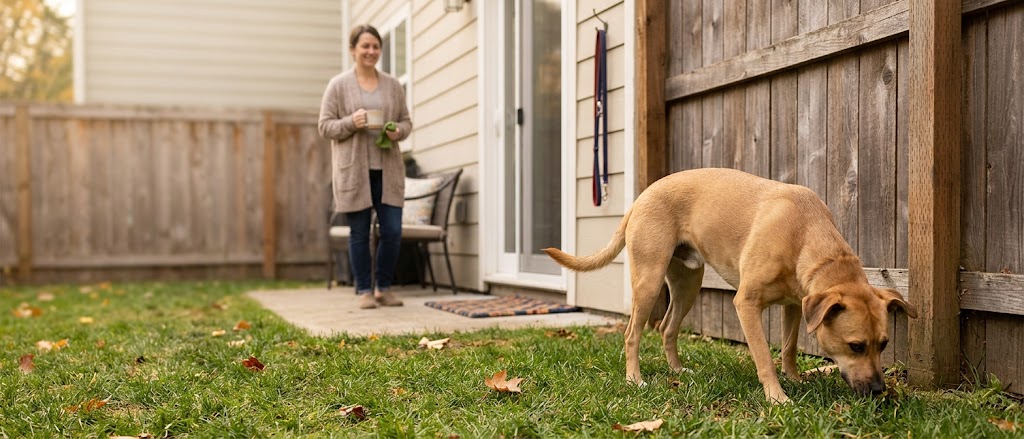
The short answer
A newly adopted dog usually has diarrhea from stress, a sudden food switch or intestinal parasites picked up at the shelter. Blood, vomiting or a weak, listless dog means a same-day vet call.
Shelter dog diarrhea after adoption is common, short-lived in most dogs and almost always tied to stress, food or parasites. If you're living through rescue dog diarrhea after adoption right now, I'm sorry about your rug.
I've cleaned up after a lot of shelter dogs. Most of them firmed up within a few days on plain food, clean water and a quiet house.
A few needed a vet, fast. Their warning signs were easy to spot once I knew what to look for.
This Let Them Be Dog guide breaks down the usual causes, gives you a simple home-care plan and draws a hard line for calling the vet today. Your own vet's advice beats mine every time.
Why Does My Newly Adopted Dog Have Diarrhea?
Your dog's gut just had a very weird week.
Picture it from the dog's side. A loud kennel, a car ride with a stranger, then a house that smells like your dryer sheets and your cat. Then somebody opens a brand new bag of fancy kibble.
That's a lot of change for 1 stomach.
Most cases trace back to stress, a food switch or parasites. Plenty of dogs get 2 at once, which is just rude. Common doesn't mean harmless, though, so keep reading.
Maddie's Fund is a national nonprofit that backs shelter medicine. Its shelter vets name the usual causes of shelter diarrhea as "parasites, stress, diet change or minor illness." The same piece says most cases can be prevented or treated.
If you're also dealing with a rescue dog not eating, the same stress is probably behind both. Appetite and poop tend to recover together.
How Does Stress Cause Diarrhea in a Rescue Dog?
A dog's brain and belly share a group chat. When one panics, the other hears about it right away.
A scared dog pumps out stress hormones, and those hormones push food through the gut too fast. The large intestine doesn't get time to pull water back out. So out comes soft, hurried poop.
Vets often call this stress colitis. Colitis just means the large intestine is irritated.
Stress diarrhea has a look. Think small, frequent poops with a slimy coating of mucus. Your dog finishes, then goes again 10 minutes later.
Sometimes there's a small streak of bright red blood from the irritation. More than a streak goes on the vet list further down.
The giveaway is your dog's mood. A dog with stress diarrhea still sniffs around, still drinks and will still hone in on a piece of cheese like a heat-seeking missile.
Stress diarrhea tends to show up in the first day or 2 home, or right after a big outing. The fix is boring on purpose: a quiet house, set meal times and no field trips. My post on keeping the first 2 weeks quiet and dull covers visitors, walks and naps.
A calmer house means a calmer gut. Set up your space with our calm-house setup tips before the next soft-poop morning.
Can Switching Food Give a New Dog Diarrhea?
Absolutely, and this one is on us.
You bring home a new dog and a fancy bag of premium food on the same afternoon. You want the best for your dog, but your dog's gut bacteria want the old stuff.
Every food has its own mix of protein, fat and fiber. Gut bacteria get used to whatever the dog has been eating, and an overnight swap makes them throw a tantrum.
So ask the shelter for the brand and formula your dog ate, then buy a small bag. Feed it for the first week or so before you mix in anything new.
Texas A&M's vet school suggests phasing in diet changes over a couple of days instead of all at once. Plenty of vets go slower for a stressed new dog, so ask yours for a number. Our upcoming guide to moving your dog onto a new food will lay out a day-by-day mix.
Then there's everything that isn't dinner. Bully sticks, rawhide, cheese and the bacon your uncle swears was "just a tiny piece" all count.
Keep treats tiny and boring for the first couple of weeks. Every new adopter wants to spoil their dog, but your carpet will thank you for waiting.
Food-switch diarrhea shows up a day or 2 after the change. It tends to be soft, bulky and frequent, and it often settles once you go back to the old food.
What Shelter Parasites Cause Diarrhea After Adoption?
Shelters work hard to keep dogs healthy, and most deworm dogs at intake. But 1 deworming dose doesn't cover every parasite, and some bugs linger in kennels no matter how much staff scrub.
Giardia Gets Around
Giardia is a tiny parasite that lives in the gut. The CDC says dogs pick it up by swallowing small amounts of infected poop, licking a dirty crate or drinking from a dirty puddle.
The CDC also notes that pets can carry Giardia with no signs at all. So a healthy-looking shelter dog can still test positive. Worse, Giardia can survive for several months in cold water or soil.
The Companion Animal Parasite Council (CAPC) cites a 2023 nationwide survey that found Giardia in 5.72% of US dog fecal samples. Among US dogs with clinical signs, Giardia infections averaged 15.6%.
CAPC also says dogs in shelters, breeding facilities and kennels are more likely to carry it. Giardia poop is often soft, pale and greasy, and it smells bad enough to clear a room.
Coccidia Loves Crowds
Coccidia are tiny single-celled parasites that spread easily in crowded spaces. Puppies and young dogs get hit hardest, often with watery diarrhea.
Worms Still Show Up
Roundworms can show up in poop looking like cooked spaghetti, which is a fun thing to find before breakfast. Hookworms can cause dark or bloody stool and can make puppies anemic.
Whipworms are sneakier. They shed eggs on and off, so 1 clean test doesn't always mean a clean dog.
This is the one cause you can't fix at home. Your vet needs a fresh stool sample to name the bug, and the treatment depends on the answer.
Stress, Food or Parasites: Match the Mess to the Cause
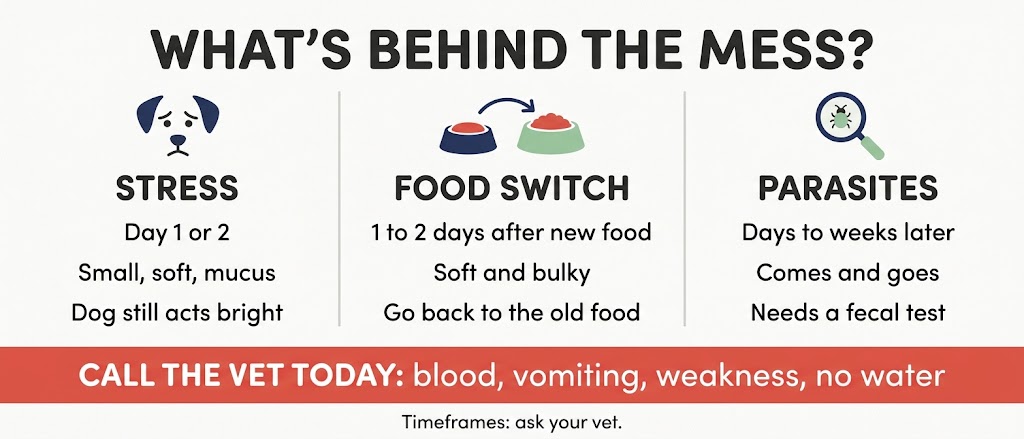
You won't always know the cause by looking. Each of these causes are a little different, though, and the details give you a head start.
I look at 4 things: when it started, what it looks like, how the dog is acting and what happened right before.
Use the table below as a cheat sheet, not a diagnosis. Plenty of new dogs have more than 1 thing going on.
| Clue | Stress | Food Switch | Shelter Parasites |
|---|---|---|---|
| When it starts | Day 1 or 2 home, or right after a busy outing | A day or 2 after a new food, chew or pile of treats | Often days to weeks after adoption, and it can come and go |
| What it looks like | Small, frequent and soft, often with mucus and sometimes a tiny streak of red | Soft and bulky, with more poops than usual | Watery, greasy or very smelly. Sometimes visible worms, dark stool or blood |
| How the dog acts | Bright, curious and still interested in treats | Normal energy, maybe a little gassy | Can seem normal, or tired, thin or potbellied |
| What helps first | A quiet house, set meal times and no outings for a few days | Go back to the shelter's food, then switch slowly | A fresh stool sample to the vet for a fecal test |
| Call the vet when | It lasts past 3 days or any red-flag sign shows up | It lasts past 3 days on the old food | Any time parasites seem likely, since treatment depends on the parasite |
Want meals that are easy on a new dog's belly? Start with our steady-stomach feeding schedule for the first 2 weeks.
How Long Does Diarrhea Last in a Newly Adopted Dog?
Watch the trend, not any single poop.
Stress and food diarrhea get a little better each day, with less trips outside as the week goes on. Monday is pudding, Tuesday is soft serve and by Thursday you can pick it up with a bag in 1 try. Victory.
That pattern fits the opening days of the 3-3-3 rule, when a new dog's whole body is still on high alert.
Parasite diarrhea acts differently. It might get better, then come roaring back a week later. The CDC notes a pet may not pass Giardia in every stool, so your vet may ask for more than 1 sample.
Even a cheerful dog has a limit. A Texas A&M internal medicine resident told the school's Pet Talk column that diarrhea lasting longer than 7 to 14 days needs a vet. That holds even when the dog is eating, drinking and acting normal.
For a brand new shelter dog, I wouldn't wait that long. You don't know this dog's history yet, and a fecal test is cheap peace of mind.
How Do You Treat Rescue Dog Diarrhea at Home?
Home care only fits a dog who's bright, drinking and acting mostly normal. If anything on the vet list below shows up, skip this section and pick up the phone.
Water Comes First
Diarrhea pulls water out of the body fast. Keep a clean bowl of fresh water out all day and refill it often.
Don't force your dog to drink, though. Texas A&M's vets say to offer water freely without pushing it.
Keep the Menu Boring
Stick with the shelter's food for now. If you followed my first-night packing list, you already have a few days of it in the pantry.
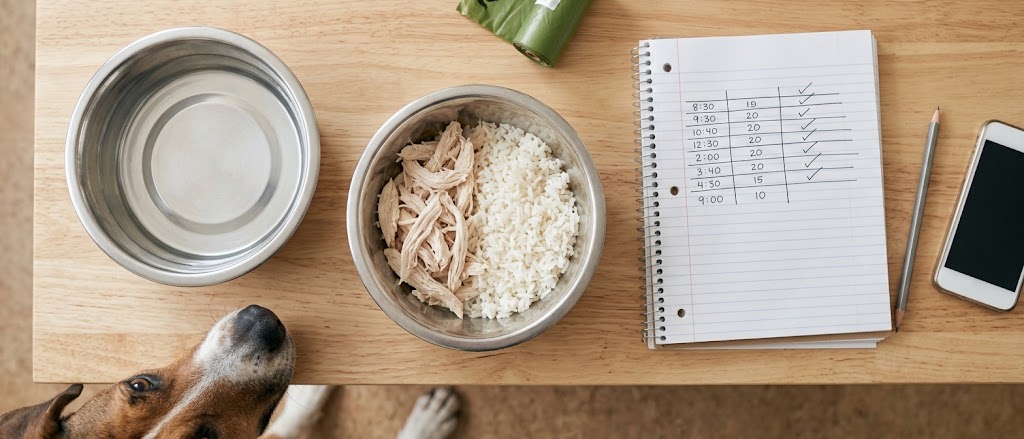
Your vet may suggest a short bland diet instead, like plain, fully cooked chicken breast with plain white rice. Texas A&M notes a bland diet isn't balanced, so it's only meant for a couple of days.
No toppers, no new chews and no "just a bite" of anything. Boring food is the medicine here.
Shrink the Meals
Split the daily amount into 3 or 4 small meals instead of 2 big ones. Small meals are easier on an irritated gut.
Fasting used to be standard advice. Many vets don't recommend it anymore, and puppies and tiny dogs should never fast unless your vet says so.
Start a Poop Log
I know. Nobody adopts a dog dreaming about a poop journal.
But a quick note on your phone after each potty trip gives your vet real answers. Write the time, what it looked like, what your dog ate and anything weird. Snap a photo too, since vets truly like poop photos.
Use the 4-point poop check below to keep your notes consistent.
| Score | What It Looks Like | What to Do |
|---|---|---|
| 1: Firm | Holds its shape and comes up clean in 1 grab | All good. Keep the routine and the same food |
| 2: Soft Serve | Loose shape that leaves a smear on the grass | Watch it. Common in week 1. Keep food boring and log every potty trip |
| 3: Pudding | No real shape, piles up like a puddle | Log and plan. Call the vet if it lasts past 3 days or keeps coming back |
| 4: Water | Pours out and can't be picked up | Call the vet today, especially for puppies, toy breeds and seniors |
| Add-ons | Mucus, blood, black color or visible worms | Note it and snap a photo. Blood beyond a small streak, black stool or worms means a vet call |
Accidents in the house during a bout of diarrhea aren't a training problem, so please don't scold. Once things firm up, our upcoming potty training refresher for adult dogs gets you back on track.
Recovery days still need a little fun. Try our quiet sniff games for recovery days while your dog's belly settles.
Call the Vet Today if You See Any of These
This is the part of the post I'd tape to the fridge.
Most rescue dog diarrhea after adoption is a mess, not an emergency. Some signs flip that, and they don't care if it's Saturday night.
If your regular vet is closed, call an emergency vet. No vet has ever been mad about a "probably nothing" call.
Call your vet today if your dog has diarrhea plus any of these:
More than a small streak of blood, or poop that looks like raspberry jam
Black, tarry poop
Vomiting more than 2 or 3 times in a day
Weakness, wobbling or a dog who won't lift their head for a favorite treat
No interest in water, or gums that feel dry and sticky
A puppy under 4 months old or not fully vaccinated, since parvovirus is a real risk
A swollen, tight or painful belly
Straining over and over with little or nothing coming out
Watery diarrhea more than 5 times in 24 hours
A chance your dog ate something toxic, like chocolate, grapes, xylitol gum or human meds
A toy breed, senior or underweight dog with diarrhea lasting more than 24 hours
What Should You Bring to the Vet for a Dog With Diarrhea?
You're going to the vet in week 1 anyway, so make it count.
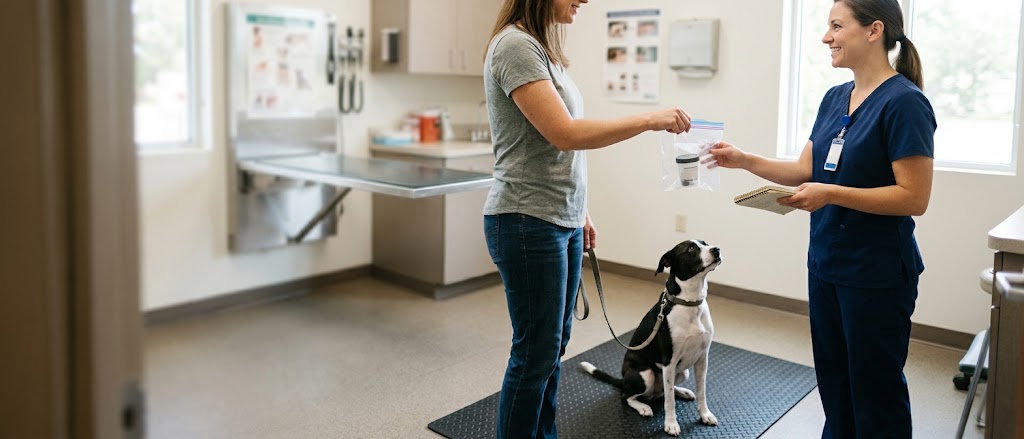
The stool sample is the star of the show. Grab a fresh one from the same day, pick it up with a bag turned inside out and seal it in a second bag. Ask your clinic how much they need and how to store it.
Next, bring the shelter paperwork. Look for deworming dates and products, vaccine dates, fecal test results and the food your dog ate. If something's missing, call the shelter before your visit.
Bring your poop log and photos too. "It was kind of soft, I think?" isn't the history your vet is hoping for.
What I've Seen on Cleanup Duty at the Shelter
I've volunteered with shelter dogs in Chicago since 2017, first at The Anti-Cruelty Society and now at Chicago Animal Care and Control. Kennel cleaning is part of the deal, so I've seen every kind of poop there is.
My hunch from those shifts is simple. The gut calms down right after the dog does.
How Do You Keep Diarrhea From Spreading at Home?
Parasites spread through poop. So the job is gross but simple: get the poop gone, fast.
Pick up every poop right away, even in your own yard. The CDC warns that disinfectants don't kill Giardia in soil or grass, so removing poop is your best tool outside.
Inside, wash bowls, toys, bedding and the crate often. The CDC suggests daily cleaning while your dog is on medicine, plus a few days after the last dose.
Give your dog a bath too, since cysts stick to fur and your dog will happily lick them right back in. CAPC also recommends a shampoo bath during treatment.
If you have other pets, feed them apart and use separate potty spots for now. Tell your vet about every animal in the house, since the CDC says some may need treatment even without symptoms.
Dog parks and shared trails can wait until your vet clears your dog. The other dogs will thank you.
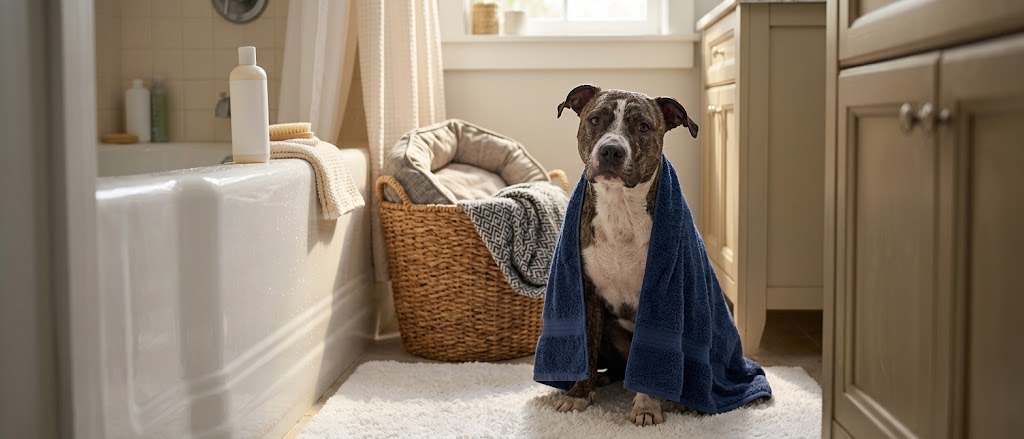
Give the Gut a Few Quiet Days
Most new dogs firm up once the house feels safe. Find more new-adopter health checklists on the Let Them Be Dog homepage.
Common questions
Is canned pumpkin good for a rescue dog with diarrhea?
Plain canned pumpkin helps firm up mild diarrhea in some rescue dogs because of its soluble fiber. The pumpkin should be 100% plain pumpkin, never pie filling, and only a small spoonful mixed into a meal. A veterinarian should set the right amount for a newly adopted dog's size before adding pumpkin.
Can I give my rescue dog Imodium or Pepto-Bismol for diarrhea?
Imodium and Pepto-Bismol should not go to a rescue dog without a veterinarian's approval. Some dogs react badly to loperamide, the drug in Imodium. Pepto-Bismol contains a salicylate related to aspirin, which can cause problems in dogs. A vet can recommend a dog-safe option that matches the cause.
Should I skip a meal if my new dog has diarrhea?
Skipping meals is no longer the default advice for most adult dogs with mild diarrhea. Many veterinarians now prefer small, frequent meals of a bland or familiar food. Puppies, toy breeds and underweight shelter dogs should never fast without a veterinarian's direction, since low blood sugar and dehydration can develop quickly.
Can I catch Giardia from my new rescue dog?
Catching Giardia from a dog is unlikely, according to the CDC. The Giardia types that usually infect dogs differ from the types that usually make people sick. Washing hands after poop cleanup and bathing a dog during treatment still lower the risk for everyone in the home.
Why is there mucus in my rescue dog's poop?
Mucus in a rescue dog's poop usually signals an irritated large intestine, often from stress or parasites. A little mucus in a dog who is eating, drinking and acting normal is common during the first week home. Mucus with blood, vomiting or a dull, tired dog needs a vet visit the same day.
Do probiotics help rescue dog diarrhea after adoption?
Probiotics made for dogs may help mild rescue dog diarrhea after adoption, though results vary by product and cause. A probiotic will not clear parasites, which need a fecal test and targeted treatment. A veterinarian can suggest a dog-specific probiotic and dose for a newly adopted dog.
About the Author
I’m Jeff Molitor and I adopted my first dog at 39 (Cooper Wonder) and have volunteered with Chicago shelter dogs since 2017, first at The Anti-Cruelty Society and now at Chicago Animal Care and Control. I help with dog handling, agility, adoption showings and support, photography and marketing. I love all dogs, but I gravitate toward momma dogs, seniors, black pibbles and the ones with cropped ears. Basically whoever’s been overlooked the longest. Jeff is dad to Oscar Wonder (pibble) and Gary Wonder (our cat).
This article shares what we have learned from our own experience. It is not medical advice, and we are not veterinarians. If you have any concerns about your dog's health, please check with your vet.