Bringing Your Dog Home
Your First Night With a Rescue Dog: An Hour-by-Hour Checklist
Published · By Jeff Molitor
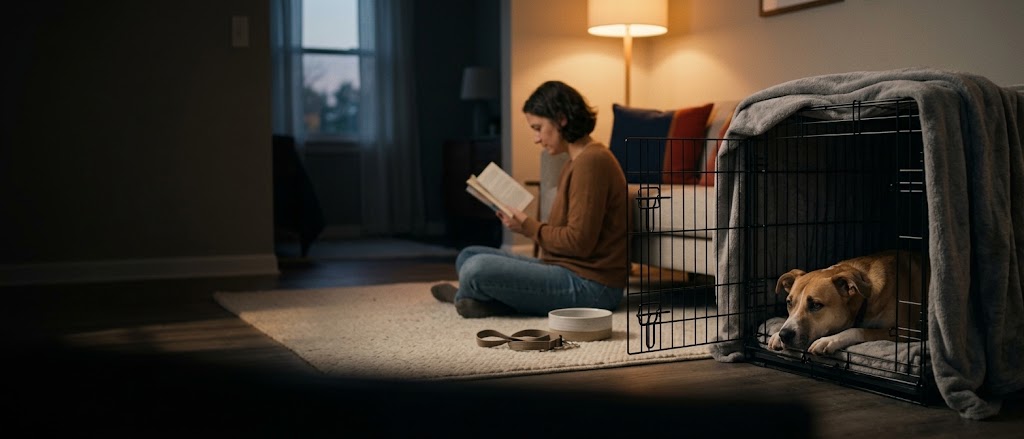
Your first night with a rescue dog goes best with a calm car ride, a leashed potty stop, a small dinner and a crate beside your bed.
The short answer
Your first night with a rescue dog goes best with a calm car ride, a leashed potty stop, a small dinner and a crate beside your bed.
Your first night with a rescue dog sets the tone for the whole first week, and it goes best with a simple plan. I wrote this Let Them Be Dog checklist hour by hour so you can bring home a shelter dog tonight without guessing.
You'll know what to pack for the car ride and where to stop before you open the front door. You'll know how long the first walk should be, where your dog sleeps and what to skip.
Nobody's first night is perfect. Mine sure wasn't.
But a boring, predictable evening is the best gift you can give a scared dog.
What Do You Need Before Your Shelter Dog Comes Home?
Do the setup in the morning, before you leave for the shelter, so you're calm when your dog walks in.
Pick one quiet room to be the landing zone for the evening. A spare room works. So does a corner of the living room closed off with a baby gate. Put down a washable bed, a water bowl and a crate with the door propped open.
Then get down on your knees and look around. Phone chargers, shoes and the trash can all go up or out.
The bedroom gets set up too. A crate or a second dog bed goes on your side of the bed, and I'll explain why in the sleep section.
The car kit is short. Pack a martingale collar or snug harness, a 6-foot leash, an ID tag with your cell number, poop bags and an old towel for the seat. Ask the shelter for a few days' worth of your dog's usual food, since switching food on night 1 is a fast route to an upset stomach.
Last, the microchip. Put your name and number on it before you drive off. A 2009 study in the Journal of the American Veterinary Medical Association found microchipped stray dogs went home 52.2% of the time. Dogs without chips went home just 21.9% of the time, as the AVMA reported on the study.
Your First Night With a Rescue Dog at a Glance
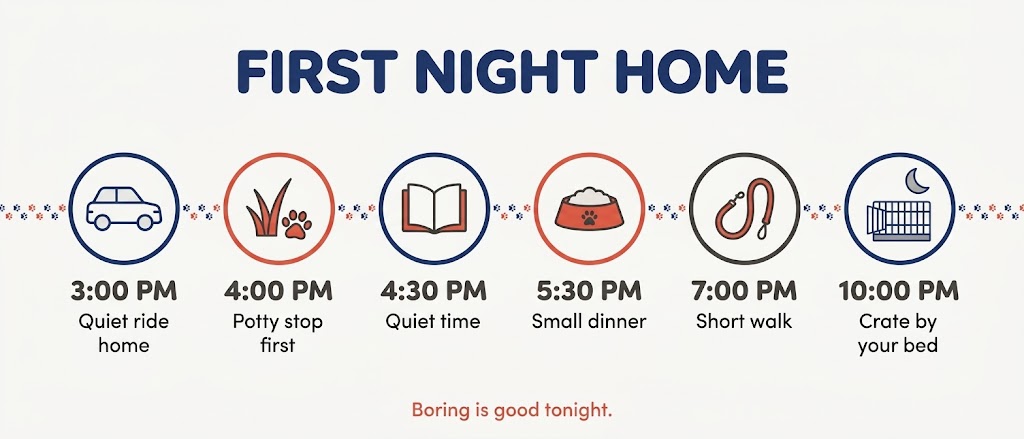
If you're short on time, here's the whole evening in one table. Screenshot it or tape a printout to the fridge.
The times assume a 3:00 PM pickup. For a noon or 6:00 PM pickup, slide every row up or down, since the order matters more than the clock.
| Time | What to Do | Why It Helps |
|---|---|---|
| Morning | Set up a quiet landing zone and a crate by your bed, attach an ID tag and update the microchip | Everything is ready, so you can stay calm when your dog arrives |
| 3:00 PM | Pick up and drive straight home with your dog in a crate or crash-tested harness | A secured dog can't bolt or end up in the driver's lap |
| 4:00 PM | Clip the leash on before any car door opens, then walk to the potty spot | Sets the bathroom spot from the very first minute |
| 4:15 PM | Go inside to one quiet room, close the gate and unclip the leash | Fewer new smells and spaces means less overwhelm |
| 4:30 PM | Sit down, stay boring and let your dog explore or hide | Your dog learns people here are safe without being pushed |
| 5:30 PM | Offer half a portion of the shelter's food, then walk away | A small, familiar meal is easier on a stressed stomach |
| 6:00 PM | Potty break at the same spot | Most dogs need to go soon after eating |
| 7:00 PM | Take a 10 to 15 minute walk on one quiet loop in a martingale collar or harness | Burns nervous energy and gives one more potty chance |
| 8:00 PM | Quiet time with one chew and no visitors | A calm house helps your dog wind down before bed |
| 9:30 PM | Last potty trip with no play | An empty bladder means a better shot at a full night |
| 10:00 PM | Bedtime in a crate or gated spot in your bedroom | Your dog can hear and smell you, and you can hear your dog |
| Overnight | Quiet potty break if your dog whines 3 or 4 hours after the last trip | Prevents accidents without turning the night into playtime |
| 6:30 AM | Straight outside on leash, then breakfast at the same spot as dinner | Day 2 starts the routine your dog will learn to count on |
How Do You Handle the Car Ride Home With a Rescue Dog?
The ride home is your first real outing together. Keep it dull.
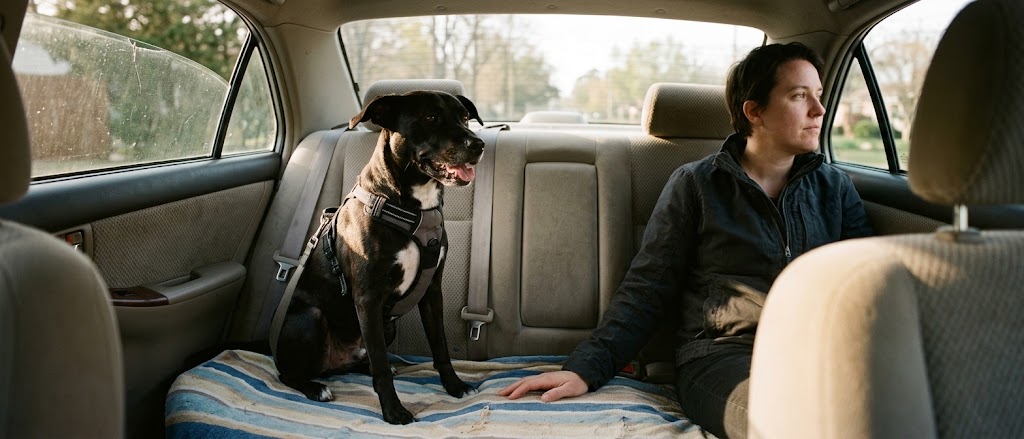
Bring a second adult if you can. One person drives. The other sits in back next to the dog, says almost nothing and lets the dog sniff a hand.
Cornell University's College of Veterinary Medicine says the safest setups are a crash-tested harness, a seat belt or a travel crate. It also warns against letting a dog hang its head out the window. A loose dog can land in your lap at the first red light.
Plenty of dogs get nauseous in the car, so lay that towel down and skip treats for the drive. Drooling, panting and shaking are normal stress signs. Keep the radio low or off.
Drive straight home. The pet store will still be there next week.
Here's the step most people miss. Clip the leash on before any door opens. Shelter dogs can slip out of a car in a second, and you don't know yet if your dog comes when called.
Want the house calm before you pull in? Read our quiet-first decompression tips before pickup day.
What Should You Do in the First Hour Home With a Shelter Dog?
You pull into the driveway and your heart's pounding. Mine was too. Take one slow breath first.
4:00 PM: Potty Spot First
Walk your dog on leash straight to the spot you want them to use. Not the front door. Pick the yard or a strip of grass by the curb, wherever you'll go every day from now on.
Stand still and let your dog sniff. If they pee, praise softly and hand over one tiny treat. If they don't, that's alright, just try again in 30 minutes. Our upcoming guide to house training an adult rescue dog picks up from here.
4:15 PM: One Quiet Room
Bring your dog inside on leash and go straight to the landing zone. Close the gate, then unclip the leash.
Skip the full house tour. Every new room is a pile of new smells, and that's plenty for one afternoon.
4:30 PM: Hands Off
Now sit down and do something dull. Read or fold laundry. Let your dog explore, hide or stare at you from across the room.
Don't chase for pets and don't stare back. If your dog walks over, a slow scratch on the chest is plenty. You're showing a scared animal that people in this house are safe and a little boring.
When Should a New Rescue Dog Eat on the First Night?
Around 5:30 PM, offer about half the usual portion of the shelter's food. A stressed stomach handles a small meal better than a big one.
Set the bowl in the landing zone or just inside the open crate, then walk away. Some dogs won't eat with a stranger watching, and right now you're still a stranger. If the bowl's untouched after 15 minutes, pick it up and try again at breakfast.
You can also try hand feeding a few pieces while you sit on the floor and look off to the side. Some dogs take food from a hand long before they'll eat from a bowl. Our homepage has more on how to feed a nervous new dog.
Hold off on rich chews and table scraps. You'll thank me when you're not scrubbing the rug at 3 AM.
If you have another dog or a cat, feed them in separate rooms tonight. About 15 to 20 minutes after dinner, head back out to the potty spot.
How Long Should the First Walk With a Shelter Dog Be?
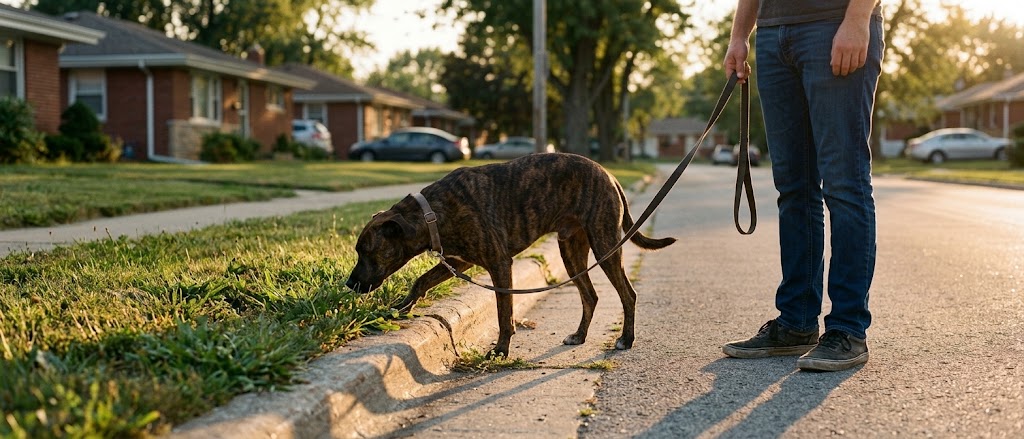
By 7:00 PM, your dog has had a few hours to land. A short walk burns off nervous energy and gives one more chance to pee before bed.
Keep it to 10 or 15 minutes on one quiet loop. This isn't exercise. It's a sniff tour of the block your dog is going to live on.
Check the gear first. A martingale collar or snug harness is much harder to back out of than a flat buckle collar. Leave the retractable leash in the closet, since a plain 6-foot leash gives you real control when a squirrel shows up.
New dogs don't know where home is yet. A 2012 survey study in the journal Animals found 14% of dogs had been lost at least once in the previous 5 years. A scared dog in a strange neighborhood is the one most likely to bolt.
Let your dog sniff all they want. If another dog is headed your way, cross the street with a friendly wave. Neighbors who want to say hi can hear "We're just getting started, maybe next week!"
If your dog freezes at the end of the driveway, turn around. A slow lap of the yard counts tonight.
Want calm ways to tire out a new dog without a long walk? Try these low-stress enrichment ideas for brand new adopters.
Where Should a Rescue Dog Sleep the First Night?
Bedtime is where most first-night plans fall apart. The dog whines, you feel guilty and suddenly a 60-pound stranger is on your pillow.
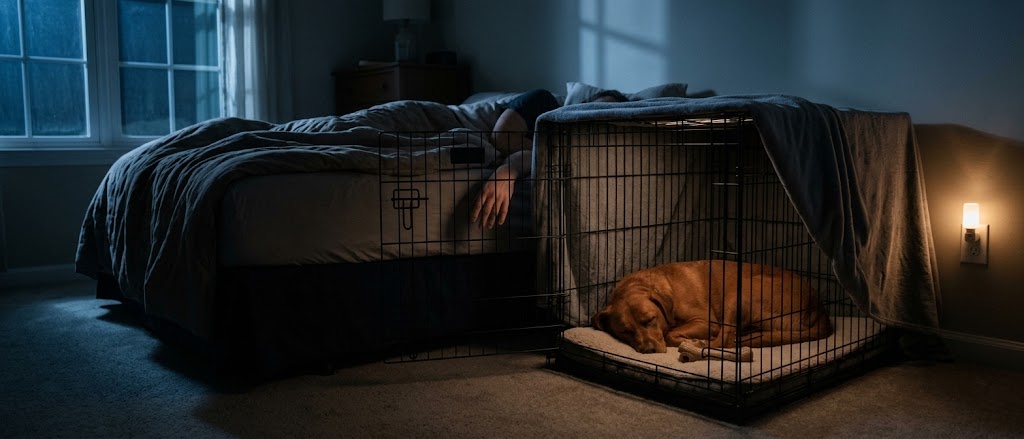
I plan bedtime around one idea: your dog sleeps near you, but not with you, for now. Do a last potty trip around 9:30 PM with no play, then head to the bedroom together.
Crate Beside Your Bed
A crate next to your bed is my first pick for most dogs. Lots of shelter dogs already know kennels, and a blanket over the top makes a crate feel like a den. Never use it for time-outs. The AKC's crate training guide calls a crate a dog's "personal happy place," and that's the goal.
Your dog can hear you breathe through the wire, and that alone settles a lot of dogs.
Gated Corner Instead
Some dogs panic in a crate. Watch for frantic digging at the door, chewing the bars or puddles of drool. If that's your dog, gate off a corner of your bedroom with a bed and water instead.
Your Bed Can Wait
A dog who sleeps in your bed tonight expects it tomorrow, and you don't know yet if your dog guards spaces or startles awake. Give it a few weeks. Taking the invite back is the hard part.
This table compares the options.
| Sleep Setup | Best For | Watch Out For |
|---|---|---|
| Crate beside your bed | Most dogs, especially dogs used to kennels and homes with other pets | Frantic digging at the door, chewing the bars or heavy drooling |
| Gated corner of your bedroom | Dogs who panic in crates and large or senior dogs | Cords, shoes and anything chewable left within reach |
| Closed bedroom with a dog-proofed floor | Calm adult dogs who settle quickly | Accidents on rugs and wandering you might not hear |
| Your bed | Later, after a few weeks of good sleep habits | Habits that are hard to undo and startle or guarding reactions |
| A separate room alone | Not recommended for the first night | Crying, panic and missed potty signals |
What Should You Do if Your Rescue Dog Cries at Night?
Expect some noise. A new dog in a strange room is going to whine or pace a little, and that's okay.
First, figure out if it's a bathroom problem. If it's been 3 or 4 hours since the last trip, take your dog out. Leash on, lights low and nothing more than a quiet "go potty." Then straight back to bed.
If your dog just went, the crying is probably about feeling alone. You'll hear advice to ignore it. I don't buy that for an adult dog on night 1, because your dog has no idea yet that you'll come back.
Start small. Say your dog's name softly and rest your fingers against the crate. Lay a T-shirt you've worn inside, and turn on a fan to cover the creaks of a strange house. Most dogs settle within a few minutes once they know you're right there.
Real panic looks different. Nonstop howling, clawing at the crate door or a blanket soaked in drool means it's time for the gated setup. Mention it to your vet this week too. Early panic about being alone can point to separation anxiety in a rescue dog, which is easier to help when caught early.
Planning ahead for nights 2 through 7? Our crate and potty training basics show you how to build on tonight's routine.
7 Things to Skip on Your First Night
Half of a good first night is what you don't do. Every item below feels kind, which is exactly why new adopters do them.
I'm not saying never. I'm saying not tonight, because most of these go better once your dog trusts you a bit.
A bath. Shelter smell and all, it can wait about a week.
Visitors. Friends and grandkids can meet your dog in a couple of weeks, and they'll get a much better hello for waiting.
The pet store or the dog park.
A face-to-face meeting with your other pets. Swap scents with a blanket tonight and plan a slow introduction later.
Hugs, face kisses and picking your dog up.
A floor full of new toys. One chew and one toy is plenty for a dog who's already on edge.
Leaving your dog home alone. Pick up on a Friday or a day off if you can.
What Should the Morning After Look Like?
Your alarm goes off, and the first job is the same as last night's last job. Leash on, straight outside, same potty spot. Do it before coffee, everyday, for at least the first week.
Then breakfast, same food, same spot. Then a short walk on last night's loop. Right now "same" is the magic word.
Jot down when your dog ate, peed, pooped and slept. It's the fastest way to spot a pattern to share with the vet who you pick for the first checkup.
This guide covers night 1. For the bigger picture, I lay out the 3-3-3 rule explained day by day in a separate post. Our upcoming first-week schedule for a rescue dog picks up right where tonight leaves off.
Tonight Just Needs to Be Boring
You don't need a perfect night, just a calm one. Find more new adopter checklists and resources on the Let Them Be Dog homepage.
Common questions
Should my rescue dog sleep in my bed the first night?
A rescue dog should sleep in a crate or gated area beside the adopter's bed on the first night, not in the bed itself. Sleeping close lets a new dog hear and smell people without forming a bed habit too early. Inviting a rescue dog onto the bed works better after a few weeks.
Is it normal for a rescue dog not to eat the first night?
Skipping dinner on the first night is normal for many rescue dogs and is usually a stress response. A small portion of the shelter's food, offered in a quiet spot with no one watching, gives a new dog the best chance to eat. A veterinarian should see any new dog who also vomits or has diarrhea.
How long will my rescue dog cry at night?
Rescue dog crying at night often fades over the first few nights as the dog learns the bedtime routine. A crate in the bedroom, a quiet potty break and a fan for background noise help a new dog settle faster. Crying that lasts all night for more than a week is worth raising with a veterinarian.
Should I leave water in my rescue dog's crate overnight?
Water in the crate overnight is fine for most adult rescue dogs, especially in warm weather. A small spill-proof bowl or a crate-mounted bottle keeps the bedding dry. Adopters worried about night accidents can offer a last drink about an hour before bed.
What should I do if my rescue dog has an accident the first night?
A first-night potty accident should be cleaned up calmly with an enzyme cleaner and no scolding. Accidents are common in newly adopted dogs, even dogs labeled house trained, because a new home has new rules and smells. Taking a rescue dog outside after meals and naps prevents most first-week accidents.
Can I leave my new rescue dog alone the first day?
A new rescue dog should not be left alone for long on the first day home. Short absences of a few minutes teach a newly adopted dog that people leave and come back. Picking up a shelter dog before a weekend or a day off gives the dog time to settle before a full workday.
What time of day is best to pick up a shelter dog?
Early to mid afternoon is the best time to pick up a shelter dog for most adopters. An afternoon pickup leaves daylight hours for a potty stop, quiet time, dinner and a short walk before bed. A late evening pickup squeezes the whole first-night routine into a few dark, rushed hours.
About the Author
I’m Jeff Molitor and I adopted my first dog at 39 (Cooper Wonder) and have volunteered with Chicago shelter dogs since 2017, first at The Anti-Cruelty Society and now at Chicago Animal Care and Control. I help with dog handling, agility, adoption showings and support, photography and marketing. I love all dogs, but I gravitate toward momma dogs, seniors, black pibbles and the ones with cropped ears. Basically whoever’s been overlooked the longest. Jeff is dad to Oscar Wonder (pibble) and Gary Wonder (our cat).
This article shares what we have learned from our own experience. It is not medical advice, and we are not veterinarians. If you have any concerns about your dog's health, please check with your vet.