Feeding
Rescue Dog Not Eating? What's Normal and When to Worry
Published · By Jeff Molitor
A rescue dog not eating in the first few days after adoption is usually normal stress, but vomiting, diarrhea or lethargy mean a vet visit.
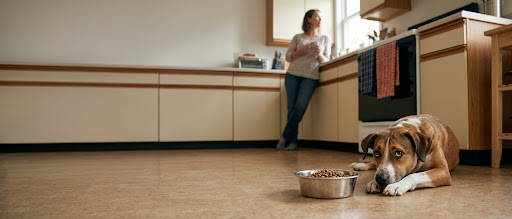
The short answer
A rescue dog not eating in the first few days after adoption is usually normal stress, but vomiting, diarrhea or lethargy mean a vet visit.
A rescue dog not eating after adoption is usually stress, not sickness, but there's a clear line where a vet needs to step in. I've watched a lot of shelter dogs stare at a full bowl like it owed them money.
Most of them were scarfing breakfast within a few days. A few needed a vet, and those dogs gave off different signals from the start.
This Let Them Be Dog guide covers why appetite drops after adoption and where the worry line sits. You'll also get my favorite tricks for tempting a dog to eat, minus the part where you accidentally raise a tiny food critic.
Is It Normal for a Rescue Dog Not to Eat at First?
A rescue dog not eating much at first is totally normal. Annoying, but normal.
Think about your dog's week. A few days ago they were in a kennel with a row of barking neighbors. Then a stranger drove them across town to a house that smells like your candles and your cat.
When a dog's scared, the body puts digestion on the back burner. Survival first, snacks later. That's why a dog who inhaled food at the shelter might snub the exact same kibble in your kitchen.
Normal often looks like skipping dinner on night 1 or nibbling a few pieces at breakfast. Plenty of dogs only eat at night, once the house goes quiet. Some will take treats from your hand and ignore the bowl completely.
Others wait until you leave the room, then clean the plate like nothing happened. Sneaky.
What matters is the trend. A dog who eats a little more each day is settling in, even if the portions look sad. That pattern lines up with the first 3 days of the 3-3-3 rule, when hiding and skipped meals are par for the course.
If you're reading this with a brand new dog and an untouched dinner, my first-night dinner plan walks through that exact evening. This post picks up from there and covers the days and weeks after.
Water is a different story. Skipping a meal is rarely a crisis for a healthy adult dog, but skipping water is a bigger deal. More on that in the FAQ.
Why Do Rescue Dogs Lose Their Appetite After Adoption?
There's rarely just 1 reason. Usually it's 2 or 3 stacked together, like the morning you missed the bus and spilled coffee on your shirt.
Stress Hits the Brakes
A stressed dog runs in alarm mode. Heart rate goes up, the gut slows down and food stops sounding good.
Every new sound in your house keeps that alarm switched on a little longer. The ice maker counts. So does the furnace kicking on at 2 AM.
The Menu Changed
Lots of adopters bring home a dog and a fancy new bag of food on the same day. Now the dog has a new home, new people and a new dinner. That's 3 changes at once, and the stomach usually votes no.
Ask the shelter what brand your dog ate and buy a small bag of it. Our upcoming guide to switching your rescue dog's food covers how to move to a new diet slowly.
For a new dog who snubs the bowl, start with the Let Them Be Dog feeding basics for setting up meals in week 1.
The Bowl Feels Wrong
This one sounds silly till you see it. Some dogs hate metal bowls that clank against their tags. Others won't eat in a busy kitchen with people stepping over them.
Most dogs could care less what the bowl cost. They care about where it sits and who's watching.
If you have another pet, feed them in separate rooms with a door or gate between them. A dog who used to compete for food may hover, gulp or freeze. Stiffening or growling over the bowl is an early sign of food guarding in rescue dogs, so take it seriously.
Something Actually Hurts
Here's where I put my serious hat on, briefly. Shelter dogs come in with all kinds of history, including bad teeth, worms and kennel cough.
The Merck Veterinary Manual lists loss of appetite as one of the general signs of a digestive problem. Vomiting, diarrhea and belly pain are on that list too.
So stress is the likely answer. It's not the only answer, which is why the next section draws a line.
The Rescue Dog Appetite Line: Wait It Out or Call the Vet
I use a simple rule for a rescue dog not eating. Stress usually looks like a dog who's picky but otherwise okay, while sickness looks like a dog who's picky plus something else.
Picky but okay means bright eyes, normal poop, regular drinking and some interest in treats or sniffing around. Picky plus something else means vomiting, diarrhea, a hard or bloated belly or a dog who won't even look at a piece of chicken.
Exact timeframes depend on your dog's age, size and health history. I've left them blank for a vet to fill in, because a number from a blog shouldn't outrank your dog's own doctor.
Puppies, toy breeds, seniors and underweight dogs get less wiggle room than a healthy adult lab mix. Keep that in mind as you read the table.
| What to Check | Usually Normal Stress | Call the Vet |
|---|---|---|
| Appetite | Picks at food, skips a meal or eats only at night when the house is quiet | No real meal for 48 hours, or 12 to 24 hours for higher-risk dogs |
| Water | Drinks normally, even while food sits in the bowl | Drinks little or nothing for 24 hours |
| Stomach | Normal or slightly soft stool in week 1 | Repeated vomiting, bloody or black tarry stool, or diarrhea lasting more than 48 hours |
| Energy | Sleeps a lot but perks up for sniffing or a treat | Weak, wobbly or won't lift the head for a favorite treat |
| Belly | Soft and relaxed when touched | Swollen, tight or painful. Retching with nothing coming up in a large dog means an emergency vet now |
| Mouth | Chews normally on both sides | Drops food, chews on 1 side or paws at the face |
| Trend | Eats a little more each day | Eats less each day, or eats at first and then stops |
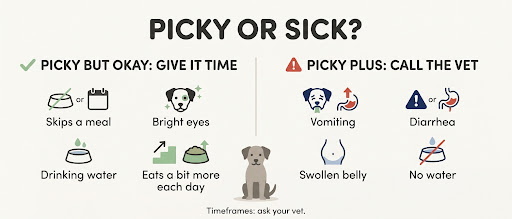
Print the table and stick it on the fridge. Then fill in the blanks at your first vet checkup, since that's the perfect time to ask.
When Should You Worry About a Rescue Dog Not Eating?
Some signs mean you call the vet today, not tomorrow. Repeated vomiting is one. Bloody poop, black tarry poop and a swollen, tight belly are others.
Same goes for a dog who's weak, wobbly or cries when you touch their belly. Large, deep-chested dogs who pace, drool and retch with nothing coming up need an emergency vet right away. That combo can point to bloat, and bloat doesn't wait.
Then there's the slower stuff, like a rescue dog not eating much but acting fine otherwise. Call within 48 hours if your dog still won't eat a real meal after you've tried every trick below.
Call sooner for puppies, toy breeds, seniors and skinny dogs, since they don't have much in the tank. A good rule is to call within 12 to 24 hours.
Mild loose stool in week 1 happens a lot with new dogs. Our upcoming post on diarrhea after adoption breaks down when it's stress and when it's not.
Don't forget the dog who eats but eats weird. Dropping kibble, chewing on 1 side or swallowing without chewing can mean a sore mouth. Experts writing for Tufts University's Your Dog newsletter note that dogs with mouth pain often keep eating and just change how they eat.
So an empty bowl doesn't always mean a comfy mouth.
When in doubt, call. Vets would much rather hear "it's probably nothing" than meet a dog who's been sick for days.
Calm homes make hungry dogs. Our quiet 2-week decompression plan lowers the stress that's keeping your dog off food.
How Can You Get a Rescue Dog to Eat?
This is my toolkit, in the order I'd try it. Start with the boring fixes, because they work more often than the fancy ones.
Shrink the Audience
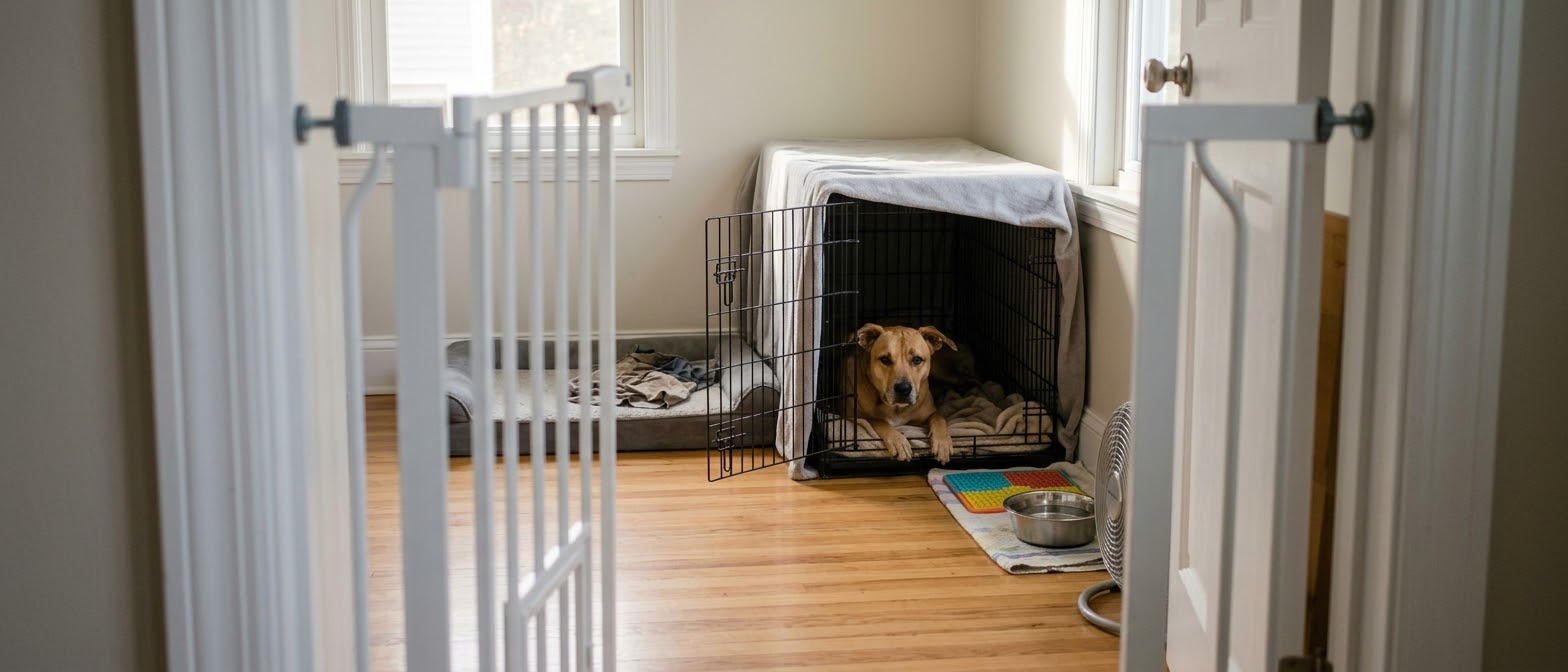
Put the bowl in a quiet corner, set it down and leave. I mean actually leave, not hover by the fridge pretending to read your phone.
Lots of dogs won't eat with a stranger watching. Right now, you're still kind of a stranger.
Warm It Up
Pour a little warm water over the kibble and let it sit for a minute. Warm food smells stronger, and a stronger smell gets a nervous dog's nose working.
Test it with your finger first. Warm, not hot.
Hand Feed a Few Bites
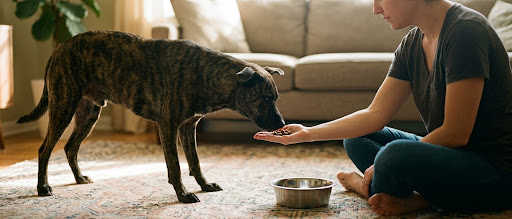
Sit on the floor, turn sideways and hold a few pieces in a flat palm. Don't stare. Some dogs will take food from a hand days before they'll touch a bowl.
You can turn this into one of our short training games by saying your dog's name right before each piece. Food plus name plus calm human is a great combo for week 1.
Scatter It on the Grass
Toss a handful of kibble across a clean patch of lawn. Sniffing is calming for dogs, and hunting for food feels like a game instead of a test.
Indoors, try and use a snuffle mat or a cardboard box stuffed with crumpled paper. Same idea, less grass stains.
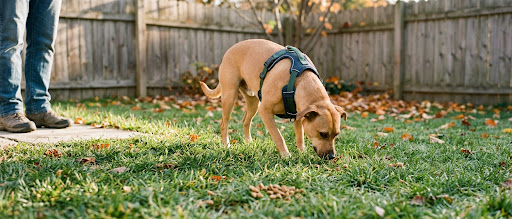
If you've still got a rescue dog not eating after all 4 tricks, move to the topper ideas below. And keep the vet's number handy.
How Do You Tempt a Dog to Eat Without Creating a Picky Eater?
Picture this. Your dog skips breakfast, so you add chicken. Your dog sniffs and walks off, so you try cheese, then fancy wet food, then a rotisserie chicken you bought just for the occasion.
Congrats, you've taught your dog that ignoring the bowl makes better food show up. Dogs learn this lesson fast. Very fast.
So here's the system I use. Offer the meal for about 15 minutes. If it isn't eaten, pick it up without a word and offer the next meal at the normal time.
No snacks in between, no begging and no guilt.
Pick 1 topper and stick with it for the whole week. A spoonful of the same wet food every meal is fine, but a rotating buffet is how picky eaters are made. Less toppers, more patience.
Keep treats small too. If your dog gets a pile of jerky for being brave at the vet, they won't be hungry at dinner. Then it looks like a food problem when it's really a math problem.
Free feeding makes all of this worse. A bowl that sits out all day stops being interesting, and you lose track of how much your dog actually ate.
Bored dogs often eat better after a good sniff. Try our food puzzle and sniff games to make mealtime fun again.
What Food Toppers Are Safe for a Rescue Dog Who Won't Eat?
Toppers are the seasoning, not the meal. A spoonful mixed in well does the job, and mixing keeps your dog from picking out only the good stuff.
My go-tos are plain boiled chicken with no skin or seasoning and plain canned pumpkin, not pie filling. The wet version of your dog's regular food works great too.
Low-sodium broth sounds perfect, but read the label first. Plenty of store broths list onion or garlic.
The FDA's list of dangerous items for pets includes onions, garlic, grapes, raisins, chocolate, xylitol and fatty foods. That rules out a lot of what's in your fridge. Your leftover pizza crust can stay on your plate.
If the shelter paperwork mentions a sensitive stomach or a health issue, check with your vet before adding anything. And go easy, since a dog who's barely eating can get diarrhea from a sudden pile of rich food.
| Topper | Verdict | How to Use It or Why to Skip It |
|---|---|---|
| Warm water | Try | Pour a little over kibble and let it soak for a minute. Warm, not hot |
| The dog's own wet food | Try | A spoonful mixed in well, ideally the same brand as the dry food |
| Plain cooked chicken | Try | Boiled, skinless and unseasoned, shredded small and mixed in |
| Plain canned pumpkin | Try | 100% pumpkin only, never pie filling |
| Low-sodium broth | Check the label | Skip any broth that lists onion or garlic |
| Onion or garlic | Skip | Both are on the FDA's list of dangerous items for pets |
| Grapes or raisins | Skip | Also on the FDA list, so keep them off the plate entirely |
| Bacon, gravy or fatty leftovers | Skip | Fatty foods are on the FDA list and can upset a stressed stomach |
| Peanut butter with xylitol | Skip | Xylitol is dangerous for dogs, so read every nut butter label |
| A new topper every meal | Skip | Rotating extras teaches a dog that refusing the bowl brings better food |
How Do You Know Your Rescue Dog's Appetite Is Back on Track?
Keep a little food log for the first 2 weeks. Write down what you offered, how much got eaten and anything odd, like a soft stool or a skipped walk. A notes app on your phone works fine.
The log does 2 jobs. It shows you the trend when 1 bad day makes you panic, and it gives your vet real answers instead of "I think he ate some?"
Watch weight too, not just bowls. The WSAVA Global Nutrition Guidelines include free body condition score charts that teach you to check ribs and waist with your hands. Plenty of shelter dogs come home a little thin, so ask your vet what score to aim for.
Once your dog eats normally, fade the topper over about a week. Mix in a little less each day until it's plain food again.
Plot twist: some dogs swing the other way and start gulping. That's usually a sign the stress has lifted, and a slow-feeder bowl or puzzle toy will slow things down.
Give the Bowl a Little Time
Most rescue dogs find their appetite once the house feels safe. Explore more adopter guides and checklists on the Let Them Be Dog homepage.
Common questions
Why will my rescue dog eat treats but not dog food?
A rescue dog that eats treats but skips dog food is usually showing stress or a learned preference, not illness. Treats are smaller and smellier and come straight from a person, so treats feel easier for a nervous dog to accept. Cutting back on treats and warming the regular food often brings a new dog back to the bowl.
Should I leave food out all day for a rescue dog who won't eat?
Leaving food out all day for a rescue dog who won't eat usually makes the problem harder to fix. A bowl that never leaves loses its appeal and hides how much the dog actually ate. Offering meals for about 15 minutes at set times builds hunger and a routine a newly adopted dog can count on.
Should I switch foods if my rescue dog won't eat?
Switching foods is rarely the right first move for a rescue dog who won't eat during the first week. A sudden diet change can upset the stomach and adds 1 more new thing to a stressful week. Sticking with the shelter's food at first, then changing over gradually, is the gentler path.
Why does my rescue dog only eat when I leave the room?
A rescue dog that only eats when people leave the room usually still sees the household as unfamiliar. Many shelter dogs feel exposed while eating in front of strangers. Setting the bowl down, walking away and sitting a little closer each day teaches a new dog that mealtime with people nearby is safe.
What if my rescue dog isn't drinking water either?
A rescue dog that refuses both food and water needs a veterinarian sooner than a dog that only skips meals. Dehydration can become serious quickly, especially in puppies, small dogs and dogs with vomiting or diarrhea. Adopters should call a vet if a new dog drinks little or nothing for 24 hours.
Why does my rescue dog eat too fast after a few weeks?
A rescue dog that eats too fast after a few weeks is often a dog whose stress has lifted and whose appetite has returned. Dogs from crowded kennels may also gulp because food once came with competition. A slow-feeder bowl, a puzzle toy or scatter feeding slows meals down and lowers the risk of vomiting.
About the Author
I’m Jeff Molitor and I adopted my first dog at 39 (Cooper Wonder) and have volunteered with Chicago shelter dogs since 2017, first at The Anti-Cruelty Society and now at Chicago Animal Care and Control. I help with dog handling, agility, adoption showings and support, photography and marketing. I love all dogs, but I gravitate toward momma dogs, seniors, black pibbles and the ones with cropped ears. Basically whoever’s been overlooked the longest. Jeff is dad to Oscar Wonder (pibble) and Gary Wonder (our cat).
This article shares what we have learned from our own experience. It is not medical advice, and we are not veterinarians. If you have any concerns about your dog's health, please check with your vet.